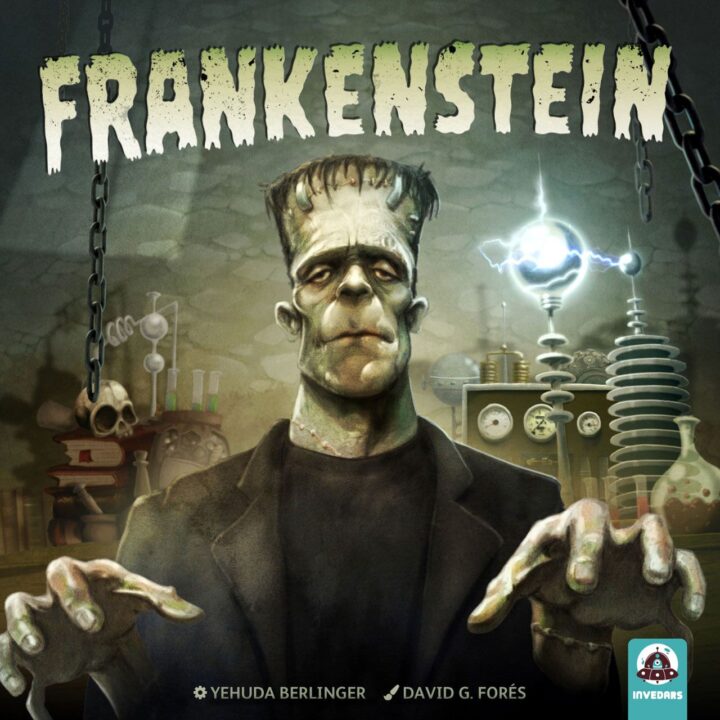

If you ever felt like your game nights were missing a bit of mad science, questionable body part choices, and a dash of lightning, you might want to pay attention to this review. Frankenstein promises creepy laughs, wild chaos, and the unholy joy of cobbling together (sometimes literally) the most monstrous creation at the table. I’ve played it more times than I care to admit (and a few times where my creature’s arm fell off in a tragic glue mishap). So, is this game a masterpiece or just another experiment gone wrong? Grab your safety goggles, and let’s find out!
How It Plays
Setting Up
Put the board in the middle of the table. Each player gets their own lab area, some body part cards, and starting coins. Shuffle the main deck and put it face down. Get some snacks—this will get messy.
Gameplay
On your turn, you draw cards, collect coins, and hunt for parts to build your own monster. You can trade, steal, or bargain for missing limbs. Sometimes there’s an angry mob event (yikes). Keep an eye on your lab, or someone might sneak in and rearrange your monster when you blink.
Winning the Game
Be the first to finish building your monster with all the correct parts. If you make it, shout “It’s alive!” while your friends glare. If two players finish at the same time (it happens!), the one with the most coins wins. If nobody finishes before the angry mob flips the final torch, everyone loses. Frankenstein’s lesson: don’t upset villagers.
Want to know more? Read our extensive strategy guide for Frankenstein.
Theme and Artwork Quality: Bringing Frankenstein’s Lab to Life (Without the Smell)
First things first, let’s talk about the theme. Frankenstein is a game that runs wild with the whole mad science thing. When I opened the box with my friends, you could almost hear thunder and maniacal laughs in the background. The people who made this game clearly love Mary Shelley’s story, but luckily, there’s no long speeches or tragic endings here—just wild body-part collecting and some very questionable science.
The artwork quality surprised me (in a good way). The main board is stuffed with jars, bolts of lightning, and moody candlelight. Every card is dripping with personality. I mean, there’s a body-part card with a bandaid on it, and another with a toe that will haunt me forever. Stylized art like this can make or break a theme, and here it totally works. It’s not too scary for kids, but it’s creepy enough to make you feel like you should maybe hide it from the family pet.
Even the player boards are cool. Instead of boring squares, you get these funny diagrams—one of my friends spent most of the game making monster puns thanks to the art. The color palette is all murky greens, yellows, and reds. It feels like you’re in an old horror movie, but you don’t have to deal with black-and-white film quality or someone yelling, “It’s alive!” every five minutes. The only real downside is that the cards are a bit thin. After a few games, mine started showing wear, so sleeves might be smart if you’re a neat freak (or just a butterfingers like me).
Strap in, because next I’m tackling Frankenstein’s nuts, bolts, and fairness—yep, it’s time to talk game mechanics and balance!
Game Mechanics and Balance in Frankenstein: Patchwork or Perfection?
Alright, so let’s talk about the nuts and bolts of Frankenstein. The game throws you straight into mad science mayhem. Every player races to build their own monster before the torches and pitchforks show up. You collect body parts, hoard tools, and flip event cards that can really mess with your best-laid plans. It feels like you’ve stepped into a tattered lab coat, complete with the smell of burnt hair and old meat (okay, maybe not that last part, but it gets close!).
The mechanics are simple enough for newcomers, but there’s just enough decision-making for us seasoned game nerds. Every turn, you pick your action: gather parts, steal pieces from someone else (yes, you can be THAT person), or shore up your monster to survive the next round. There are dice involved, so luck pops up every so often—sometimes your experiment catches lightning, sometimes you blow up your own lab. It’s hilarious till you realize your friend Carl keeps rolling sixes and growing a mutant with three left arms. Not fair, Carl.
Balance-wise, Frankenstein teeters a bit. If you get unlucky on your first couple turns, you could lag behind and end up cobbling together roadkill while others go full Frankenstein’s Bride. I wish the catch-up mechanics were a bit stronger. When luck goes cold, it stings. But, if you like a bit of chaos with your science, there’s plenty of laughter to be had.
Next up, grab your pitchforks and strategy hats—let’s see how player interaction and table talk go mad in Frankenstein!
How Players Scheme and Plot in Frankenstein
I love a board game that makes me side-eye my friends across the table, and Frankenstein brings just the right amount of mistrust and sneaky moves. Some games turn into solo puzzles, but Frankenstein keeps everyone alert. Players trade parts, steal body bits, and sometimes form laughably short-lived alliances. I once thought I made a deal with Karen for a left arm, but she used my trust to swipe a lightning rod from under my nose. I still hold a grudge.
Choices in this game matter, but not in a way that feels like chess. You can bluff, cut off others, or try to corner the market on heads—but someone might surprise you with a lucky draw or wild trade. The win isn’t always obvious. I saw my cousin Sam, who usually needs help remembering the rules, win just by being charming (and maybe a little sneaky). Frankenstein makes players feel clever, but a little cautious. The table talk is half the fun and watching someone negotiate as if their life depends on finding a foot is truly a thing of beauty.
Strategy in Frankenstein is about reading your friends and playing the table, not just the cards. Yes, sometimes you get what you need by pure stubbornness or by making a desperate trade. The sweet spot is between open scheming and straight-up begging. If you like a game where you must watch every move and make friends (and then betray them), you’ll enjoy this one.
But what about replayability and how those cardboard brains hold up after a few rounds? That’s where we’ll really put Frankenstein to the test—grab your glue and let’s see!
Replay Value and Component Durability in Frankenstein
Replay Value: Always a New Monster
Here’s the thing about Frankenstein: it’s almost impossible to play the same game twice. Mix up the Labs, body parts, and Scientist powers, and you get some wild combos. My group played seven times (don’t judge us, we got snacks), and each session felt fresh. You might try sneaky sabotage one time and mad dashing the next. If your group likes to adapt and outwit each other, Frankenstein will keep your brains buzzing for ages. But if nobody likes chaos or trying wild new things, this game might get stale eventually. So, if you’re a human spreadsheet, maybe skip it.
Component Durability: Sturdier Than a Monster’s Stitching?
Now, on to the parts. The board is solid and survived one accidental soda spill—thanks, Dave. The monster tiles and Lab tokens stand up to shuffling and the occasional dog paw. The cards… eh, they’re decent but I wish they were thicker; after many plays, the edges started looking a bit chewed (not literally, the dog prefers socks). If you like sleeving cards, go for it. If you like to throw cards in a rage—be careful!
Final Thoughts: Would I Recommend Frankenstein?
For all its monster-ish charm, Frankenstein is one of my top picks for a wild game night and lots of replay. Just don’t expect mint condition components forever. I’d say grab it—unless you hate chaos or own a paper-shredding pet.
Conclusion
Frankenstein is a wild ride—loud, messy, and full of laughs. If you like clever table talk and aren’t scared of a little chaos, this game might be your new favorite. The theme and goofy artwork pull you in, and the unpredictable action keeps things fresh each time. Yes, the luck factor can be brutal and the cards won’t survive a coffee spill, but if you play with folks who enjoy the madness, you’ll have a blast. I wouldn’t bring it to game night with ultra-competitive rules lawyers, but for everyone else, it’s a monster hit. That wraps up my review—now if you’ll excuse me, I have a rubber ear to glue onto my monster.