
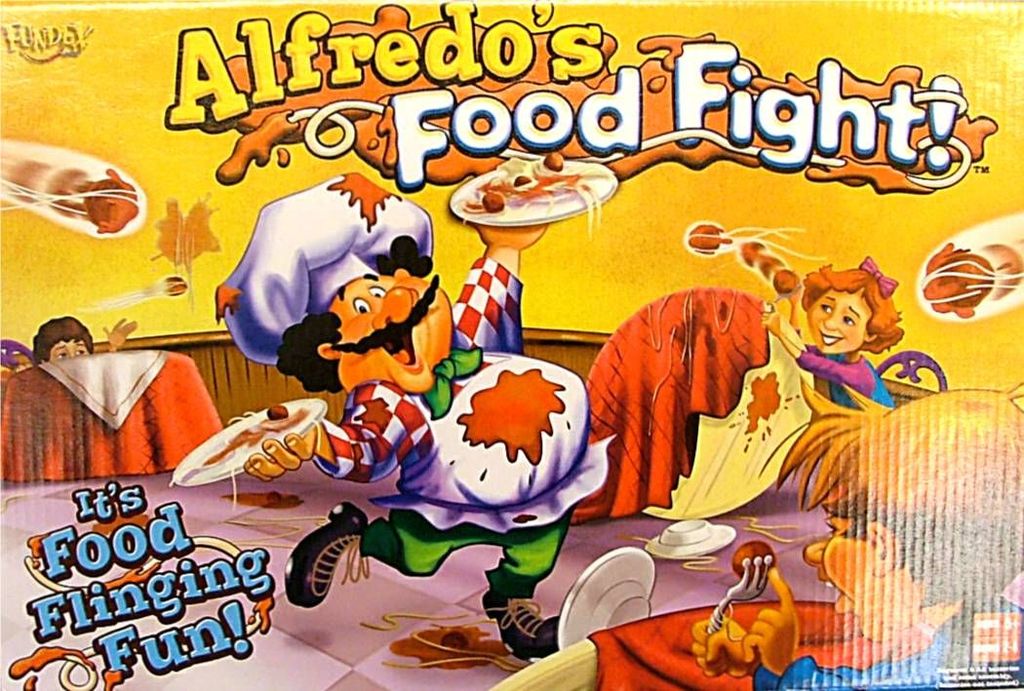
If you’ve ever wanted to see a slice of pizza slap a hot dog with a meatball, you’re in the right place. Welcome to my review of Food Fight—a game that promises edible armies, frantic card battles, and plenty of food puns to clog your arteries and your brain. Here’s what we chewed over (pun intended).
How It Plays
Setting up
First, everyone grabs their food-themed army deck (yes, you’ll hold a hand of pizza and hot dog troops). Shuffle the cards, dish out a fresh stack to each player, and place the Food Mascot tokens in reach. Lay down three Meal cards to fight over — say, Breakfast, Lunch, and Dinner.
Gameplay
Each round, players secretly build their army for each Meal by picking cards from their hand and sending them face-down to the table. When everyone’s ready, flip your armies and see what’s cookin’. Add up the ‘Flavor Points’ of your troops at each Meal to see who’s winning, then throw some Foodie dice to spice things up (my personal favorite part—so much yelling). The highest points, after all bonuses and dice, wins that Meal card. Don’t forget the quirky Action cards! They’ll let you sabotage or boost, so expect food fights and betrayal, especially from your so-called friends.
Winning the game
The first player to collect enough Meal cards (usually three, but double-check the rules) wins and gets bragging rights as Top Chef… at least until next game night.
Want to know more? Read our extensive strategy guide for Food Fight.
Gameplay Mechanics and Player Interaction in Food Fight
Let me tell you, Food Fight brings a whole lot of flavor to the tabletop. If you love flinging mashed potatoes at your friends (metaphorically, of course), this game will tickle your taste buds. Each player commands an army of feisty foods—think taco grenadiers and spaghetti warriors. The goal? Out-battle your opponents in food-on-food showdowns to win the prized “Meal” cards.
Now, the main mechanic is card battling, and it feels easy to get into but not so simple that you snooze off in the middle. Each hand, players secretly pick a dish to throw into the fray, then compare their cards’ strength and special powers. Power combos add spice to your attacks, and pulling off a sneaky Foodie card at just the right moment feels like putting ketchup on the perfect burger.
Player interaction is the spicy sauce of Food Fight. The trash talk flies faster than popcorn at a movie theater, and you never know who’ll get targeted next. There’s a fair amount of backstabbery, but nothing too mean—more like the friendly shoving over the last slice of pizza. Just beware: luck can sometimes spoil the broth. If your cards stink, you might be stuck watching your army of veggies wilt. I wish the luck factor was toned down a bit, since no one likes losing to a soggy bread roll.
Next up, let’s see if Food Fight’s artwork is good enough to eat or just a half-baked mess.
Themes and Artwork: Food Fights Have Never Looked This Deliciously Weird
One thing I love about Food Fight is how it leans hard into its food theme. Seriously, you’ve never looked at mashed potatoes the same way after you’ve seen them wielding a spatula and a bad attitude. The game is what happens if cartoons and your fridge leftovers had a wild party together.
The artwork is bold, sometimes just a little too wacky, but it never stops being fun. I like how you can tell right away what you’re dealing with—no squinting at cards trying to figure out if that’s a breadstick or a mutant carrot. It’s super accessible for kids, but it still made my adult friends laugh. The design team at Food Fight gets major kudos for putting in loads of eyeball-rolling puns and sneaky background jokes on the cards. You’ll find faces, limbs, and kitchen weapons where you least expect them. Each card, whether hero or villain, just screams personality.
But enough about the flavors and flair—next up: does Food Fight leave you hungry for strategy, or is it just a roll of the dice? Let’s chew on that in the next section!
Strategy vs. Luck: The Big Food Fight Showdown
Alright, let’s get saucy and talk about the big question: is Food Fight a brain burner or just a fortune cookie? From my wild Friday night marathon with the crew, one thing stood out—luck plays a huge role here. I’m talking “spicier than grandma’s chili” levels of randomness. You shuffle, you deal, and you just hope your pickles aren’t facing off against someone’s meatloaf commando.
Don’t get me wrong, there is some room for clever tricks. You can try to guess what cards other players might slap down, and maybe, just maybe, save your best dish for the final round. But let’s be honest, I spent more time cursing the gravy gods than using four-dimensional chess moves. The meal cards and actions are unpredictable, so every game feels like a food fight at a kindergarten birthday party—fun, messy, and totally out of control.
This doesn’t mean you won’t enjoy planning a little, especially when you can make combos work or steal someone’s prized dessert (which got me banned from Tim’s next game night). But if you’re searching for a game where skill always trumps luck, Food Fight will leave you as bitter as burnt toast. For groups who love chaos and belly laughs, though, that wild unpredictability is half the fun.
Now, if you’re hungry to know how many times you’ll want to throw down for a rematch, and if grandma can finish before bedtime, just wait until the next section on replay value and game length. You won’t want to miss dessert!
Is Food Fight a One-Hit Wonder or a Go-To Snack?
When it comes to replay value, Food Fight delivers about as much as your favorite burger joint: you keep coming back, but only if you love the flavor.
The variety in Food Fight comes from the wacky card combinations and the unpredictable matchups. Every round, you’ll face off with different meals, and the battles can get wild real quick. But be warned: after a few rounds, you do start to see the same breakfast sausages pop up. There’s only so many ways you can dress up a taco, you know? Not even my dog.
Food Fight definitely works best with more players. The chaos increases, the table talk gets louder, and there’s more opportunity for sneaky sabotage (or food-based insults). That said, if your playgroup loves fast, silly games, Food Fight could become a regular appetizer before bigger games. For gamers who want something deep or new every round, you might find the replay value a bit thin after a few sessions. At least you won’t have to do any actual dishes.
Would I recommend Food Fight? Well, if you’re after a tasty, quick, and silly battle with friends, yes. Just don’t expect a main course—this one’s more like a salty snack that sometimes leaves crumbs everywhere.
Conclusion
The rules are easy to teach and you’ll have a good time if you like wild, quick games that don’t take themselves too serious. Still, I can’t ignore the luck—a few card flips can tip the outcome, so if you want deep strategy, you’ll want to look elsewhere. Great for a party warm-up or as a family game, but not one I’d play over and over. With friends who love chaos and puns, though, you just might get your money’s worth. That wraps up my review—now, who wants to throw mashed potatoes?