
I’ve played a lot of board games with my friends—sometimes it’s chaos, sometimes it’s brilliant. But few games start family feuds quite like chess board two player. In this review, I’m breaking down whether this classic box of brain-busting moves is worth your time, table space, and arguments with your uncle. Get ready for honest laughs, a sprinkle of wisdom, and maybe a confession about how many times I’ve lost before breakfast.
How It Plays
Setting Up
To get started, pop open your chess board and set it up so each player has a white square in the bottom right. Place all your pawns on the second row. Then line up the rooks in the corners, knights next to the rooks, bishops next to the knights, queens on their color, and kings in the last spot. Easy! Unless your cat decides to be the third player; then, good luck.
Gameplay
White starts first, and you and your rival take turns moving one piece at a time. Every type of piece moves in its own funky way—knights hop, bishops go diagonal, queens pretend to be queen of everything. You can gobble up your opponent’s pieces by moving onto their square. Planning ahead is the name of the game, but bluffing helps too (just don’t wink, it gives everything away).
Winning the Game
To win at chess, you need to trap the enemy king so it can’t escape, which is what we call ‘checkmate.’ Sometimes you’ll end up in a draw and neither of you win, which is perfect if you like bragging about not losing. That’s chess—start with a handshake, end with a king crying in the corner.
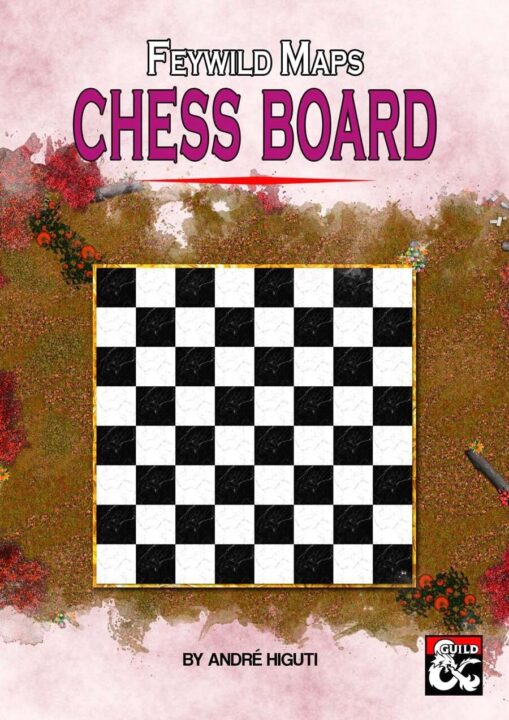
Want to know more? Read our extensive strategy guide for Feywild Maps: Chess Board.
Board and Pieces Quality: First Impressions Matter
Let’s talk about the first thing you see and touch in any chess game: the board and pieces. When I cracked open my shiny new chess board two player set, the first thing that hit me was the smell of fresh cardboard (I wish it was mahogany, but hey, my living room isn’t Buckingham Palace). The board itself felt sturdy and didn’t fold at weird angles. I’ve played on boards where the middle tries to eat your pawns. You won’t find that here.
The squares are clearly marked—no guesswork if your bishop just landed on the Great Swamp. The contrast between the black and white squares actually helps you focus and avoid that classic chess accident: moving your queen into the sun (don’t ask; it’s a long story from my first game).
Now about the pieces: they’re weighted enough to survive a nervous hand or a small earthquake (I have clumsy friends, so this matters). They aren’t too shiny or slippery, so no accidental knight skidding. The detail is nice but not so intricate that you feel guilty for shoving them in the box when everyone wants pizza. I once played with pieces that looked like abstract art sculptures and I couldn’t tell a bishop from a penguin. This set gets that right.
My only gripe? The storage. You just get a cardboard box, so don’t expect velvet pouches or secret compartments. If you trip over it in the dark, you’ll know it’s your chess board two player set and not your cat… hopefully.
Next up, I’ll tackle the burning question: is chess as fair as your grandma claims? Spoiler: sometimes, yes. Sometimes, I cry.
Game Balance and Fairness in Chess Board Two Player
Let’s be honest, when it comes to game balance, chess board two player is the king, queen, and probably some sort of royal court jester, too. The rules are set, the starting positions are always the same, and there’s not a single dice to curse when you’re in trouble. You win or lose by your own skill (or sometimes, how distracted your cat is by the knight pieces).
Everyone starts on level ground. Both sides have identical armies—just mirror images of pawns, knights, bishops, a queen, a king, and those always dependable rooks. There’s no “catch-up” mechanic or wild cards here. If you blunder, no special ability is going to save you. At my place, we had a very heated match where I tried to blame my loss on the lighting, but deep down, I knew it was because my opponent actually saw my not-so-sneaky rook advance three moves ahead. Ouch.
The only minor gripe about fairness is that White always goes first, and yes, that does offer a teeny-tiny advantage at the competitive level. If you ask my buddy Dave, he’ll say that’s why I keep losing as Black. Statistically, though, it’s close—anyone can win with either color if they stay one step ahead (or if your opponent forgets the rules and tries to castle through check—don’t let them!).
No random luck means that skill, planning, and a dash of good old second-guessing yourself rule the day in chess board two player. And speaking of ruling—next up, let’s see how this classic holds up when it comes to replay value and strategic depth. Get your thinking caps ready!
How Chess Board Two Player Stays Fresh: Replay Value & Strategy Bliss
If your idea of a good time is plotting moves that make your opponent question their life choices, chess board two player has your back. I’ve played this game so many times my friends have started hiding pawns in their pockets just for a break. Each session feels new, no matter how many times we pull out the board. Why? Because the action depends on the players, not random dice rolls or weird draw cards. Every game, you get new puzzles, new mind games, and usually, the same old arguments about who had the better opening.
The strategic depth in chess board two player is, honestly, bonkers. Want to go on attack mode with your queen? Do it. Prefer lurking in the shadows with sneaky bishops? That’s your jam. I’ve lost games in four moves (thanks, fool’s mate), and I’ve fought through marathons that ended with three lonely pawns and a lot of regret. The moves you can make seem endless. I’ve even watched a friend just push pawns for ten minutes straight, convinced they were inventing a “pawn wall meta.” (Spoiler: it did not work.)
Even after years, I find new tricks, fresh blunders, and more reasons to say “aha!” or “oh no…” Chess board two player never feels stale, and that’s rare in a box of cardboard and plastic. The replay value is off the charts—like, I-could-play-this-for-decades level off the charts. Next up, let’s see if anyone can actually learn the rules without falling asleep or reaching for the instruction booklet for the millionth time!
How Easy Is It To Learn Chess Board Two Player?
When I first got my hands on chess board two player, I’ll be honest—I was a bit terrified. The rules seemed like rocket science. But, here’s the plot twist: it’s actually pretty easy to learn! Most starter sets come with a simple rule book. It spells everything out: how the pieces move, how to set up the board, and even what ‘en passant’ means (no, that’s not French for “please pass the salt”).
I once taught my seven-year-old niece to play in under 15 minutes. I also taught my buddy Dave, who struggles to find his car keys most days, so I can confirm you don’t need a PhD to learn chess. The hardest part is remembering which way the knight moves. (Is it L-shape? 2 to the right and 1 up? Or was it 1 to the left and 2 down? Expect a few wrong moves at first—trust me!)
Most printed rules are clear, and there’s a ton of apps and videos online if you need more help. The official rules never change, so you won’t find any sneaky twists from one set to another. You won’t find yourself flipping through endless pages or arguing about what a rule means. Once you learn, you know it for life.
If you want a game that’s not a headache to learn, chess board two player gets my thumbs up. It’s a classic for a reason! Grab a set and get playing. Next, let’s see how portable this brain-busting game really is.
Conclusion
That’s a wrap on my chess board two player review! After many late-night games and dramatic king-chasing, I can say this: Chess is classic for a reason. The sturdy board and easy-to-tell-apart pieces make it a pleasure to play. Fairness? Top notch—it’s all about your skill, not your luck (sorry, dice fans). The strategy keeps things fresh every time, and the rules are simple to pick up—your grandma could beat you by round two. Sure, the box could store pieces a bit better, but that’s a small gripe. If you want a game that keeps your brain busy and your friends coming back for revenge matches, chess board two player delivers. That’s checkmate for this review!