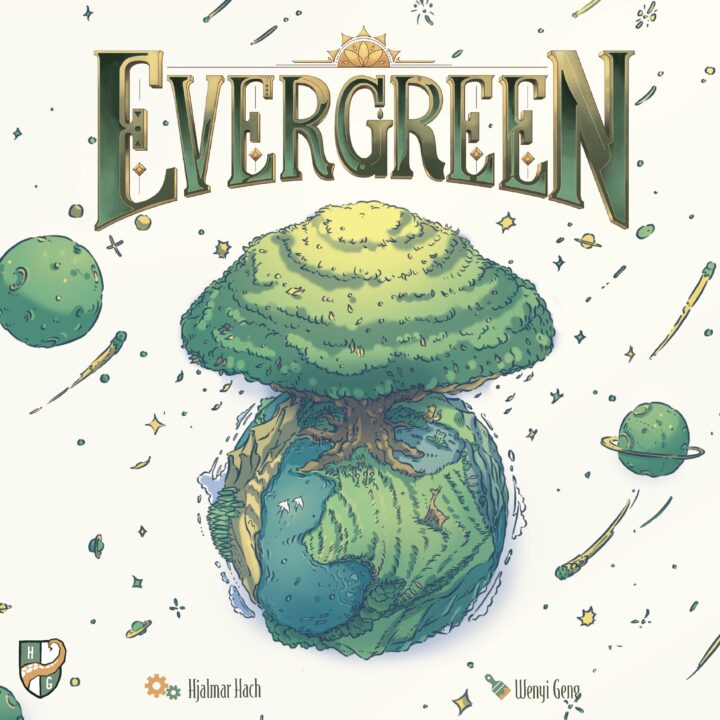

Picture this: my friends and I, gathered around a table cluttered with snacks and caffeinated drinks, ready to try a new board game. We had heard whispers about a game where you grow lush forests, compete for a sunny spot, and maybe—just maybe—out-shrub your rivals. Well, we put Evergreen through its paces, and if you want to know if this game deserves a place in your collection (or if it’s best left to gather dust like that old copy of Monopoly at your grandma’s), this review has you covered.
How It Plays
Setting up
First, everyone grabs their own planet board. Shuffle those biome cards like you mean it, deal out four to each player, and put the Sun Board in the middle. Plop all the funky tree and bush pieces within reach. Pretend you’re a gardener. You’re ready to go.
Gameplay
Each round, players pick a biome card from the four in front of them. This tells you where on your planet you can plant—trees, bushes, or sprouts. Each card also shows a special power, so there’s always a bit of thinking. After choosing, pass the leftover cards to the next person. Repeat until every card’s been picked. The Sun moves, casting light. The shadiest bits of your forest grow less, while the sunny spots boost your points. Think ahead or your trees will block themselves. Trust me, I’ve done it more times than I’d like to admit.
Winning the game
After all rounds, everyone counts up their points. Trees in the light, biggest forests, and little bonuses add up. Whoever has the most points grows a mighty victory tree in their soul—or just wins. The rest of us sulk but pretend to be happy. Quick to learn, tricky to master, and no actual gardening skills needed!
Want to know more? Read our extensive strategy guide for Evergreen.
Gameplay Flow and Rules Clarity: How Smooth is Evergreen?
First, let me admit something: I once learned the rules to Monopoly from my cousin and spent three rounds thinking you had to pay $500 every time you rolled doubles. So my standards for rules clarity are basically ‘don’t make me want to eat the instruction booklet.’ Evergreen impressed me right from the start, mainly because I only had to re-read one line twice. That’s saying something!
The rulebook lays out everything from tree placement to sunlight scoring with handy pictures and examples. Even my friend Dave, who gets lost setting up Jenga, picked up the basics after one round. There’s not a lot of fussy exceptions or ‘gotchas.’ Evergreen lets you focus on strategy instead of flipping through the rules every five minutes. I only got confused once, and that was when I tried to explain the scoring out loud, but I blame my own excitement for that, not the rules.
Turns move like clockwork—draw a card, place a plant or tree, collect sunlight, repeat. Nobody sits there bored while someone else overthinks for half an hour. It’s almost relaxing! The flow keeps everyone engaged without feeling rushed. No player ever asked ‘Is it my turn?’ because the pace just… works. You might even get to finish a game before someone’s pizza burns in the oven.
If you’re the type who hates arguing over what counts as an ‘adjacent’ space, Evergreen will be your new best friend. Ready to see how cutthroat the tree-growing business gets? Next up: Player interaction and competition level. Grab your watering cans, because things are about to get wild!
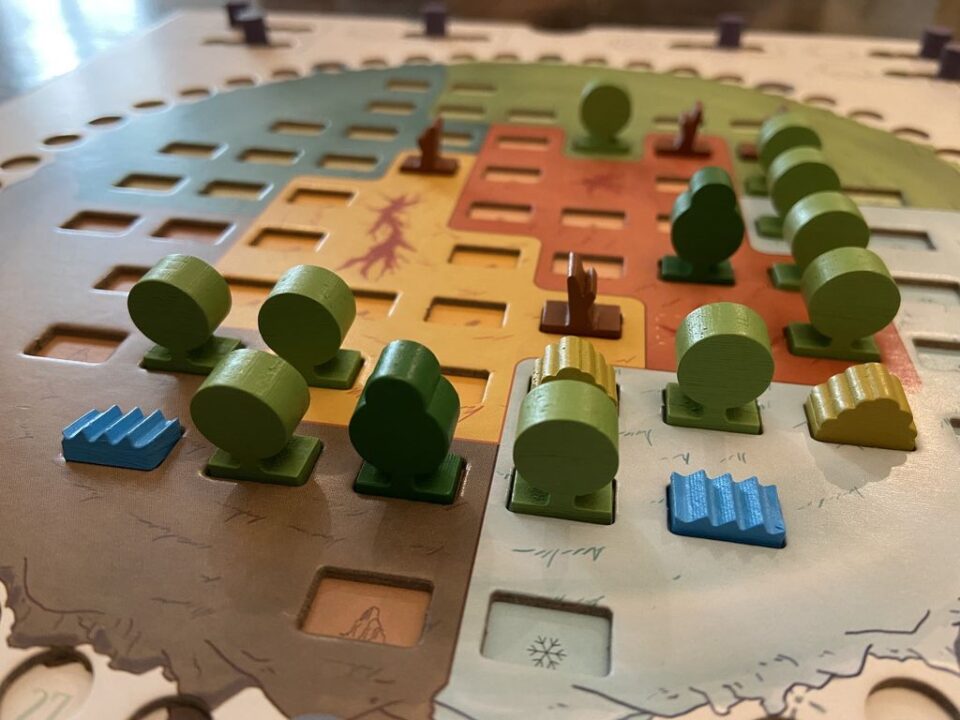
Evergreen: How Much Elbow-Room Do You Get?
If you ever wanted to know what it is like to plant trees and then have your friend barge in with a giant oak, Evergreen is the game for you. In my last game, I was happily growing my forest, minding my own mossy business, when Dave decided his forest needed to be right next to mine. I swear I heard my trees groan in disappointment.
Evergreen is not one of those “take-that-and-take-this-too” games, but player interaction still matters. Each round, we draft cards from a shared pool, and you really have to watch what other players might grab. Want a sun-filled meadow? Too bad, Emma scooped up that card before you could say photosynthesis. There’s no direct sabotage, but passive-aggressive blocking? Oh yes. Your choice can leave someone else scrambling for plan B, and it feels oddly satisfying.
Competition level stays strong, but never gets nasty. I appreciate that Evergreen lets you focus on your own leafy plans while quietly nudging your rivals off their perfect grove. It’s the board game version of passive-aggressive gardening, and I am here for it. Even with four players, things never felt chaotic, but you always keep an eye on your neighbors. Just when you think you have the best forest, someone else finds a sneaky combo and sprouts ahead of you.
Next up, I’ll break down whether Evergreen rewards cunning gardeners or just those lucky enough to pull the best cards – so prepare your trowel and your dice-hating heart!
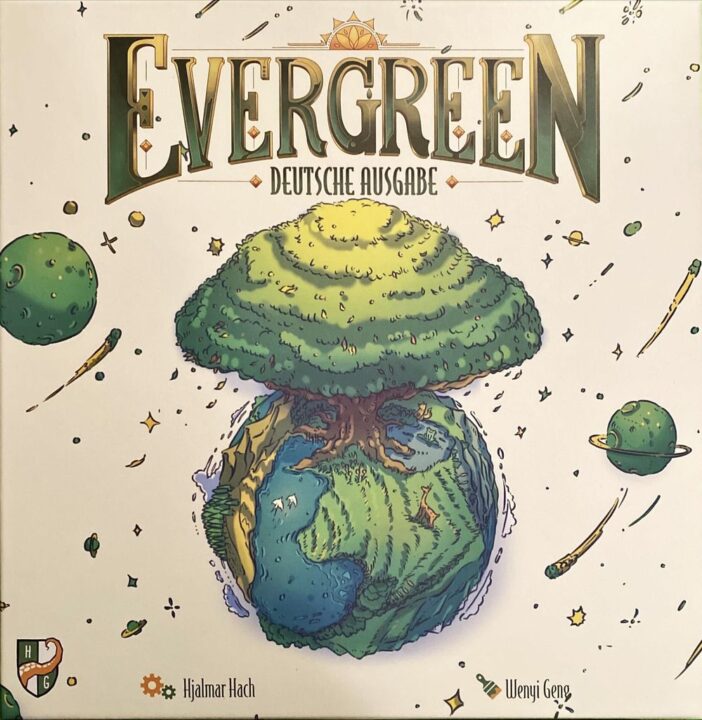
Luck vs. Strategy in Evergreen — Who’s Really in Control?
If you’ve ever lost a board game to pure chance and then had to watch your smug cousin do her victory dance, you know how much luck can sting. Thankfully, Evergreen is not one of those games where the dice decide your fate. Strategy takes the wheel here, and luck just sits quietly in the back seat.
Each turn, you select cards and plan your actions with a nice chunk of information in hand. You’ll know what’s coming up, and can actually make a plan without worrying about the game flipping the table on you. The randomness comes from the way draft cards appear each round, but even there, you have choices. I never felt stuck because of bad luck — if I made a mess, it was my own spectacular fault.
I played Evergreen three times now, and each game felt different, but not because of random events. It’s all about reading the other players, watching their tree placements, and adjusting your garden-growing masterplan. No sneaky dice rolls, no weird surprises. Maybe you’ll get the card you need, maybe not, but you’ll always see it coming.
Sure, there’s a sprinkle of luck, just enough to keep things fresh and stop it feeling like chess-with-trees. But mostly, Evergreen lets you win or lose based on your brain, not your lucky socks.
Now, before my cardboard forest wilts, let’s talk about something that makes Evergreen pop on the table: the drool-worthy artwork and juicy component quality up next!
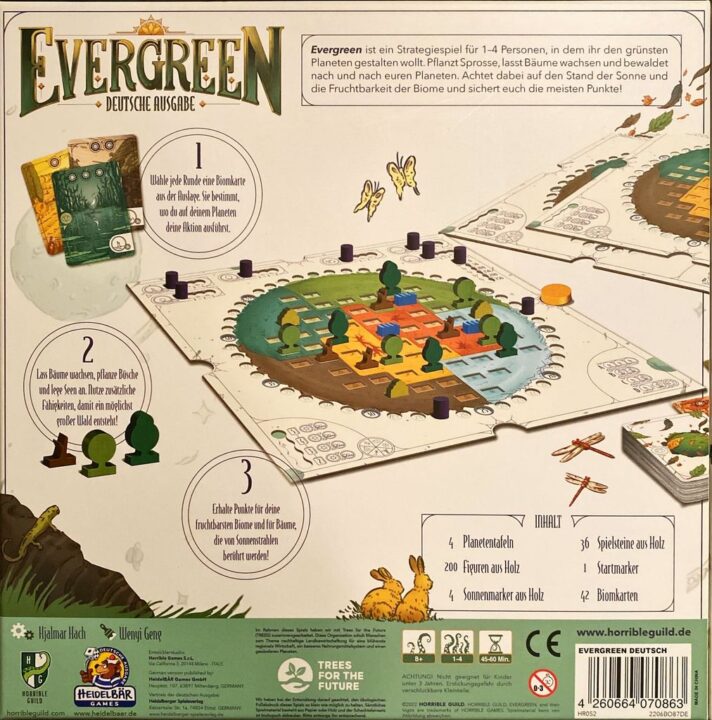
Evergreen’s Eye Candy: Artwork & Component Quality
Let me start by saying, Evergreen is not just a board game—it’s a table decoration. My friend Annie actually stopped by during our game night, took one look at the board, and asked if we were building a tiny park for hamsters. The art pops! Every tree, bush, and sprout card feels lush and inviting, like my inner gardener finally got to run wild without killing any real plants.
The components get two very enthusiastic green thumbs up. The wooden trees and shrubs are chunky and satisfying to place. They don’t topple over, even after my clumsy friend Dave sneezed right into the board. The sun marker is a bright, shiny disc that my cat tried to steal at least twice. This isn’t the cheap, thin cardboard you sometimes get in nature-inspired games—Evergreen feels premium, even before you’ve scored a single point.
I also love the player boards. The illustrations are clear, the iconography is crystal, and there’s a pleasing tactile “snap” when dropping down a tree. It’s all sturdy enough to handle a few accidental drink spills (don’t ask). Plus, every piece fits perfectly back into the box insert. If you’re an organization nerd like me, this will give you a warm fuzzy feeling inside.
Would I recommend Evergreen for its looks and feel? You bet your cardboard acorns I would! Put it on your shelf and watch your board game group swoon.
Conclusion
Evergreen sprouted a special spot on my shelf after a few game nights. With clear rules and smart, competitive play, it kept my friends busy arguing (in a fun way!) about the best place for a tree. Sure, there’s a bit of luck when picking cards, but smart moves usually win the day. The lovely art and chunky plant pieces make the table pop. I wish there was more direct player action, but the peaceful pace still gives decent competition. If you like growing, puzzling, and planning—without too much chaos—Evergreen is worth planting in your collection. And with that, my review comes to a close. Now, if only my actual plants were this easy to take care of.