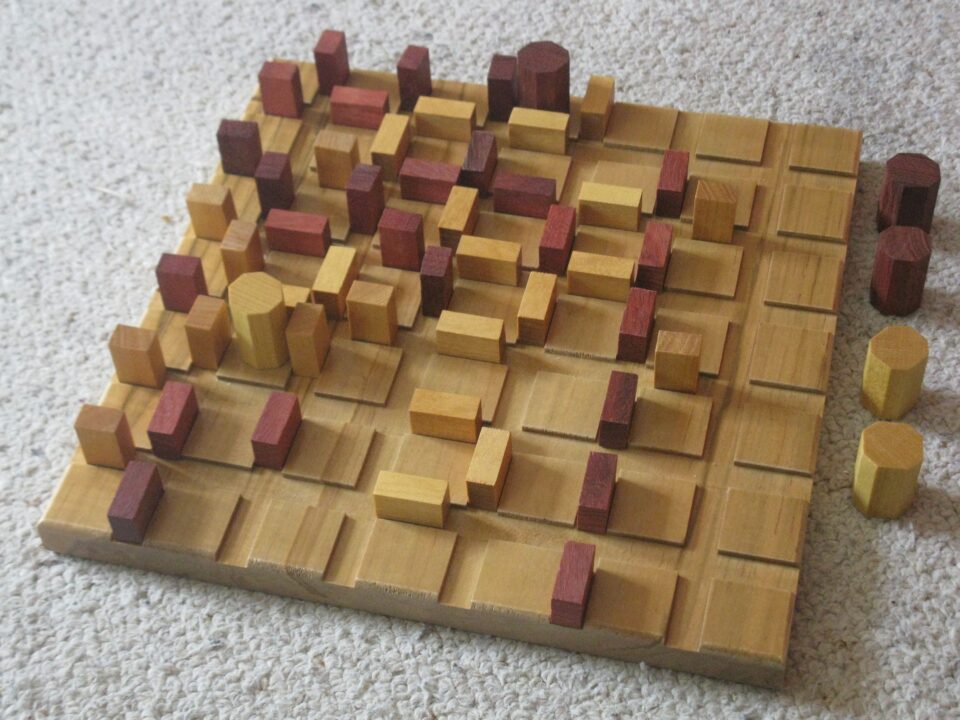

Strap in for my review of Entrapment, the game that had my friends and me accusing each other of trickery faster than you can say “who moved my cheese?!” Whether you’re a board game buff or just tired of Monopoly meltdowns, I’m here to give you the honest truth about this sneaky, tile-shifting puzzler—warts, wonders, and all.
How It Plays
Setting up
First, lay out the modular board tiles in a big square. Each player picks a colored pawn and matching set of trap pieces. Put your pawn on your start spot. Everyone gets a hand of movement cards. Shuffle the trap tokens nearby—you’re ready to go!
Gameplay
On your turn, you play a movement card to move your pawn. Sneaky players use trap tiles to block paths or force rivals into traps. You can swap tiles too, which really messes up everyone’s plans. Be careful, because every move you make leaves an opening for someone else to outfox you!
Winning the game
The first player to cross the board and escape past all traps wins! If your pawn gets caught too many times, you might fall behind, so don’t just rush ahead. Plan your moves, watch your friends’ evil grins, and try not to shout when someone turns your perfect path into a pitfall.
Want to know more? Read our extensive strategy guide for Entrapment.
Game Mechanics and Player Interaction in Entrapment
If you ever wanted to blame your loss on your friends, Entrapment gives you plenty of reasons. The game’s core mechanic is simple: you set traps, trick your rivals, and grin as you watch them tumble right into your evil plans. I once tried to act innocent and ended up trapping myself—my buddies still call me “trap happy Jamie.” You’ll use tiles to build the ever-twisting maze, but here’s the catch (pun totally intended): you can swap, flip, or even remove those tiles, turning the board into a puzzle of doom. It’s like chess, but if chess let you hide banana peels under the knights.
Player interaction is where Entrapment shines. You are never just staring at your own little corner. You have to watch every move your friends make, guess their intentions, and sometimes team up just so you can backstab someone else. I love games where a good plan can outsmart dumb luck, and Entrapment really rewards clever play. If you’re outwitted, it’s because someone used their brain, not because dice rolled against you. That said, it’s not all roses—if you fall behind, it can be tricky to catch up, especially if your group is ruthless (mine is).
The shifting tiles keep everyone on their toes, but sometimes the player who gets ganged up on might feel a bit picked on. So, pick your game night group with care!
Next up, let’s find out if Entrapment keeps things fresh and how long you’ll be trapped at the table—replay value and session length await!
Replay Value & Game Session Length: Will Entrapment Stay on the Table?
Let’s talk replay value. Entrapment keeps things spicy thanks to the way every session gets a new mixture of traps, shifting tiles, and unpredictable players. At our table, no two games ever feel the same. One time, my buddy Karl went from hero to zero in two moves flat—just pure chaos. The ever-changing board keeps us guessing. You can try different trap strategies each game, which means you’re not locked into the same old moves. Entrapment really rewards folks who want to experiment and mess with their friends.
Game session length is something you’ll want to know before you break this one out. A game of Entrapment usually takes about 45 minutes to an hour with three or four people. It can run longer if you all play as slowly as my cousin Janice (she analyzes every single trap like it’s the fate of the universe). But for most groups, it’s punchy and doesn’t drag. We even cranked out two back-to-back games in one night—no complaints except my snack bowl didn’t survive.
For families, quick thinkers, and board game hoarders, Entrapment sits right in the sweet spot: not too short, not too long, and always a little different. Plus, you don’t need to block off your whole evening to play. Your snack budget might take a hit from repeated rematches, though, because Entrapment does make you want to keep going.
Next up: I’ve got opinions on Entrapment’s chunks of cardboard and eye-candy factor that’ll make or break your shelf appeal—stay tuned for the shiny details!
Entrapment’s Components and Visual Design: Looks and Feels on the Table
Let’s talk about the stuff you actually touch and look at when you play Entrapment. You know how some games look fantastic on the shelf, but when you open the box, it feels like a cheap cereal prize? Entrapment thankfully avoids that fate. The tiles are thick enough to flip dramatically (even if I did once send one flying across the living room—my cat thought it was her new toy). They don’t bend or warp easily, which is handy since you’ll be shifting them around a lot as you try to trap your friends.
The color scheme is bright but not blinding. Each player’s pieces stand out without looking like a crime scene. Even my color-blind friend Mike had no trouble telling his traps from mine, which is a big win. The rulebook uses big fonts, lots of pictures, and—thank goodness—examples that make sense. I only had to read the setup instructions three times instead of my usual six, so that’s progress!
The game box closes well, and there’s enough space for everything to fit back inside, which means you won’t be hunting for baggies or swearing at the insert. The tile art looks a bit basic compared to some glossier games, but function beats fluff here. If you play board games for the joy of moving chunky pieces and being able to tell what’s actually going on, Entrapment delivers.
Speaking of function over fluff, next I’ll tackle the burning question: Is Entrapment more brain-burning strategy or luck-driven chaos? Stay tuned as we spring that trap next!
Entrapment’s Dance: Outwitting Luck with Strategy
If you ever flipped a coin and lost your entire candy stash to your little cousin, you know the sting of pure luck. So when I sat down to play Entrapment with my friends (and, honestly, my rival Tim who cheats at everything), I braced for dice rolls or card draws that punish planners and favor couch potatoes. But Entrapment surprised me. Some luck is there—mainly in how the board tiles get placed each round, but not so much that you want to flip the table and order pizza instead.
The main juice in Entrapment is in thinking a turn or three ahead. You set traps, you guess what your opponents might do, and if you’re me, you occasionally set a trap and then forget about it. Strategy wins here. Sure, every now and then, the tile you want just slips out of reach like a slippery soap bar. But unlike Monopoly (the king of dice-induced rage), your choices matter almost every round. I’ve seen cautious players win just as often as wild ones who throw traps around like they’re Oprah giving out cars.
Don’t get me wrong—if you hate any setback caused by chance, Entrapment isn’t made of cold, perfect logic. But the balance lands well: you need a plan, but you also need to react when the board throws you a banana peel. Overall, for my game group and even Tim (who only sulked once), I give Entrapment a solid recommendation. You’ll win by outthinking, not just out-lucking. And that, my friends, is worth your game night.
Conclusion
If you love games where you can outsmart your friends without feeling like you’re bashing your head against a wall of dice rolls, Entrapment delivers. It’s got solid components, the rules make sense, and there’s enough replay value to keep your game shelf happy. Sure, if you mess up early, catching up is rougher than a hedgehog’s back, but the strategic tile sliding and grudge-filled player moments make up for it. I had a blast playing it (even when I lost by falling into my own trap—don’t ask). This wraps up my review—happy trapping!