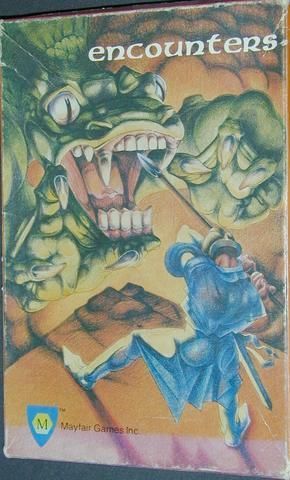

Welcome to my review of Encounters, the game that turned my weekly board game night into a wild rolling, dice-chucking, and card-slapping adventure. If you’ve ever wanted to battle monsters, outwit your friends, and then blame the dice when things go wrong, you might just be in the right place. I’ve roped in my usual group of highly competitive (and snack-obsessed) pals for a thorough test, so buckle up—here’s the honest scoop, from artwork to arguments over the final score!
How It Plays
Setting Up
First, give everyone a character board and matching token. Shuffle the encounter cards and deal out the starting hand. Put the board in the middle. Set up takes about as long as finding where you put the rulebook last time—so, not too long if you’re organized, and a bit of an adventure if you’re like me!
Gameplay
Players take turns flipping over encounter cards and reacting to whatever weird, wild, or annoying surprise pops up. On your turn, you choose actions, use special abilities, and sometimes mess up your friends with clever plays (or just questionable judgement). There’s a pinch of luck, but I found you can usually plan ahead—unless Steve starts cackling and throws a curveball.
Winning the Game
The winner is the first player to collect the set amount of victory points, which you earn by beating challenges and surviving encounters. If you’re last, just remember: it’s about the journey… unless you really like winning, in which case, good luck next time!
Want to know more? Read our extensive strategy guide for Encounters.
Fairness and Fierce Fun: How Encounters Balances its Mechanics
If you’ve spent a game night at my place, you know I hate when chance rules everything. I didn’t clear off my kitchen table and bribe my friends with pizza just to get wiped out by a card draw. So I always look for games that balance luck and skill. Encounters mostly gets it right here—with a few stumbles worth mentioning.
Let’s talk about mechanics. Encounters has a mix of tactical card play, clever resource management, and a dash of unpredictability. On your turn, you pick from a hand of actions, each one giving you ways to outsmart your rivals (or, if you’re like my brother, to spectacularly sabotage yourself). The good part: you’re never totally at the mercy of the luck gods. Except when you are. There’s still a bit of randomness with event cards and random elements, but most outcomes feel fair because you can plan for things or adapt at least a little. My group agreed it’s much better than those games where the winner is just the person rolling highest—no broken dice-throwing here.
What I liked most is that, even when someone gets ahead, Encounters has clever catch-up mechanics. Nobody felt totally out of it after a rotten round. On the flip side, when you lose, you can usually blame your choices—unless you just got unlucky, which does happen, but not often. I wish the randomness was trimmed a bit more, but it doesn’t spoil the fun.
So, if you like your games fair but interesting, Encounters mostly gets it right. Next up: let’s talk about how this game gets you and your friends talking, competing, and (occasionally) shouting, in the section on Player Interaction and Engagement!
Player Interaction and Engagement in Encounters
I’ve played my fair share of board games where player interaction is about as lively as a loaf of stale bread. Thankfully, Encounters shakes things up. If you like staring down your friends and plotting your next move while they squirm, this game delivers. It’s not just about what you do with your cards, but how you mess with your buddies. I spent half the game angling for alliances and the other half breaking them because, let’s face it, trust is as fragile in Encounters as my ability to avoid second helpings of cake.
In one session, my friend Tom was leading by a mile (as he loves to remind everyone). Suddenly, Sara and I teamed up thanks to an event card that forced temporary cooperation. Tom never saw it coming, and let’s just say his comeback attempts were as successful as my attempts at yoga—painful and awkward. This type of forced interaction keeps everyone invested, even if you’re lagging behind. Nobody zones out while waiting for their turn because you’re often involved, planning or reacting to every play.
Another neat trick Encounters pulls is how actions ripple through the group. One bold move can set off a chain of chaos, laughter, and occasional betrayal (all in the spirit of fun, of course). Even the shyest player at our table got sucked into a heated negotiation over resources, and she usually spends most games checking her phone. That’s a win in my book.
If you’re someone who loves engaging with others, plotting, and the odd bit of revenge, Encounters has you covered. Now, if you’re wondering whether all this chaos keeps things fresh in future plays, you’ll want to stick around for my thoughts on replay value and variability next. Spoiler: variety might just be the secret sauce.
Replay Value and Variability in Encounters: Same Game Twice? Not Likely!
Let me be blunt: I hate when a board game feels like reheated leftovers. Luckily, Encounters serves up a fresh dish every single time. Even my buddy Tim (who tries to memorize every card in existence) was surprised by how unpredictable this game can be. From the first shuffle to the last gasp at victory, Encounters keeps you guessing.
The variety comes from the huge stack of encounter cards, each one shaking up the strategy. No two sessions feel the same. There’s always a new villain, obstacle, or twist. On our third play, I got chased around the board by a mutant goose—don’t ask. But it’s stuff like that which makes me want to play again instead of scrolling on my phone while waiting my turn.
We also tried swapping in different characters (I still maintain the Pirate is OP, but my friends claim it’s because I made him talk like a Muppet). Each character feels unique enough to make you think about your moves, and the way the encounters change every game keeps it spicy. Even after five rounds, my group found new combos and surprises. If you’re the kind of person who worries about a game getting stale, Encounters is that tub of popcorn where every bite’s somehow different.
But (and I know you love a good ‘but’), the one thing I wish they did is toss in just a few more wild cards or events. After lots of plays, you might start seeing repeats, but honestly, by then, you’ll be too busy plotting revenge on your friends to care.
Next up: I’ll talk about Encounters’ artwork and components—and yes, there will be glitter.
Encounters: A Feast for the Eyes? Digging Into Artwork & Bits
First thing’s first—when I pulled Encounters out of the box, my cat thought I’d finally bought him the world’s fanciest cardboard. I don’t blame him. The artwork is stunning, folks. Each card bursts with color, and even my colorblind friend Bill (who calls everything either “blue” or “not blue”) was impressed. Characters have loads of personality. There’s a goblin in a pink tutu. I respect that.
The board? Sharp and clean. The icons actually make sense, which is more than I can say about my last attempt at assembling IKEA furniture. You’ll find yourself pausing now and then just to enjoy the silly details in the illustrations. I caught myself giggling at a mutant chicken with sunglasses. This is a game that knows not to take itself too seriously, and I love it.
Component quality? Solid for the price. The cards have a nice linen finish and shuffle well. Nothing worse than cards that stick together like wet pancakes. The tokens feel weighty, almost like casino tokens if you squint and pretend you’re richer than you are. The only flaw: the box insert could be better. If you sneeze, chaos erupts inside the box. I now store the game sideways, and it’s become a mini disaster movie every time I open it. You win some, you lose some.
So, do I recommend Encounters based on art and bits? Heck yes. If you like games that look as good as they play, and you can forgive a wild token party in the box, this is for you.
Conclusion
If you want a game that’s easy to learn, looks fantastic, and keeps everyone at the table yelling, chuckling, and occasionally blaming the dice for their miserable luck, Encounters fits the bill. Yes, there’s a bit more luck than I’d like, but clever play still wins out most nights. The artwork and components feel top-notch, and the replay value’s solid, even if you see the odd repeat. My group keeps asking to play again—that’s always a good sign. Just watch out for the box lid (trust me, it bites). If you like a fun, slightly wild game that doesn’t take itself too seriously, give Encounters a shot. That wraps up my review—may your victories be sweet and your dice rolls sweeter!