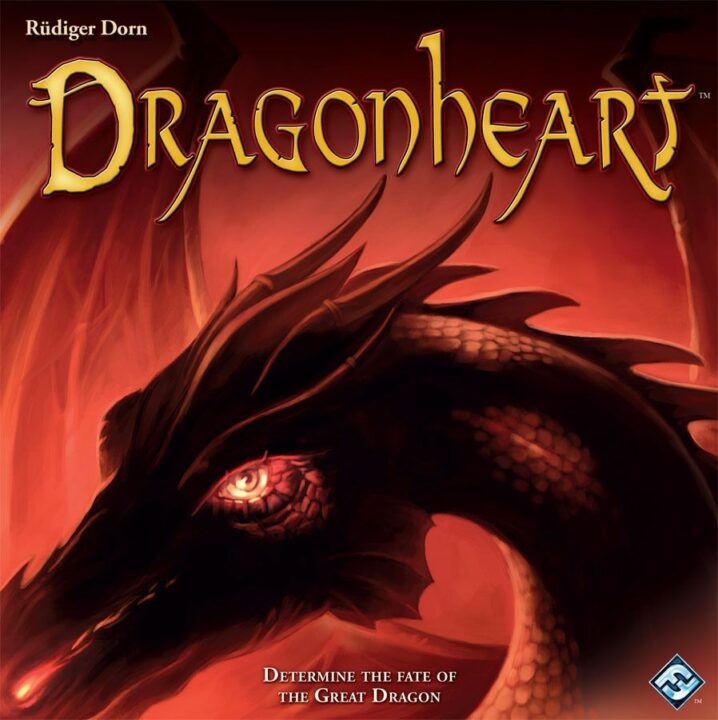

Welcome, fellow cardboard addicts! This is my review of Dragonheart, a two-player game that turns you into a clever dragon hunter—or a very unlucky knight. I’ve played more rounds of this than I care to admit, and my friends are still arguing about who’s the real card shark. Want to know if it’s all fire and glory, or if you’ll just get burned? Grab your finest plastic sword and read on!
How It Plays
Setting up
First, lay out the Dragonheart board on your table. Each player grabs a deck of cards matching their color. Shuffle your deck and draw five cards to form your starting hand. Place the dragon and statue tokens on their spots, and you’re ready to roar.
Gameplay
On your turn, place one or more matching cards on the board, following the card spot rules. You might play a dragon, a knight, or even a sneaky dwarf. You’ll trigger effects and sometimes swoop in to grab cards played by your opponent. Don’t forget to refill your hand back to five cards after each turn. Turns zip by faster than a dragon chasing a sheep!
Winning the Game
Keep playing cards, snatching points, and blocking your rival. The game ends when any player’s deck runs out. Count the points on the cards you’ve scored. Whoever has the highest total wins. If you lost, just claim your dragon card was upside-down or blame the dog. It’s tradition!
Want to know more? Read our extensive strategy guide for Dragonheart.
Gameplay Flow & Rule Clarity in Dragonheart: As Smooth as a Dragon’s Scale
Let me tell you, Dragonheart surprised me the first time I cracked open the box with my friend Jess. The rules are only a handful of pages, and for once, we didn’t need to have a forty-minute debate about what a card meant! The game spells things out in a way that even my mate Dave, who once confused a pawn for a dice, could follow along. Bless him.
Every move in Dragonheart feels fast and snappy. Each turn, you play one or more cards face up, matching spots on the board, which represent classics like dragons, dragonslayers, and of course – that one greedy dwarf. The best bit? You’re always watching the other player, trying to snag their cards or set traps. There’s none of that analysis paralysis that makes you want to grab snacks just to have something to do. In fact, every time I’ve played, the game zipped along. You can finish a whole match in about 20 minutes or so. That’s just enough time to feel smart, but not enough to get bored.
Clarity is king here. The iconography is easy to pick up. After one round, even the newcomers usually get the hang of it. The player aid is genuinely helpful—nobody’s flipping through the rules while the table slowly grows hostile, which is a win in my books.
If you want a game that doesn’t need a rules lawyer at the table, Dragonheart is a solid pick. Up next, let’s see if Dragonheart’s scales tip toward strategy or if luck crashes the party like an uninvited fire-breathing lizard.
Strategy or Luck? Where Dragonheart Breathes Fire
Let me tell you, when I first pulled out Dragonheart on my kitchen table, I wondered if I’d need wizard-level chess skills or just a horseshoe in my pocket. Some games claim they’re all brains, then hand you a random event that ruins your perfectly-laid schemes. So, where does Dragonheart land? I’d say it’s more like a clever dance—if you mess up your steps, you’ll end up in the dragon’s dinner. But, don’t be fooled: luck peeks its scaly little head in at just the right (or wrong) time.
The core of Dragonheart’s gameplay is about playing cards in clever combos. You watch what your opponent picks, plot a sneaky move, and try to guess their next step. There’s tension. There’s a bit of ‘Aha!’ But here’s the deal: your hand is always at the mercy of the card draw gods. Sometimes you stare at five cards and none of them fit the spot you want. At those moments, you can’t do much but hope your opponent also has a dud hand—or that they completely miss your next sneaky play.
In my games, the better player usually wins, but I’ve seen a total newbie pull off a fluke just because they drew the perfect dragon-slaying card at the perfect time. Strategy matters a lot, but fate definitely has a seat at the table, probably eating nachos. Dragonheart’s balance isn’t perfect, but it’s fair enough for friendly rivalries and a quick rematch if luck burns you.
And now, since you can’t play cards if you’re too dazzled by how they look, let’s head to the next section and ogle that card art and the component bling!
Eye-Candy or Cardboard Catastrophe? The Art and Quality of Dragonheart
The first thing I noticed when unboxing Dragonheart wasn’t the rules—it was the cards. There’s a dragon staring me down, looking like it’s ready to singe my eyebrows if I botched a move. Each card is like a mini art show, with bright, fantasy-themed illustrations that actually help set the mood. I mean, if you’re going to lose (which I did, quite spectacularly), at least you can admire the artwork while you spiral into defeat.
The component quality really surprised me. The cards feel sturdy—no joke, I dropped one in my coffee, and it lived to play another round. The board is small but mighty, and it fits the card piles perfectly. Dragonheart doesn’t come with a mountain of tokens or fiddly pieces, so if you’re tired of chasing escapee components under the table, this game is a blessing. You just get cards, a board, and some dragon tokens that feel satisfying to win (or, in my case, lose and then mutter about loudly).
I do wish the dragon tokens were a bit fancier—maybe something 3D or shiny—but honestly, my wallet appreciated the budget-friendliness. The box insert is… well, it exists. I’d like a bit more organization for travel, but considering the price, my complaints are nitpicking.
If you think pretty artwork and solid cards are enough to charm you, you won’t be disappointed here. Next, let’s flap our wings over to talk about replay value and player interaction—because even a pretty dragon needs friends…or rivals!
Replay Value and Player Interaction: Why Dragonheart Keeps Hitting Our Table
I’ll say it straight up: replay value matters. You want a game that begs you to play it again, right? Dragonheart is that kind of game for my group. After our first match (which I lost by a margin so narrow it would make a dragon sweat), we put the cards back in the deck and said, “One more!” several times. It’s quick enough that you never feel bogged down, and it never wears out its welcome.
Where Dragonheart really shines is player interaction. It’s a proper duel, card-flinging and nerve-testing from start to finish. You’re constantly watching your opponent, muttering under your breath as they steal a big punt of points, and plotting your next sneaky move. Every play matters, and when you bluff or lure your friend into a bad card drop, it feels amazing. There’s no hiding in your own corner. You are in your opponent’s face (in a friendly way, unless you play with my cousin Dave, who takes it personal for about 10 minutes).
The game’s back-and-forth keeps everyone engaged. I never found myself zoning out, which I do in games with little direct player action. Here, you care what your opponent does. You might even yell a bit. Or snort-laugh when someone sets you up for a big dragon snatch.
Do I recommend Dragonheart? For two-player showdowns with a mix of brain and a little luck, yes. It’s simple to teach and quick to play. Just don’t blame me if you end up losing three times in a row and want revenge.
Conclusion
Alright, so that’s it for my look at Dragonheart. This game won me over with its quick setup, easy rules, and head-to-head action. The art gets a thumbs up from my friends and me, and the card quality has survived pizza night with only minor grease marks. Sure, there’s some luck, but clever play wins most of the time. If you want a fast, tactical two-player game that doesn’t make you want to flip the table, Dragonheart is a solid pick. That’s a wrap on this review—I’ve got to go defend my winning streak now!