
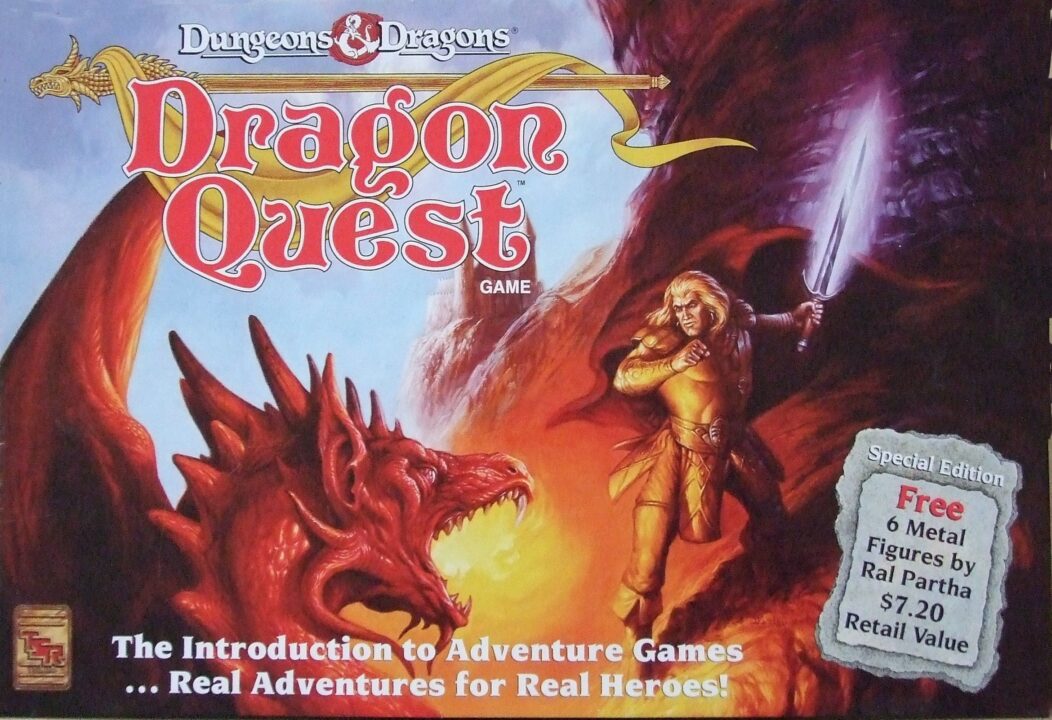
Welcome to my review of Dragon Quest, a cheerful adventure of monster fights, quests, growing heroes, and just enough dice luck to keep us sweating. The quests kept things fresh, while character growth gave us good choices without burying us in fiddly rules. Luck sometimes caused a groan or two, but it rarely stole the whole game. So, grab your sword, pack a snack, and let’s see if this quest earns a spot on your shelf.
How It Plays
Setting up
Place the game board in the middle of the table. Each player chooses a hero, takes their starting cards and tokens, then places their figure in the starting town. Shuffle the quest, monster and treasure decks, and put them within easy reach. Keep the dice handy. You will roll them often, so they may try to escape.
Gameplay
On your turn, move your hero, explore a location or begin a quest. You can fight monsters, collect treasure, buy gear and use skills to help your party. Combat uses dice, cards and your hero’s abilities. Work together when trouble appears, because brave plans beat random screaming most of the time. Complete quests to gain rewards, improve your hero and unlock tougher challenges.
Winning the game
Players win by completing the main quest and defeating the final dragon or boss. The group must meet the quest goals before the game ends. If the heroes fail too many quests or lose the final battle, the dragon wins and everyone goes home sadly.
Want to know more? Read our extensive strategy guide for Dragon Quest.
Dragon Quest Combat: Monster Battles That Feel Fair and Fun
In Dragon Quest, battles feel simple at first, but they hide some nice choices. The game gives each hero a clear role. One hero hits hard, another heals, and a third can guard or use a handy spell. That setup made our turns brisk without turning into a button-mashing mess. Even my friend who treats rules like suggestions had to think before swinging wildly.
Monster battles also reward teamwork more than blind luck. You can see enemy patterns and plan around them. A beast may guard its weak side while a witch charges a nasty spell. Players must decide whether to attack now or spend a turn setting up a safer hit. I liked this best because clever play often beats a lucky roll. Still, the dice can wobble a fight. A poor roll can sting, but smart choices usually rescue the team.
Tough Fights Without Cheap Tricks
The monster list stays through the game. Small foes teach the basics while larger beasts test timing and team trust. The game could explain some enemy powers more clearly. I missed one effect twice and blamed the dice like a champ. Still, combat feels rewarding when everyone joins the plan. Next, Quest variety and story await beyond the old gate.
Dragon Quest Quest Variety and Story Review
Quest Variety
Dragon Quest gives its adventure a storybook feel, with bright towns, odd heroes, and villains ready for a speech.
The story moves through short chapters. Each quest gives a clear reason to travel, from helping a nervous mayor to finding a lost heirloom. The goals feel different enough to stop the campaign becoming one long delivery job. Light writing still gives the party a reason to care.
Quest variety stands out because tasks ask for more than reaching a marked space. One mission has us choose which village needs help first. Another asks us to gather clues from characters. These choices add sparks of ownership.
Story & Setting
I liked how side quests gave the setting extra color without forcing a detour. A baker with a secret, a child chasing a paper dragon, and a tired guard felt more memorable than faceless errands. That made each session feel personal.
Still, the main story sometimes moves too quickly. A few twists arrive before they get room to breathe, and one late villain felt more silly than scary. Some side quests repeat the same fetch shape with new names. I wanted more branching endings or choices that changed later chapters.
Overall, Dragon Quest tells a warm tale with varied quests. The next section checks Character growth and gear, showing whether our heroes earn more than fancy hats during the next very long game night at my own table.
Dragon Quest Character Growth and Gear Review
My mage started as a shaky spell-slinger who folded faster than a cheap deck of cards.
Simple Growth That Still Feels Good
The leveling system keeps things easy to follow. Characters gain new skills as they grow, so each level feels useful instead of feeling like a number going up for no reason. I liked seeing each hero develop a role without needing a thick rulebook or a spreadsheet.
That simple design does limit choice, though. Players who love building strange, custom heroes may find the paths a bit narrow. You cannot always shape a character exactly how you want. The game gives you a strong road, but it does not offer many side streets.
Gear With Real Choices
New weapons, armor, and trinkets add a nice layer of planning. Better gear clearly helps, but upgrades cost enough that we had to think before spending our hard-earned gold. I often faced a choice between buying sturdy armor now or saving for a powerful staff later. Those moments gave the shop more bite than a sleepy list of items.
The gear system also stays tidy. Each item has a clear job, and the icons make comparisons quick. Still, some purchases feel like obvious upgrades rather than exciting decisions. I wanted a few more odd items with clever effects, especially after several sessions.
Next, we will see whether luck, balance, and replayability can keep Dragon Quest fresh after the shiny new gear loses its sparkle.
Dragon Quest Luck, Balance, and Replayability Review
After several evenings with friends, I noticed that Dragon Quest handles luck with a fairly steady hand. Dice rolls can change a turn, but they rarely decide the whole game. A bad result stings, yet smart planning can soften the blow. That matters because nothing feels worse than losing after making every sensible choice.
Luck That Adds Tension
Random events keep repeat plays fresh. One session may hand us a strange ally, while another sends us toward a risky shortcut. These moments create stories we still laugh about. My friend Ben once drew the worst possible event and then used it to set up a brilliant comeback. The table cheered; I pretended not to be jealous.
Fair Rules, Strong Replay Value
Dragon Quest gives players enough control to make each attempt feel earned. The game does not bury newcomers under hidden bonuses or punish one unlucky round forever. That balance helps groups with mixed skill levels, though a few random swings can still feel sharp near the finish. The replay value comes from changing paths, group choices, and event timing.
Still, the luck may annoy players who want total control. A clever plan can collapse because of one poor draw, and the game offers no campaign reset button. I would enjoy a few more ways to trade, reroll, or recover from disaster. Those tools could help without turning every result into a safe bet.
For casual groups and families, I recommend Dragon Quest. Its luck creates drama without making skill pointless, and each session feels different enough to bring back snacks and arguments.
Conclusion
This concludes my review of Dragon Quest. After playing with friends, I found a cheerful adventure with fun battles, varied quests, useful character growth, and plenty of gear to fiddle with. Luck adds some spice, but it rarely feels unfair, which matters a lot to me. The story stays light and charming, though some quests can feel a bit samey after a while. Still, Dragon Quest offers a friendly, easy-to-learn game with enough choices to keep your party busy. I recommend it to fans of fantasy adventures who enjoy teamwork, simple tactics, and the odd monster bonk. It will not reinvent the genre, but it delivers a good quest without making you read a rulebook the size of a small dragon.