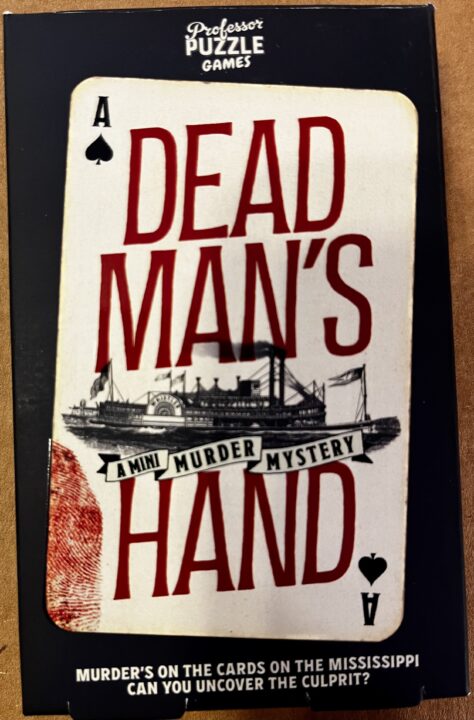

If you’ve ever wanted to argue with your friends while pretending you’re a sneaky outlaw in the Wild West (without having to actually rob a bank), then you’re in the right place. Welcome to my review of Dead Man’s Hand—a board game that promises quick action, sneaky moves, and the chance to yell “I’m not bluffing!” at your best mate while they glare across the table. After wrangling my group for several rounds (and only losing half my dignity), here’s what I found—warts, wonders, and all the wild card chaos in between.
How It Plays
Setting Up
Each player grabs a posse of miniatures and their matching cards. Place the scenery on the table to make your Wild West town. Set out the tokens, pick a scenario, and get your dice ready! Prepare for pretend cowboy voices. Yes, that part is not optional.
Gameplay
Players take turns activating their models. You can move, shoot, or do fancy stuff like duck behind a barrel. The deck of action cards keeps everyone guessing what will happen next. Sometimes you’ll try to outbluff your friends about your next move. Expect wild shootouts, risky decisions, and at least one person yelling, “Draw, partner!”
Winning the Game
Each scenario has its own win condition. Sometimes you need to wipe out the other gang, sometimes you just need to steal the loot and run away. If your posse is the first to meet the objective (or if you’re the last one standing), you win and earn bragging rights until next game night.
Want to know more? Read our extensive strategy guide for Dead Man’s Hand.
Gameplay Mechanics & Fairness in Dead Man’s Hand: Guts, Glory, and a Bit of Grit
If you’ve ever wanted to know if Dead Man’s Hand is more High Noon showdown or just a luck-flip with fake moustaches, look no further. I’m here, sleeves rolled up, recounting my nights at the table. First off, the mechanics in Dead Man’s Hand mix card-drawing, gun-fighting, and sneaky bluffing. The game throws you into the Wild West, with each player wrangling a gang—no horses needed, just plenty of table space and patience for your friend Pete, who over-thinks every turn.
Let’s talk fairness. I hate it when a game feels like it’s bullying the little guy, or if your victory depends more on the cards than your cleverness. Good news: Dead Man’s Hand mostly keeps things balanced. Each gang has unique strengths, but I never felt stuck with a dud. Skill and planning matter much more than just drawing the lucky ace—though yes, sometimes my mate Liz won a shootout by pulling an unlikely card and cackling louder than a saloon door on a windy day. The designers tried hard to keep luck in check with special actions and risks you can take. There’s a learning curve, but not that steep. One or two rounds in, and you’ll figure out when to be bold and when to duck.
So, if you want a game where you can outsmart your friends without feeling like you’re at the mercy of blind luck, Dead Man’s Hand ticks a lot of boxes. Next up, I’m pulling back the dusty curtain to see if this game’s theme and art style are more spaghetti western or canned beans.
Theme and Art Style in Dead Man’s Hand: A Western Worth Hollerin’ About
Dead Man’s Hand pulls you straight into an old-school spaghetti western, right up to your knees in tumbleweeds. The art style goes full John Wayne, with cards looking like they’ve been stepped on at a saloon brawl. Seriously, every illustration on the cards has this dust-and-gunpowder vibe that makes you want to yell, “Draw!” at your unsuspecting friends. It’s all sepia tones, splashes of faded color, and more cowboy hats than a Texas rodeo.
What I love most is how the game doesn’t take itself too seriously, but also doesn’t fall into cheesy clichés (at least, not the bad kind). The character cards are brimming with personality—one even looks suspiciously like my uncle Joe, minus the horse. The icons and text are clear and big, so you can spot ‘em from across the table, even if your eyes are as tired as you are after a late-night gaming session. None of that squinty “what does this say again?” stuff here. Set dressing matters, and Dead Man’s Hand feels like you’re actually at high noon, minus the sunburn and horseshoe accidents.
The game box has this awesome wanted-poster look, which genuinely got a whoop of approval from my group. If you want a theme that sticks, Dead Man’s Hand puts its boots up and stays a while. Next up, let’s see how much backstabbing (or teamwork) really happens in the wild and rowdy world of player interaction!
High-Stakes Standoffs: Player Interaction in Dead Man’s Hand
Let me tell you, player interaction in Dead Man’s Hand is the stuff spaghetti westerns are made of. You don’t just sit around waiting for your turn—oh no, you’re glaring at your friends (or frenemies), finger-twitching, ready to pull your next move. There’s a lot of back-and-forth, with a healthy dose of bluffing and “are you sure you want to do that?” thrown in. In one match, my buddy Pete formed a shaky alliance with me until he backstabbed me mid-round. I should have seen it coming—Pete can’t resist dramatic betrayals.
This game really keeps everyone on their toes. Every gunfight feels tense, and every round, you need to read the room like you’re an Old West detective. You can truly influence the outcome by outsmarting others, not just relying on lucky dice rolls. Sometimes, the table gets rowdy from all the jawing back and forth. Trash talk is basically required—if you’re not calling someone a yellow-bellied cheat at least once, are you even playing Dead Man’s Hand right?
The action is quick, and nobody zones out during someone else’s turn. You might be dodging bullets or plotting revenge at any moment. This keeps players—from the poker-faced strategist to the excitable novice—engaged till the last showdown. The game makes it feel personal and keeps you talking, scheming, and maybe plotting a little revenge after Pete’s next betrayal.
Get your hats ready, because next I’ll be wrangling up my thoughts on replayability and just how long you’ll want to keep this shootout going on your table.
Replayability and Game Length of Dead Man’s Hand
If you’re anything like me, a game that overstays its welcome is about as welcome as a cactus in a tumbleweed race. Thankfully, Dead Man’s Hand knows how to make an exit. Most of our sessions wrapped up in about 45 minutes, counting the time my friend Dave spent loudly accusing everyone at the table of cheating (he lost, if that wasn’t clear). The game’s pace feels snappy, never dragging its boots between turns. This really helps keep everyone in the action—and believe me, I need the action to stay awake after three cups of cowboy coffee.
Replayability is where Dead Man’s Hand tips its hat. Every game feels fresh, because the mix of cards and wild tactics from your friends lead to new stories every round. One night, I was two cards away from victory only to be bamboozled by a sneaky play that’ll go down in our group’s hall of shame. The luck of the draw does play a role, but it doesn’t rule the roost—you can plot and bluff your way into some mighty fine wins if you play smart.
The variety in scenarios and the chance to switch up your strategy mean that Dead Man’s Hand isn’t going to gather dust on your shelf. It’s the kind of game you’ll want to bring out for rematches, especially if you owe someone a friendly grudge from last time.
So, do I recommend it? Absolutely—unless you’re allergic to fun, or cowboys. Otherwise, saddle up and deal me in!
Conclusion
Well, partner, that about wraps up my review of Dead Man’s Hand. This game has all the style and bite you’d want from a wild west shootout. The rules are easy, the art pops, and you always feel like you’re in the thick of it—not just waiting for dice to save your bacon. There’s plenty of bluffing, a touch of chaos, and best of all, winning feels earned. Sure, there’s a whiff of luck now and then—like when my friend Derek somehow pulled three aces in a row (he swears he’s just talented)—but skill mostly wins the day. If you love games that spark stories and rivalries, you’ll want Dead Man’s Hand on your shelf. If you hate fun, maybe try tax forms instead. That’s it for this showdown, thanks for reading!