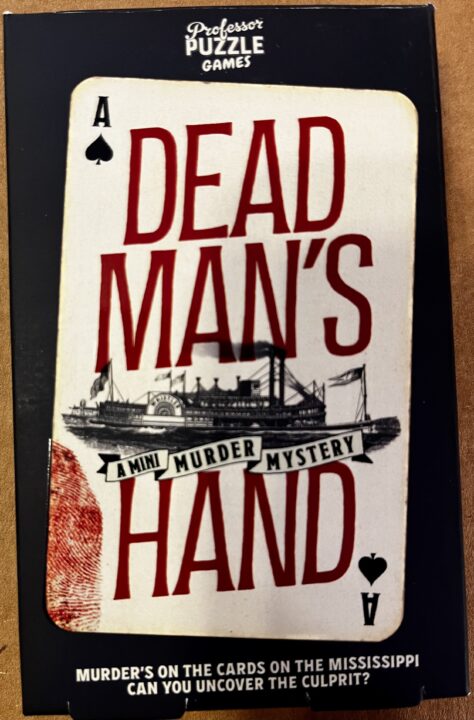

Howdy folks! If you’ve ever wanted to test your nerve in a shady saloon, bet your life on a poker draw, or just call your friends out for cheating, then saddle up—because today, I’m reviewing Dead Man’s Hand. My friends and I tried this wild west romp, and let me tell you, it’s one rootin’-tootin’ ride. But before you slap your cash on the table, let’s see if this game is worth your precious chips (and hours) or if it’s just snake oil in a fancy box.
How It Plays
Setting Up
First, crack that box open and toss the rulebook at your friend who thinks they know it all. Each player grabs a gang and sets up their figures and cards on the table, like a tiny Wild West movie. You’ll build a little town with scenery—mine always looks more like a yard sale, but hey, it works. Deal out the cards that decide who goes when. Everyone places their gang members around the board, ready to draw… cards, not pistols (yet).
Gameplay
Turns zip by fast. You pick cards from your deck to see who acts when—lower cards mean you go first. Each gang member moves, shoots, or takes cover. Rolling dice decides if you hit or miss. There’s a lot of ‘wait, my guy was behind that barrel!’ and blaming the dice. Actions like reloading, climbing, or just yelling at your friends for bad luck make each turn fun and a little nuts. You play through scenes that tell you what to do, so every match feels like a story.
Winning the Game
You win if your gang hits their objective before anyone else—sometimes that means mowing down rivals, sometimes grabbing loot and running. If your whole gang turns to worm food, you’re out. Last gang standing, or the one who finishes the job, takes home the bragging rights and the imaginary gold. Just watch out for wild dice rolls—they can end your outlaw career fast!
Want to know more? Read our extensive strategy guide for Dead Man’s Hand.
Game Balance and Fairness in Dead Man’s Hand: Is the Sheriff Always Right?
I love a good showdown at high noon. Any board game that lets me pretend I’m in a dusty saloon shouting, “This town ain’t big enough for the both of us!” grabs me from the start. But the real question isn’t how good I look in a cowboy hat—it’s whether everyone at the table stands a fair shot at winning.
With Dead Man’s Hand, I braced myself, expecting another wild ride of wild luck. I was pleasantly surprised—mostly. The game gives every player neat options to react and outthink their foes. Bluffing works, but isn’t everything. Smart planning and sharp card play feel rewarded. In my first game, my friend Dave pulled a sneaky move and I only barely wriggled out with my honor (and chips) intact. It felt earned, not random.
That said, not all is gold in them there hills. A bit too often, the tides turn with one or two cards that feel overpowered. If you draw the right gun or get lucky with a shootout, you can trample a carefully built plan. It made my pal Jasmine mutter more than once, “That wasn’t fair!” She had a point. While skill matters, luck can still decide the outcome, especially if your poker face is about as convincing as a cardboard cactus.
So, Dead Man’s Hand gets a tip of the hat for fairness most of the time, but watch out for those wild cards. Next up, I’ll tell you about the game’s theme and artwork—get ready to feast your eyes on some wild west wonders!
Grit, Guts, and Gorgeous Gloom: Theme and Artwork in Dead Man’s Hand
I’ll be honest, Dead Man’s Hand had me at the box cover. There’s a grim cowboy aiming his revolver straight at you, and you just know you’re in for a rough ride. The theme is pure Wild West—if you love dusty saloons, tense standoffs, and suspiciously sticky card tables, this game gets you right in the neckerchief. Everything screams spaghetti Western (minus the actual spaghetti, which is sad because I do enjoy carbs while gaming).
The quality of the artwork is so good, I half expect Clint Eastwood to walk in and ask if he can join. Cards have crisp, moody illustrations—lots of shadows, smoky light, and faces that look like they’ve seen things. The board and tokens channel a nice old-timey feel, with sepia tones and splashes of color for danger and drama. There’s lots of clever detail tucked into the designs, from bullet holes in score markers to wanted posters. I caught my friend Larry just admiring the art during his turn—he was so distracted, I snuck in a win. Thanks, Larry!
Nothing feels out of place. Even the font choices have that lawless charm. It’s clear the designers went all-in on their theme, and it pulls you into the action before the first card is even played. This game oozes atmosphere like an old whiskey barrel leaks, well, whiskey.
Next up, let’s wrangle the topic of Player Interaction and Replay Value, because what’s a Wild West showdown without a few rivalries and rematches?
Wrangling Rivals: Player Interaction and Replay Value in Dead Man’s Hand
Let me tell you, Dead Man’s Hand knows how to stir up a table. There are few things funnier than watching my buddy Dave channel his inner outlaw, trying to bluff his way through the saloon, only to get caught red-handed by yours truly. The game shines when it comes to player interaction. Every move you make has the potential to set off a chain reaction around the table. You can plot, bluff, and double-cross, and still, someone will pull a fast one on you. And trust me, folks remember!
What I like most is how everyone at the table stays engaged. No long stretches of waiting while someone counts on their fingers or reads a rulebook for the fifth time. You’ll find yourself watching your opponents closely – sometimes with suspicion, sometimes just so you can mock them later. And I always appreciate a game where my social skills are as sharp as my card skills (which, let’s be honest, are not sharp at all).
As for replay value, Dead Man’s Hand deals you a wild hand every game. Because each session feels different, thanks to the chaos we all bring to the table, I’ve never played two rounds that went the same way. It keeps coming off the shelf for our game nights, and nobody groans – that’s saying something!
Stick around, because next up, I’ll be peeling back the curtain on how luck and strategy trade punches in this wild-west showdown.
Luck versus Strategy: The Showdown in Dead Man’s Hand
Let’s get something straight: luck sneaks around every corner in Dead Man’s Hand. The cards are sly, like an outlaw hiding behind barrels, and they love to mess with even your most brilliant plans. Trust me, I’ve watched my friend Steve, who never smiles, lose his poker face as his carefully planned moves fell apart because he drew the wrong dang card. I almost felt sorry for him. Almost.
While the game does reward sneakiness and reading your opponents (yep, I usually lose to my cousin Carla because she’s part-coyote or something), sometimes the cards are just plain cruel. You want your gunslinger to make a dramatic comeback? Sorry, you just got a handful of cards that are about as useful as a water gun in a shootout.
Don’t get me wrong—there’s satisfaction in outsmarting your rivals and timing your actions. Bluffing feels great when it works! But chance pokes its head in so often, it sometimes takes the wind right out of your strategy’s fancy boots. If you’re a fan of tight, purely skill-based board games, Dead Man’s Hand might leave you wishing you’d just gone outside and played actual poker with your grandma (who, for the record, cheats).
My final verdict? Dead Man’s Hand is fun, especially if you love a rowdy, unpredictable Wild West showdown with friends who can laugh at some bad luck. Just know this isn’t chess with cowboy hats—luck rides hard in this town. If you can handle that, then saddle up! If not, you might want to hitch your wagon elsewhere.
Conclusion
Dead Man’s Hand made me feel like a cowboy, minus the sunburn and sore backside. The theme grabs you fast and the art is a treat for dusty eyes. Player bickering over rules gives the whole thing a saloon brawl vibe—if you like that sort of thing. Luck does ride high in this game, which might annoy folks who dream of clever, flawless plans. But if you want a game that’s more about wild fun than deep strategy, you’ll have a blast. Just watch out for that lucky card that ruins your day! That’s a wrap, partner—thanks for joining my review!