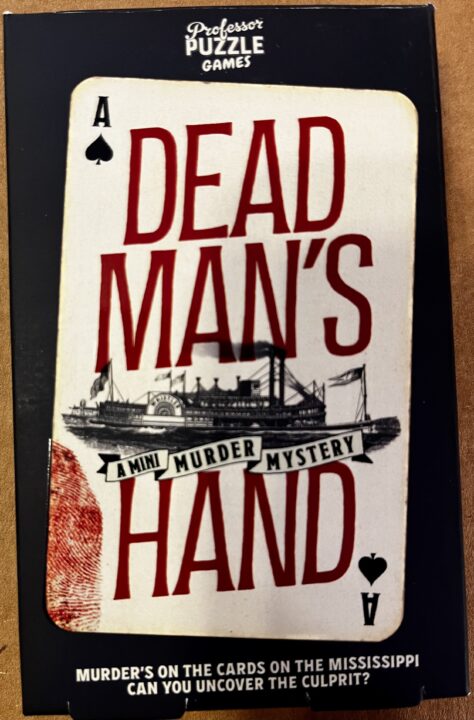

Howdy partner! It’s time for a rootin’-tootin’ review of Dead Man’s Hand, the board game that slaps more hats off heads than a strong prairie wind. My friends and I grabbed our imaginary six-shooters, sat around the table, and tried our best not to flip it in frustration (or excitement). If you dream of wild west standoffs and intense showdowns, stick around—I’m sharing what works and what trips up faster than a cowboy in new boots. Let’s see if this game is gold or just fool’s gold!
How It Plays
Setting up
Each player grabs a hand of cards and some tokens that look like they’ve been through a few bar fights. Everyone gets a cowboy character with their own quirks and is dealt an initial stash of cards. Place the saloon card (it looks fancier than my kitchen table) in the middle. Everyone puts their tokens nearby. Boom, you’re ready for some Wild West action.
Gameplay
Players take turns trying to outwit each other by playing cards that attack, dodge, or pull off sneaky tricks. You can blast away at your rivals, dodge bullets, and try to keep a poker face even if you’re holding a pretty sorry hand. Every round, players pick a card and reveal them one by one. Usually, this ends in someone cackling while another person groans about bad luck—or unfair friends.
Winning the game
Keep swinging till you’re the last one with tokens left. If you run out of tokens, you’re out (time to fetch snacks for the others). The last cowboy with any tokens standing wins and earns the right to talk like an outlaw until the next game night.
Want to know more? Read our extensive strategy guide for Dead Man’s Hand.
The Wild West Comes Alive: Theme and Atmosphere in Dead Man’s Hand
If you ever wanted to feel like Clint Eastwood with more cardboard and less acting skill, Dead Man’s Hand has you covered. This game throws you straight into the Wild West with a bang, a whistle, and a surprisingly tense trigger finger. From the moment I opened the box, I could smell imaginary gunpowder and almost gave my dog a cowboy hat (he refused it, naturally). The art on the cards is gritty and full of swagger—think comic book outlaws squaring off in a dusty saloon where everyone’s got questionable facial hair and a story to tell.
My friends and I tried our best Western accents, but gave up quick—the game doesn’t need you to roleplay to draw you in. The theme oozes out of every card and rule. Whether you’re gunning for your rival or bluffing your way through a standoff, you really feel like you’re in a sun-baked town where trouble finds you before breakfast. Even the names of actions and abilities keep things in the spirit—you’re not just playing cards, you’re outsmarting varmints or laying low after a botched duel.
No joke, I caught myself saying “I reckon that’s a bad hand” out loud and didn’t even cringe. That’s the level of immersion we’re talking about here. The setting isn’t tacked on; it shapes every choice. If you want a game night that feels like you’re in ‘Tombstone’—without needing a real-life life insurance policy—Dead Man’s Hand delivers.
So saddle up, partner, because next I’m breaking down the game mechanics and strategy balance—let me tell you, it’s wilder than a runaway stagecoach!
Game Mechanics and Strategy Balance in Dead Man’s Hand
Let me tell you, Dead Man’s Hand knows how to keep you on your toes. You’ve got the card-driven activation system, and let me say, nothing says “tense” like flipping that top card and realizing you’re nowhere near ready for action. Each player controls a posse, and every action has a cost, so you’re always juggling whether to reload, take cover, or just get the heck outta Dodge. My buddy Steve once tried to charge straight at me with his gunslinger, only to realize halfway that he couldn’t reload in time. He had to hide behind a barrel and eat pretzels instead. That’s strategy!
Movement and line of sight rules actually make sense—no arguing for twenty minutes about whether the cactus counts as hard or soft cover. The system’s simple, but not dumbed down. You can try to outwit your opponent or rush them, but usually the best plans are the ones that take into account how your opponent thinks. You can tell it’s been playtested, because there’s no “one way” to win. A classic shootout can go sideways fast if you get too cocky, which I learned the hard way after my “sure thing” gambler was blown off his feet by Steve’s rookie (who then celebrated with more pretzels).
So, is it all cool calculated moves, or does luck play a wild card? Hold onto your hats, partners—next up, we’re drawing the line between luck and skill in Dead Man’s Hand!
Luck vs Skill: Who’s Really Calling the Shots in Dead Man’s Hand?
Let me set the stage: Dead Man’s Hand has you squinting at your friends across the saloon table, hats tipped low, all ready for a good old fashioned shootout. Now, you’d think planning and tactics would win you the day. Well, yes and no. The game invites you to pull off clever moves, sure. You get to pick your actions, plan standoffs, and try to read your opponents—the same way my Uncle Bill tries (and fails) to read my poker face every holiday.
But here’s the kicker: luck still struts in, spurs jangling, and sometimes it trips you right up. There are moments you’ll groan, not because of a bad decision, but because you pulled a dud card right when you needed an ace. I’ve had games where my best-laid plans got shot down by a cold streak of unlucky draws. It keeps things wild and unpredictable, but it can also feel like you’re at the mercy of Lady Luck more than your own wit. When I play Dead Man’s Hand, it’s not rare to see a rookie trounce a veteran with a lucky draw—it’s both hilarious and, if you’re the veteran, a bit painful.
So, the verdict here: skill matters, but luck has a big seat at the table. If you love games where every move counts, this one might leave you shaking your fist at the card gods. Now, saddle up, because next we’ll talk replayability and whether Dead Man’s Hand keeps you coming back for rematches or makes you wish for a new posse.
How Many Times Can You Re-Deal? Replayability and Player Engagement in Dead Man’s Hand
Let’s be honest, I’ve gone through Dead Man’s Hand so many times, I’m pretty sure my friends could recite the rules in their sleep (and probably have, based on the snores after too many rounds). But does the game hold up after the tenth, twentieth, or fiftieth play? Well, partner, saddle up because here’s what I found.
First, Dead Man’s Hand cleverly keeps things fresh with those ever-changing scenario cards. Each new showdown can have a wildly different feel, and the special character abilities mean you’re never stuck doing the same thing twice. My buddy Steve tried to be Billy the Kid every round – until we banned him for talking in a cowboy accent all evening. Still, the variety is a real plus!
On engagement, the game works its magic when folks get into the drama – everyone’s looking to pull off that one legendary play or survive against the odds. The shootouts get tense! But I did notice if someone gets eliminated early (looking at you, poor Sarah), waiting for the next round can feel as long as a prairie sunset. So, it keeps most people hooked, but early elimination can leave you reading the snack bag instead of the rulebook.
If you like a fast-paced, rootin’-tootin’ game with high player interaction and plenty of character, Dead Man’s Hand is a great pick. I’d say grab it for your next game night, but make sure everyone’s got their best poker face ready!
Conclusion
So that’s my run at Dead Man’s Hand. It’s a solid Wild West shootout with plenty of yeehaw moments and groans when luck snatches the win from your grip. It’s easy to bring to the table, keeps things rowdy, and fits well for folks looking for fast action. Just be ready for a swingy game—sometimes your best laid plans get taken out back and shot by a wild card. If you love chaos and don’t mind a few unlucky turns, you’ll have a blast. For those who want more control, you might want to keep your cash in your holster. That’s it for my review, partner!