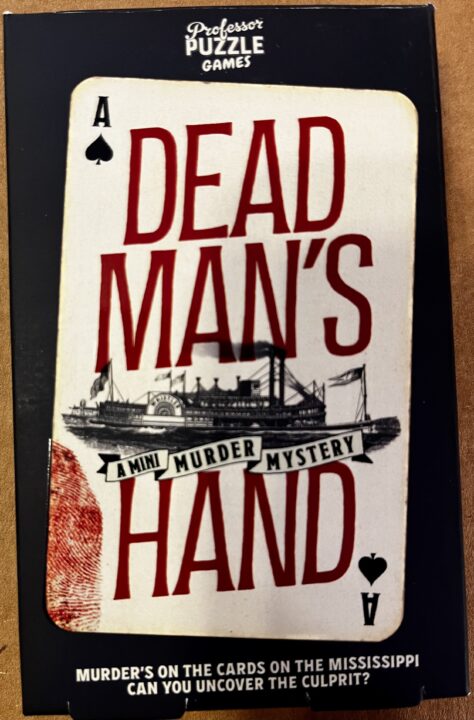

Alright, folks, grab your hats and your poker face—this is my review of Dead Man’s Hand! I roped in a bunch of friends, braced for some wild swings, and after a few games, even my most level-headed buddy started accusing the deck of personal insults. I’ve laid out my honest opinions below: the easy rules, how fair the game felt, what keeps it coming back to the table, and if it turns friends into rivals. Let’s see if this game is a keeper or best left buried at sea!
How It Plays
Setting Up
First, pick your posse. Each player gets a gang and its matching cards. Shuffle the deck, deal yourself a hand (try not to peek at your neighbor’s, it’s rude) and set the board with all the fun tokens and scenery. Place your miniatures in the starting spots and try to look menacing, like a true outlaw.
Gameplay
On your turn, you get to activate one of your gang members. Pick a card from your hand and play it face down. Everyone does the same. Then, all cards get flipped and the highest card goes first. Move, shoot, or take cover – your choice! Actions include running for cover, taking potshots at rivals, or maybe just ducking and hoping nobody notices you.
When you shoot at someone, use dice to see if you hit. If you miss, blame the dice (I always do). Play keeps going until all gang members have had a turn. Then you draw cards and keep going for the next round. Watch out—things can get spicy real fast, especially if you’re low on cards or have a rival gunning for you.
Winning the Game
The winner is the last gang standing, or whoever completes their special scenario goals first. If you’re the last one with outlaws left, you win! If not, better luck next round—maybe your luck will change (but it probably won’t, if you play like me).
Want to know more? Read our extensive strategy guide for Dead Man’s Hand.
Learning the Ropes: Rules Clarity and Learning Curve in Dead Man’s Hand
Alright, let’s talk about something that can turn a Wild West shootout into a wild mess: rules clarity. Dead Man’s Hand does a pretty good job here. The rulebook is about as thick as the napkin I used to wipe my pizza fingers, which to me is a blessing. My friends and I sat down, chips in bowls and cola in hand, and found ourselves playing within minutes. No endless reading or consulting the Oracle of Board Games (aka Youtube tutorials) required.
The rules themselves are laid out with some old-timey flavor, but they’re not too flowery to confuse things. I appreciated the examples scattered throughout. One of my friends, who gets that thousand-yard stare when a game asks him to roll more than two dice, had it all down by round two. Sure, there were a couple of card interactions that made us scratch our heads, but nothing that sparked a rules-lawyer brawl. For the most part, you can just grab the deck, deal, and shoot. Well, you don’t actually shoot anyone, but you get the idea.
If you’re looking for a game to teach your board game newbie cousin or that guy who still thinks Uno is peak strategy, Dead Man’s Hand sits on the friendlier end. There’s a learning curve, but it’s more like a molehill than a mountain. Next up, I’ll strap on my spurs and talk about the game balance and fairness, because every cowboy deserves an even playing field… unless he’s cheating, of course.
Does Dead Man’s Hand Keep the Odds Even? A Look at Game Balance and Fairness
Game balance can really make or break a night in my house. If someone storms out yelling, “This game is so rigged!” then you know it’s gone wrong. So, how does Dead Man’s Hand stack up when it comes to fairness and keeping everyone at the table on level ground?
After wrangling my usual crew—two poker sharks and one person who thinks ‘bluffing’ is a type of potato—I can say Dead Man’s Hand doesn’t totally let chance run wild. The game tries to keep everyone honest with its mix of card play and clever action timing. Bluffing matters, yes, but you can’t just rely on a lucky streak. Skill plays a decent role, since reading your opponents and timing your moves really pays off. I like that even when I flopped a few hands, I still felt I could claw my way back by playing smart.
But let’s not sugarcoat it—luck’s still invited to the party. Bad draws can burn you, and there’s always a round or two where someone shouts, “Oh, come on!” as another lucky river card appears. I’m giving Dead Man’s Hand 3 out of 5 stars for balance. If you hate games that sometimes let the cards decide your fate, you might start plotting revenge after a couple rounds. But if you don’t mind a dash of wild luck (like me, after three coffees and no sleep), it’s not a dealbreaker.
Now, do the strategies and stories keep changing, or does Dead Man’s Hand wear out its welcome? Grab your boots—next up is replay value and variety!
Replay Value and Variety in Dead Man’s Hand
If there’s one thing every board gamer wants in a new game, it’s knowing you won’t get bored after two rounds. When I brought Dead Man’s Hand to my regular board game night, I held my breath—would this Western shootout make it to the table more than once, or would it ride off into the sunset forever?
Good news: Dead Man’s Hand packs in more variety than my sock drawer (and that drawer contains Christmas socks, so the bar is high). The game throws a different line-up of gunslingers, events, and objectives at you each time. You never quite know if you’ll be dodging flying lead or trying to outwit your rivals as you hunt down bounty cards. Every round, you get new tactical choices—do you risk a duel against the town’s deadliest outlaw, or play it safe and hunker behind a barrel? If you play with a different group or just switch up your strategy, things can get wild fast.
That said, if you’re the type who needs a fresh twist every single game, it’s not quite as variable as some legacy games out there. Still, in my group, Dead Man’s Hand saw the table more than a few times before anyone even muttered the words “let’s play something else.” It’s got enough wild-west spice to keep each session fresh, even if the basic structure stays the same. And with expansions or house rules, you can stretch that variety even further—I may or may not have tried a sombrero variant, which was as chaotic as it sounds.
So, if you’re looking for a game that’s not the same ol’ same ol’, Dead Man’s Hand has you covered. But can it handle a rowdy table of players and keep the energy up? Saddle up for the next section: Player interaction and engagement is about to get rowdy!
How Engaged Will You Be Sitting at the Dead Man’s Hand Table?
Gather round, partners, because if there’s one thing that draws folks to Dead Man’s Hand, it’s the player interaction. For real, you can’t play this game in a corner quietly, sipping tea—unless you want your gang to get clobbered. Every turn throws you into the thick of things, forcing you to look your friends in the eye and think, “Will they shoot first, or will I?”
Table talk here isn’t just encouraged, it’s basically required. During my first game, my buddy Sarah sweet-talked me into a false sense of security, then stabbed my gang in the back (metaphorically speaking, of course—she used dice, not an actual knife). Grudges can form in just a few rounds and oh boy, do they carry over. You’ll find yourself planning moves based on who backstabbed you last or who’s about to win; it turns into a spaghetti western soap opera.
Another great thing about Dead Man’s Hand is that it keeps everyone involved, even when it’s not their turn. You’ve got to watch the board, pay attention to others’ moves, and sometimes even join in with your own reactions. There’s no zoning out or sneaky phone-checking here—you’ll miss crucial moments and someone will rub it in forever.
So, would I recommend Dead Man’s Hand for player engagement and interaction? If you like bantering, plotting, and the occasional yelp of betrayal, absolutely. Just keep your wits about you and maybe don’t trust Sarah.
Conclusion
Well, that wraps up my review of Dead Man’s Hand. If you want a game with simple rules, loads of player interaction, and a theme that makes everyone talk like a pirate (even my grumpy uncle Bob), you’re in for a good time. The luck factor is a bit much for me, but if you’re not allergic to a few swings of fortune, there’s plenty of fun to be had here. I’d say give it a go if you like fast, loud, and cheeky games—but maybe leave your sore-loser cousin at home. Thanks for reading, and may your cards never betray you (unlike my so-called friends did)!