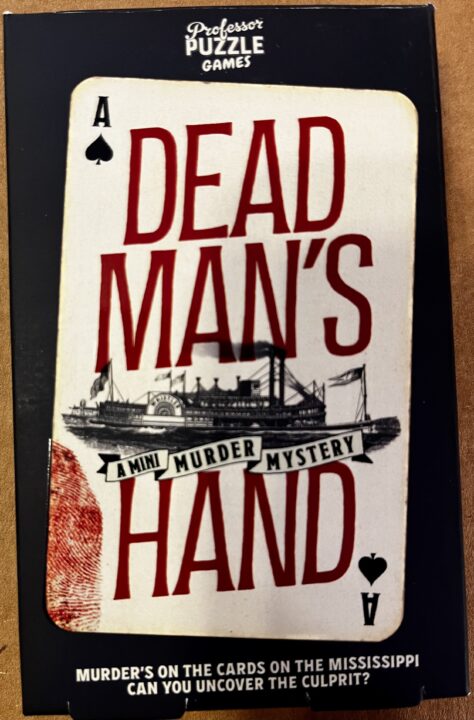

You ever sit around a table with your friends, squint your eyes, and pretend you’re a Wild West outlaw with a hand full of aces—and a bigger chip on your shoulder? No? Well, you will after this review! I played Dead Man’s Hand so many times I almost developed a southern drawl. Get ready as I take you through the dust, bullets, dramatic standoffs, and occasional tantrums that make this game more than just cards and cardboard. Saddle up, partner, and let’s see if this rootin’-tootin’ experience is worth your loot or if it’s all hat and no cattle.
How It Plays
Setting Up
First, deal each player a hand of cards and some character cards—these show your gang of outlaws. Place the scene cards on the table. Make sure everyone has whiskey (actual or pretend) handy to keep things authentic. Decide who goes first by seeing who can best say “Yeehaw!”
Gameplay
Players take turns playing cards to shoot, duck, or try fancy Wild West moves. Each card has a different effect, and you match wits, bluff, and sometimes stare down your pals. You can pick actions like moving behind cover, reloading, or, in my case, yelling dramatically when you miss. Sometimes the cards go your way, sometimes they don’t. Expect arguments about what counts as a “wound.”
Winning the Game
Your goal? Be the last gang standing. If you wipe out your friends’ gangs before yours bites the dust, you win. It’s a little bit skill, a little bit “did I really just draw another miss?”—but it’s always a good time, even when you lose your last outlaw to a lucky shot.
Want to know more? Read our extensive strategy guide for Dead Man’s Hand.
Theme and Wild West Atmosphere in Dead Man’s Hand
Y’all ever wanted to throw on a cowboy hat and shout, “this town ain’t big enough for the both of us!” at your friends? Well, Dead Man’s Hand lets you do that without having to explain yourself to the local sheriff. The Wild West theme rides shotgun in this game. The minute I slapped those cards on the table, I was ready to duel, call someone a varmint, and probably lose my horse in a bet. My gaming group actually started talking in terrible Southern accents by round two. If that’s not immersive, I’m not sure what is.
The artwork does a fine job setting the dusty mood. Think sun-faded playing cards, wanted posters, and saloon wallpaper that probably smells like whiskey and regret. Every card you pick up feeds the story of a rootin’ tootin’ showdown. We even took a break halfway through just to play some old spaghetti western music in the background. (Pro tip: this improves atmosphere by at least 23%, according to my totally real scientific study.)
The game doesn’t waste time with wishy-washy themes. You get to rob, cheat, call out duels, and all the classic shenanigans you’d expect at the OK Corral. It’s basically a Hollywood Wild West movie, except you’re the star, and no horses were harmed in the making of our session, except my dignity.
If you love games that really stick to their theme and make you feel like you’re stepping into a tumbleweed-ridden frontier, Dead Man’s Hand does it better than a pack of coyotes chasing a stagecoach. But can the game rules wrangle all that excitement without getting tripped up? Saddle up, partner, ‘cause next I’m talking about Game mechanics and rules clarity!
Game Mechanics and Rules Clarity in Dead Man’s Hand
Let’s talk mechanics, because Dead Man’s Hand is not just about twirling a moustache and squinting into the saloon light. It’s actually got a neat thing going with its card-driven system. Every turn, you’re picking actions using a hand of playing cards, and let me tell you—sometimes your luck feels as busted as my cousin Barry’s old pickup. But mostly, it’s about reading your opponents and figuring out when to bluff. There’s a nice bit of strategy in picking your targets and risking your best cards. That said, luck can poke its head in at the worst times—like when you draw nothing but low spades and you need a King to shoot first.
The rules themselves? Once you get through the rulebook (which is, thankfully, not as thick as the one for Monopoly Cheaters Edition), things click into place fast. I picked up the basics after one play, and my friends—who come from the “what’s a meeple?” school—weren’t left behind. Some actions need a second look at the first read, but nothing made me want to flip the table. There is a bit of referencing for special cards and scenario details, which slowed us down for the first few rounds. But by the second shootout, we had it down faster than the time I got booted from a poker night for using Uno cards.
Next, I’ll wrangle up all the action—find out if shooting at your pals stays fun or fizzles out like a dud firework in the section on Player interaction and replayability!
Player Interaction and Replayability in Dead Man’s Hand
Now if you want a board game where you stare at your phone for three hours, Dead Man’s Hand is not it. Oh no—this one throws you right into the saloon with your pals, and nobody gets away with zoning out. Player interaction sits front and center. Every move, shot, and insult (those are optional, but recommended for Wild West flavor) means you can’t slack off. My usual game group—half of whom have attention spans shorter than a rattlesnake—actually paid attention the whole time!
What really sets Dead Man’s Hand apart is the way it makes every decision count. You need to watch your enemies, guess what card they’re hiding, and—occasionally—convince someone you’re not about to shoot them in the back. It’s a social dance, sometimes a brawl, and always a test of wits. You might end up with a grudge or two, but that’s how you know it’s working. Highlights for me include the time my cousin tried to bluff her way out of a duel, only to reveal she had the wimpiest hand in the game. She still won’t talk about it.
Replayability? It’s high. Different gangs, scenarios, and always that unpredictable human element. No two games play the same, especially if you swap in new players. Our group came back to Dead Man’s Hand across three weekends—nobody got bored or memorized some “winning strategy.”
Next up, we’re hitting the dusty trail to see if luck or skill really matters in Dead Man’s Hand. Hold onto your hat—this one’s a doozy.
Luck vs Skill: Can You Outwit the Odds in Dead Man’s Hand?
I grabbed my hat and holstered my deck for another round of Dead Man’s Hand, hoping this time, my skill could finally overcome the random wrath of the cards. Let’s be honest, nobody wants to lose a gunfight because they drew the wrong number again. So, where does Dead Man’s Hand stand when it comes to luck versus skill?
Here’s the deal. Skill does play a role—I found myself planning ahead, trying to predict my friends’ plays. And when a clever bluff worked, I felt like the fastest draw in the West. But then, more than once, my planned move shot blanks because the cards didn’t go my way. Sometimes, Lady Luck stomped through the saloon, knocked over my strategy, and laughed all the way to the bank.
This game’s core is still card-driven, and cards mean luck. If you get dealt a dud hand, no amount of sly thinking can bail you out. I saw friends sitting there with a face longer than a horse when their best-laid plans crumbled due to bad cards. Sure, those moments can be funny (for everyone else), but they can sting if you’re on the losing side.
Would I recommend Dead Man’s Hand? If you enjoy a game where wit is important but luck still holds the smoking gun, then saddle up! If you want pure tactical control, you might want to pick another fight. For me, I’ll keep my boots on—but I won’t put all my poker chips on skill alone.
Conclusion
If you want a Wild West shootout that you can play on your kitchen table, Dead Man’s Hand will fill your boots. The card mechanics and theme feel like a saloon brawl, and it’s easy to teach new folks. Just beware—the luck swings harder than a cowboy after a strong drink. If you love games where strategy beats randomness, you might feel like a tumbleweed caught in a storm. But for casual, rowdy fun? This game hits the target. Consider this review wrapped up faster than a draw at high noon!