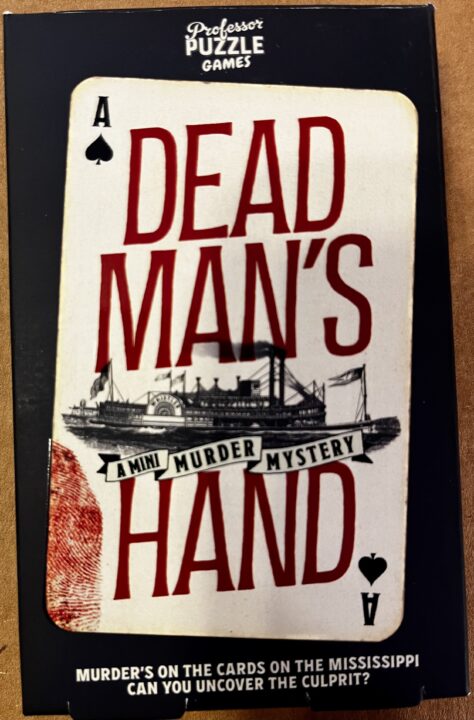

Ever wanted to outsmart your friends, talk trash, and pretend you’re a Wild West outlaw—all in less than an hour? Well, look no further! In this review, I’ll tell you why Dead Man’s Hand shot its way onto my game table and what happened when I rounded up my trusty crew for a night of rootin’-tootin’ fun. Saddle up, because things get heated (and a little silly) when cards start flying. Yeehaw!
How It Plays
Setting up
Shuffle the deck, pick your gang, and plop down the cards for your crew. Everyone places their posse face down for that secret outlaw feeling. Don’t forget the loot and action markers, unless you want a wild west riot at your table.
Gameplay
On your turn, flip a card and decide who’s shootin’. You can move, gun down an enemy, or duck for cover. The trick is keeping a poker face—my buddy Steve could teach a class in lying. Actions play out as you try to outsmart, outdraw, and sometimes out-luck your rivals.
Winning the game
Once the dust settles, count up those victory points. Take out rival gang leaders or snag strategic spots for the big score. Whoever has the most points at the end rules the west—or at least gets bragging rights until the next showdown.
Want to know more? Read our extensive strategy guide for Dead Man’s Hand.
Gameplay Mechanics and Fairness in Dead Man’s Hand
When I first sat down to play Dead Man’s Hand with my friends, I thought, “Alright, time to prove I was born to be an outlaw.” The rules looked simple at first. You play cards from your hand to shoot, dodge or pull fancy western tricks. But let me tell you, the game has more twists than a rattlesnake in a sack race. Each move you make is public, so you can’t hide behind your poker face for long. That leads to a lot of bluffing, shouting and the occasional dramatic hat tip.
What really stood out for me is how much your choices matter. You can try to outguess your opponent, but luck never completely takes over. Sure, you do draw cards, but strategy wins most showdowns. No one at my table pulled off a win by pure luck alone. You know how some games just hand the victory to whoever has the most horseshoe up their sleeve? Not this time. Dead Man’s Hand makes you work for every win. Shootouts feel tense, and even the slowest player gets a fair shake.
I do get annoyed when a game lets someone win just because they drew the magic card. Dead Man’s Hand avoids that. Yes, there’s a sprinkle of luck, but not so much that you want to flip the table. The balance keeps it fun but fair. If you get outplayed, it’s usually your own fault (believe me, I learned this the hard way). Next up, let’s tip our hats to the wild west and peek at the theme and artwork that sets the mood.
Dead Man’s Hand: Theme and Artwork Quality
If you want to feel like a cowboy with nothing to lose except your last peanut, Dead Man’s Hand will do the trick. The designers must have eaten, slept, and showered in spaghetti western movies, because the theme is everywhere. I almost started speaking with a Clint Eastwood whsiper after laying out the cards. The box art shows you gunslinger style straight away, and there’s a sort of dust-and-danger vibe that follows you from setup to shootout.
The cards themselves have detailed artwork. Each outlaw has that stubbly, squinty look you’d expect. Even the background looks like a postcard from a town called Trouble. I love the little touches, like the faded wanted posters and the crooked saloon signs peeking out behind character illustrations. My friend Dave tried to use his card as a bookmark. I nearly stole it back, it looked so good.
What’s really nice is that the cards never get too busy. You can always tell what you have, even after a few, uh, rounds at the table. The artwork helps set the mood, but never gets in the way of playing the game. You can feel the grit and tension, but you won’t squint trying to tell your Sheriff from your Outlaw.
I’d say Dead Man’s Hand is a treat for both your eyes and your wild west daydreams. Up next: I’ll tell you how much (or how little) you might yell at your friends during a round—player interaction and engagement is up ahead, partners!
How Does Dead Man’s Hand Keep Everyone at the Table Hooked?
If there’s one thing Dead Man’s Hand pulls off better than my cousin Dave at a family poker night, it’s making sure every player stays on their toes. This isn’t one of those games where you spend half your turn scrolling on your phone, waiting for your moment in the sun. Oh no. Every play matters, and you will care about other people’s moves as much as your own.
What really grabbed me—besides a near-fatal duel with my friend Tom’s outlaw—is how much you need to pay attention to what others are doing. Bluffing, reading opponents, second-guessing their motives, these are all baked right in. Turns move at a nice clip. I never felt like I was just watching, even when it wasn’t my shot. The game is generous in giving players ways to respond, counter, or just try to mess with someone else’s plan. Obviously, there’s a little table talk, lots of banter, and a few threats of eating someone’s hat. Ok, maybe that was just me.
The special abilities each character wields keep things spicy. Every time someone pulls a stunt, you have to adjust your plan. I lost count of how many times I cackled with glee when I foiled my opponent’s move. It’s not just about winning; it’s about outsmarting everyone else, and maybe bragging a bit. You never feel alone in this saloon.
If you’re curious how easy it is to pick up the game, deal yourself in for the next section. No cowboy boots required, but they help.
Is Dead Man’s Hand Easy to Learn? A Look at the Rules and Learning Curve
If you’ve ever tried teaching a fiddly game to your friends and watched their eyes glaze over, I feel your pain. Luckily, Dead Man’s Hand isn’t one of those party-poopers. I handed out the rulebook (which is thin – always a good sign!) and my friends were grumbling less than usual. The rules are laid out in a way that actually makes sense. No jumping back and forth, no arcane jargon. Even Sam, who still struggles with UNO, picked it up after the first round.
The game guide includes helpful diagrams and short examples. After a read-through, we only had to check the rules once (for a weird showdown). That’s a miracle in my group, where arguing about game rules can turn into a three-hour side quest. Everything felt logical, and there’s a handy summary at the back of the rulebook for quick reminders.
The complexity is low-to-medium. You can get playing in 15 minutes, with the deeper strategy showing up after a few hands. If you think you’ll need a PhD to understand the rules, relax. Dead Man’s Hand doesn’t have secret rules, hidden exceptions, or gotcha moments. If anything, it may seem so straightforward that hardcore rules lawyers might wish for a twist or two.
Would I recommend it? Absolutely! This is a game you can teach quickly and get right to the action. No five-hour tutorials, no baffled faces. So, put on your cowboy hat and get shuffling – you’ll be playing in no time!
Conclusion
If you want a board game with wild west flair, smart choices, and plenty of laughs, Dead Man’s Hand stands tall. The theme hits hard (who doesn’t like a cowboy showdown?), the artwork looks sharp, and the game feels fair. My friends keep asking to play it again. You won’t get tripped up by any weird rules and you won’t lose just because you’re unlucky. Sure, the cowpoke theme isn’t for everyone, and if you like games with lots of plastic cowboys, you’ll be sad. But for most folks, you get a fast, fun brain-battle where your smart choices really count. That’s my kind of card slingin’! This wraps up my review—if you want a wild ride across cardboard prairies, you can’t go wrong here.