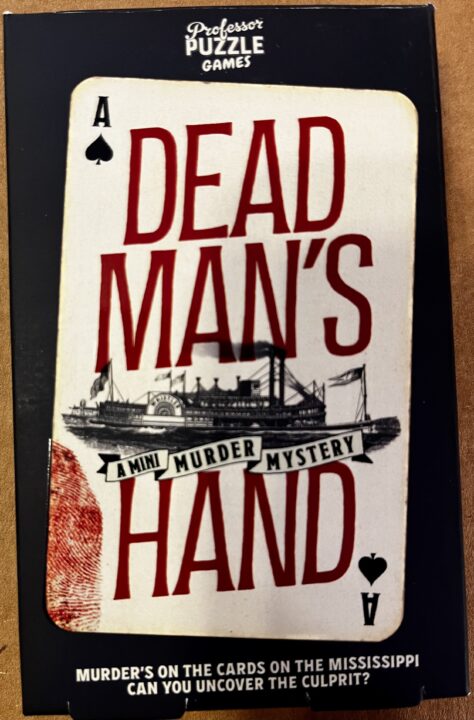

If you ever wanted to outwit your friends with a poker face that says, “Yes, I definitely have the winning hand,” but inside you’re screaming, “Please just fold!”, then you might be in the right place. Welcome to my review of Dead Man’s Hand. I sat around the table with my friends, got into character with some bad cowboy accents, and shuffled up to see if this game is gold—or just fool’s gold. Saddle up, because I’m about to tell you everything you need to know before you reach for your wallet and spurs.
How It Plays
Setting up
Shuffle the deck and deal each player their starting hand, just like you would deal out snacks at a movie night—no fighting over the good stuff! Pick your gunslingers and set up your chips or tokens, ready for a good old standoff.
Gameplay
On your turn, play cards from your hand to outwit, outshoot, or just plain out-luck your opponents. Think poker meets fast-draw, with a bit of bluffing and more staring contests than a family reunion. Take actions like shooting, dodging, or playing special cards to mess with others. Keep one eye on your cards and the other on sneaky players (looking at you, Pete).
Winning the game
The last player standing with cards or tokens is the winner, crowned the fastest draw in the West—at least until the next round! Sometimes you win by being clever, other times you win because luck decided to stop hating you for five minutes.
Want to know more? Read our extensive strategy guide for Dead Man’s Hand.
Game Balance and Fairness in Dead Man’s Hand: Are the Odds Ever in Your Favor?
Let me tell you about the wild journey I had playing Dead Man’s Hand last Friday. We shuffled, dealt, and after the first round, my friend Greg had the look of a man who just realized his horse had run off with his hat. He kept moaning about balance and, honestly, he wasn’t wrong. Fairness in a board game is like salt in soup: too little, and it’s bland; too much, and you’re chugging water.
The rules in Dead Man’s Hand are clear. Everyone gets a shot (pun intended) at pulling off risky moves or steady tactics. You can see the designer tried their best to give players ways to counter each other and keep things even. But, in practice, luck sometimes rears its ugly head. Once, I lost my ace card on a coin flip. That’s like losing your dessert in a waiter mix-up—unforgivable! There’s a lot riding on luck, especially with card draws and some swingy event cards. That can lead to nail-biting tension or just pure frustration if you want a tight tactical showdown.
I do respect that Dead Man’s Hand tries to keep everyone in the saddle until the end, and the rules don’t have runaway leader problems. You never feel totally out of it, even if your poker face is slipping. But the wild chance factor might irk players (like Greg) who crave more control. If you’re allergic to randomness, steer clear or bring your own salt shaker.
Now, hold onto your hats, partners, because up next, we’re taking a scenic ride through the theme and western atmosphere—spurs and all!
Theme and Western Atmosphere in Dead Man’s Hand
I’ve played my fair share of cowboy-themed games, but Dead Man’s Hand stands out for its dedication to the whole wild west vibe. This game throws you straight into a dusty showdown, complete with saloon shootouts and more bravado than my friend Greg after three cans of root beer. The artwork smacks you in the face with cowboy hats, mustaches, and enough six-shooters to stock a spaghetti western. It’s easy to feel like you’re in a classic Clint Eastwood film (minus the squinting—unless you also forgot your glasses at home, like I did).
The cards themselves carry the feel of weathered, well-used playing cards you’d expect to find tucked into a gunslinger’s boot. I lost track of time arguing with my friends over which character would win in a real showdown, and the dramatic card names—like “Gut Shot” and “Last Gasp”—add that tasty layer of drama you want in a western. Even the little flavor text lines made us laugh and groan; who knew a board game could deliver so many corny puns? My friend Maggie even started speaking in a bad southern accent, and honestly, it just added to the fun.
If you want a game that lets you live out your inner outlaw or good-for-nothin’ card shark, Dead Man’s Hand delivers the goods on theme and setting. Now, saddle up and get ready to mosey over to the next section, where we’ll wrassle with the rules and see how easy—or tricky—it is to start playing.
How Easy is it to Learn Dead Man’s Hand?
Let me tell you, when I cracked open Dead Man’s Hand with my game group for the first time, nobody fainted at the rulebook. That’s a good sign. The instructions are written in plain English—no legal jargon, no need for a law degree, and not a single page made me want to fling the whole box across the saloon. Even the friend who once lost to a folding chair understood the basics after one run-through.
The rulebook uses simple language and includes clear examples. The step-by-step structure really helped my group. We didn’t have to look up YouTube tutorials every five minutes, which is more than I can say for some games (looking at you, Gloomhaven). Most of the rules are on handy reference cards, so you don’t have to keep flipping through the book in the heat of the moment. Pro tip: Give those cards to the friend most likely to forget everything as soon as the game starts. You know who you are, Dave.
The learning curve? I’d say it’s more of a gentle hill than a cliff. Dead Man’s Hand offers enough depth for folks who want to hone their skills, but new players can get playing in under fifteen minutes. You don’t need to know every trick right away to have a good time or stand a chance. That said, a couple of small rules can be easy to overlook in the chaos, but nothing that ruins the fun.
If you’re wondering how this all plays out between players, get your hat ready—next I wrangle up the truth about player interaction and strategy!
Player Interaction and Strategy in Dead Man’s Hand
If you enjoy friendly banter as much as wild shenanigans, Dead Man’s Hand does a pretty spiffy job bringing folks together around the table. I played this last Friday night, and let me tell you, we laughed, we shouted, and one player (who will remain nameless, but it was Pete) got so caught up in the action that he started calling himself ‘Sheriff.’ Honestly, the game’s player interaction is top-notch.
Every turn is a little showdown. You try to read your opponents—are they bluffing, or do they really have the cards to back up that cocky grin? It’s like poker, but with more drama and less risk of losing your rent money. There’s also the timing of plays; sometimes you gotta wait, sometimes you gotta pounce. This isn’t a game for lone wolves. You have to watch everyone, and every move can change your own plan.
Strategy-wise, Dead Man’s Hand won’t melt your brain, but there’s just enough to chew on. You’ll need to weigh risk versus reward: Do you play it safe or go all in for glory? And when to use special abilities—well, that’s where legends are made, or broken, usually amid a chorus of groans.
So, do I recommend Dead Man’s Hand for those who love interaction and a bit of clever plotting? You bet your best cowboy hat I do. Just don’t blame me when someone tries to shoot the sheriff (sorry Pete).
Conclusion
Alright partner, that’s it for my review of Dead Man’s Hand. If you want a quick, rowdy game with a Wild West feel, this one hits the spot. The game looks great, is easy to learn, and it gets folks bluffing and trash-talking at the table—just like a real saloon (minus the spilled whisky). The luck factor keeps it lively, but if you want deep strategy, you might be left feeling like an unlucky outlaw. If you’re okay with that, and like a bit of chaos, grab your hat and give Dead Man’s Hand a shot. Otherwise, mosey on to something with a bit more planning. Thanks for hanging out with me for this review—happy gaming!