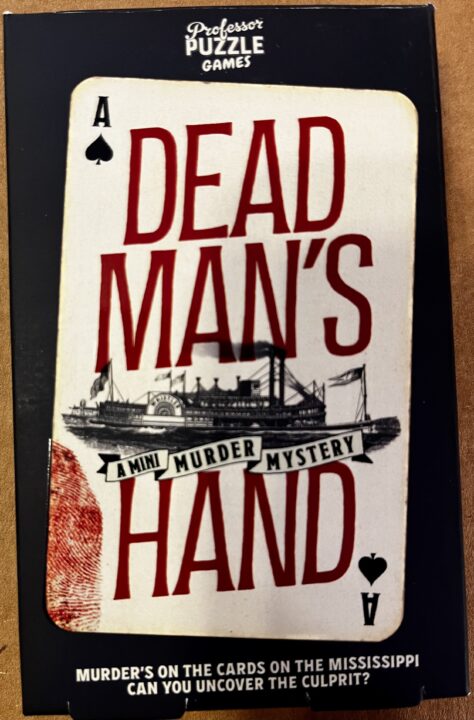

Howdy, game wranglers! Jamie here, and this time I’ve roped in my most skeptical, card-counting friends for a showdown with Dead Man’s Hand. This is a rootin’-tootin’ review, so holster your expectations and prepare for tales of saloon standoffs, bluffing, and the occasional questionable moustache. Is this Western card game a six-shooter full of fun, or will it leave you shot in the foot and reaching for the rulebook? Let’s shuffle up and see if it stacks up to the hype!
How It Plays
Setting Up
First, shuffle the deck and deal each player five cards. Put the rest of the cards in the middle as the draw pile. Give everyone their cheat sheet (trust me, you’ll need it). Grab your favorite root beer, because things are about to get wild westy.
Gameplay
On your turn, play a card from your hand and follow whatever is on it. Sometimes you’ll shoot, sometimes you’ll dodge, and sometimes you’ll stare down your friends with your best poker face. You try to make the best poker hand, using cards in front of you, and bluff your way out of trouble. If you’re like me and can’t lie to save your life, prepare for a short ride.
Winning the Game
The last person left standing at the table is the winner! If you’re eliminated, don’t worry; you can heckle the others as they try to out-bluff each other. The game ends when only one gunslinger is left holding their cards. Yeehaw!
Want to know more? Read our extensive strategy guide for Dead Man’s Hand.
Gameplay Balance and Fairness in Dead Man’s Hand
When I first sat down to play Dead Man’s Hand with my ragtag group of Wednesday night desperados, I had high hopes for a shootout that would be sharp, clever, and most of all, fair. If there’s one thing that sends me running faster than a chicken at a fox convention, it’s a board game that lets random luck trample all over my careful strategy. Well folks, Dead Man’s Hand tries its best to walk that tightrope between luck and skill, but does it keep its balance?
Let’s start with the basics. Each player gets their own gang, and the game hands you some neat (and sometimes very wonky) objectives. I love that the win conditions depend on more than just who can roll the highest number. There’s real planning in positioning your cowboys and using your abilities. Sometimes, my mate Steve, who trusts luck like it’s his long-lost twin, gets lucky shots that make me want to flip the table (I never do, because that’s a good way to lose friends and respect). But after several plays, I noticed that the game tries to curb wild luck with smart card play and risk management. That said, some scenarios can tip in favor of certain gangs, and a lucky streak can turn a sure win into a shocking loss faster than you can say “snake eyes.” So is it perfectly balanced? Not quite. It’s better than some, but you can expect fortunes to swing faster than a saloon door in a hurricane.
Still, it never feels like anyone’s out of the fight until the final shot rings out, and that’s a huge plus in my books, even if luck sometimes draws a wild card. Next up, I’ll mosey on over to where the real gold’s hidden—player interaction and strategy, where friendships are tested and rivalries are born!
Player Interaction and Sneaky Strategy in Dead Man’s Hand
If you like mind games and bluffing, Dead Man’s Hand is for you. This game is like poker, but with more sneaky looks and fake grins. You will spend most of your time watching your friends, trying to guess if they’re holding junk or about to ruin your day with a killer combo. The best part? All that laughter when someone tries to look serious but can’t stop grinning like a pirate with a pocket full of gold teeth.
There’s never a dull moment in Dead Man’s Hand. Sure, the rules are simple, but if you want to win, you’ve got to keep your wits about you. One wrong move and the whole plan falls apart—kind of like when I tried to win by copying my mate Simon’s strategy. Spoiler: it didn’t work. Simon bluffed me right into a trap, and everyone else joined in. Lesson learned: watch your own cards, and never trust a guy who winks at you too much.
What really makes Dead Man’s Hand stand out is how much you can mess with your friends. Alliances form and break faster than I can shuffle cards, and the person you trust one round could sink your ship the next. It keeps you guessing and makes every game night a different adventure.
Next up, I’m checking if the artwork and bits in Dead Man’s Hand are worth showing off or if they look like they’ve been through a barroom brawl. Stay tuned!
Dead Man’s Hand: Components and Artwork Worth Betting On?
I’ve handled a lot of card games, but Dead Man’s Hand deals out a first impression you won’t soon forget. The cards themselves? Sturdy enough to withstand a spilled drink and a dramatic table flip—both of which may or may not have happened during our group’s last showdown. They have a satisfying snap when you shuffle, which is a detail I never thought I’d care about until this game taught me otherwise. The game box is compact, with no wasted space, so it fits on my ever-growing board game shelf (which is starting to look like an accident at a lumber yard).
Now, let’s talk artwork. Every card features wild, western-themed art that puts you right in the middle of a dusty shootout. The illustrations have this pulpy, comic-book vibe, somewhere between classic western movies and the doodles I made on my math homework in high school. Each character and item card pops with color and personality. My friend Becky claims the barkeep looks exactly like her uncle Larry, and honestly, she might be right. Even the font choices feel on theme—nothing ruins immersion like Comic Sans on a cowboy’s wanted poster, and Dead Man’s Hand thankfully steers clear of that disaster.
There’s a quick reference guide included, which saved our skins about five times when rules got heated. My only real knock? The tokens are fine, but a little dull compared to the artwork on the cards. A splash more flair there would’ve made it a full house.
Now grab your hat and six-shooter, folks, because next I’ll tackle Dead Man’s Hand’s replayability and whether learning it is more cactus or comfy couch.
Dead Man’s Hand: Replayability & Learning Curve – Will You Be Dealing Again?
Let’s crack open the rulebook and talk about how often you’ll want to pull “Dead Man’s Hand” off your shelf, and how friendly that first game night actually is. Spoiler: one of those things is miles better than the other.
The replayability here is a solid win. Each round in Dead Man’s Hand feels a bit different, because you never know if a friend will start bluffing like they’re in a Hollywood saloon, or just play their hand straight as a ruler. The mix of strategies, mixed with how unpredictable every group can be, makes for some wild rides. I’ve played it at least a dozen times and haven’t yet groaned, “Not this again.” It’s not just the cards themselves – it’s the players who keep you guessing. Of course, if someone always grins when they’re about to play a double-deal, well, that’s part of the fun too.
Now, on the learning curve: this game is about as intimidating as a mouse in a cowboy hat. The rules fit on a couple pages, and even my friend Dave (who still gets confused by Monopoly) had this down by round two. You can teach Dead Man’s Hand faster than you can say “card sharp.” Sure, a new player might get bluffed out of their boots the first game, but that’s part of the charm, and they’ll come back swinging.
So, do I recommend Dead Man’s Hand? I’d bet my last gold coin on it, if you like clever card games where every round is a bit of a showdown. Just don’t blame me when your pals start practicing their poker faces in the mirror!
Conclusion
Well, partner, that wraps up my wild ride with Dead Man’s Hand! This game has a lot going for it—snappy gameplay, cool western art, and enough bluffing to make a poker face jealous. It’s easy to learn and keeps anyone awake at the table (even my Uncle Dave, who once fell asleep during Monopoly). But if you hate games with a pinch of luck or the feeling that someone can win on a random draw, you might get grumpy with this one. Overall, it’s a rootin’-tootin’ good time for groups who love mind games and a bit of chaos. Thanks for reading, and remember: never trust a quiet cowboy. That’s it for my review—see you at the next game night!