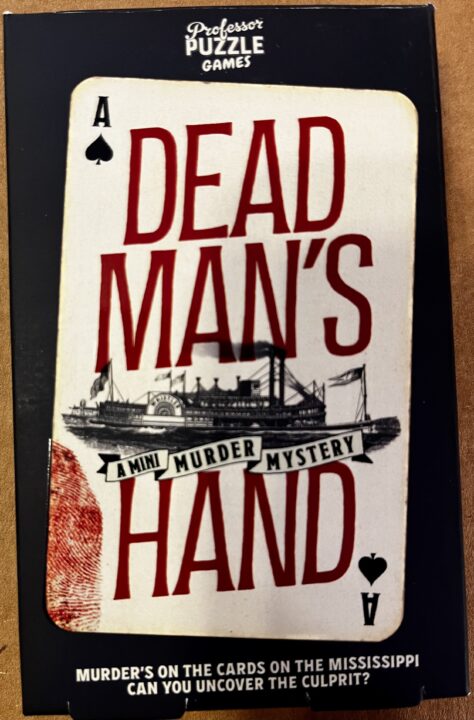

If you ever wanted to experience the thrill of a wild west showdown without risking a sunburn or actual bullet wounds, you might want to read this review. My friends and I gave Dead Man’s Hand a whirl, hoping it would serve up the perfect cocktail of tense strategy and good old-fashioned table-flipping moments. Now, before you run out and spend your hard-earned loot, let’s talk about all the clever bits (and not-so-clever bits) that come with playing it. Spoiler alert: I kept my hat on the whole time, but my poker face did not survive.
How It Plays
Setting Up
Shuffle the deck of cards and deal each player their starting hand. Place the rest in the middle as the draw pile. Give everyone a reference card, just in case someone (like me) gets lost reading simple rules. Decide who goes first—the person with the best poker face usually wins this argument at my table.
Gameplay
On your turn, play a card from your hand and follow its effect. You might take aim at an opponent, block their move, or pull off a wild west combo. After playing, draw back up, and try not to get too cocky. Other players can hit back, so don’t look too smug or you’ll find yourself the main target (I know this all too well).
Winning the Game
Keep playing until only one player is left standing with cards. That player is the last gunslinger in town and wins the game. The rest of us get to sulk and shuffle for a rematch. Simple, fast, and always a hoot, unless you’re allergic to losing.
Want to know more? Read our extensive strategy guide for Dead Man’s Hand.
Dead Man’s Hand: A Wild Ride of Player Interaction and Game Flow
Alright, Dead Man’s Hand came out on our table last Friday. I’d like to say it was a calm, friendly match, but it felt like a bar fight in action cards. The gameplay flow keeps things moving at a cracking pace. You don’t sit around for long. There aren’t long drawn-out turns, which is super nice if you have an impatient family like mine. You draw, you play, and you try to outwit your friends, all in about the time it takes my dog to look for his tennis ball.
Player interaction in Dead Man’s Hand is no joke. You can’t just hide in the corner and hope for the best. Pretty much everything you do can mess up someone else’s well-laid plans. I learned this the hard way when my friend Dave stole my best poker hand and laughed so hard he choked on his chips. Basically, there’s a lot of sabotage. If you like games where you can quietly build up your own empire and not bother each other, this isn’t that. But if you love pointing fingers, bluffing, and the occasional groan as someone pulls off a sneaky move, you’re in for a treat. The back-and-forth makes every round unpredictable and lively.
The best part? Even if you’re losing, there’s enough going on that it never feels boring. You’re always watching the others, trying to guess who’s bluffing and who’s just plain lucky. But speaking of luck and planning ahead, can Dead Man’s Hand strike a good balance between luck and strategy, or will you find yourself yelling at the dice? Get ready for my next section on just that!
Luck vs. Strategy: Does Dead Man’s Hand Deal You a Fair Shot?
Let’s talk about the real cowboy in the saloon—balance between luck and strategy in Dead Man’s Hand. This is the stuff that can make or break a game night, right? Now, I’ve played a bunch of western-themed games, and let me tell you, some just drown you in dice rolls until your eyes glaze over. Dead Man’s Hand isn’t one of those. Sure, there’s luck—hey, it’s a card game, what did you expect?—but it’s not all about the wild draws from the top of the deck.
When my group played, we quickly figured out that you need to read your opponents, play your hand with guts, and bluff better than my Aunt Mary dodges vegetables at family dinners. You can’t win just by hoping for the right cards every turn. Timing your plays, knowing when to go big or fold, and watching the others like a hawk—all of this matters. Luck might serve you a rotten hand, but skill decides what you do with it. I’d say Dead Man’s Hand leans about sixty percent strategy, forty percent luck, which is enough to keep you sweating but still give the clever folks a real shot.
If you hate games that feel rigged by fate, this one won’t make you flip the table in despair. Up next, I’ll tip my hat to the theme and those chunky, rootin’-tootin’ components—so saddle up, partner!
Theme and Component Quality in Dead Man’s Hand
If you’ve got a soft spot for the wild west, Dead Man’s Hand delivers a thick slice of cowboy action right to your table. I once wore a hat and tried talking like a grizzled outlaw for a whole night while playing, and honestly, the game’s theme helped me keep that going. The cards are full of gun-slinging illustrations—think dust, tumbleweeds, and facial hair so glorious even my uncle would be jealous. The artwork pulls you in, making it easy to picture yourself dueling behind a saloon or bluffing your way out of trouble. You can almost smell the whiskey. Almost.
Now, on to the components. The box is sturdy enough to survive at least three accidental drops. (I have clumsy friends, it’s happened.) The cards themselves feel solid. They’ve held up after several shuffles, and one unfortunate salsa incident. (Don’t ask.) Iconography is easy to read—even my friend who claims he can’t find his glasses could understand what he was doing. Tokens and extra bits are decent quality, not the cheap stuff where the print rubs off after two games. My only gripe? The game could use a nice velvet bag for the tokens, just for added wild west flair. But that’s me being picky because I like fancy bags.
The rulebook deserves a shoutout—clear, concise, and I didn’t need to google a thing during play. That’s rare. In the next section, I’ll break down why Dead Man’s Hand might become the regular showdown in your game group… or why it might wear out its welcome. Saddle up for replayability and the player count experience!
How Many Times Can You Play Dead Man’s Hand Before You Lose Your Mind?
When it comes to replayability, Dead Man’s Hand really surprised me. After three rounds in a row, my friend Dave still wanted to play. That’s saying something—he usually taps out after anything with a Western theme. Each game saw new card combos, sneaky moves, and grudges that carried over (I’m looking at you, Sarah!).
The game scales nicely from two to six players. With two, the face-offs feel personal, and you can get petty real quick. Three or four brings a bit more chaos, but you still have a good sense of control. At six, things get wild. You’re constantly watching your back—and sometimes your front, because Sam has sticky fingers and will steal your best hand every chance he gets. The action is fast enough that even with six gunslingers, nobody gets bored.
If I had to nitpick, I’d say Dead Man’s Hand shines brightest with three or four players. Any less and it feels too much like chess with bad accents. Any more, and you risk people zoning out if they’re not in the action. But hey, that’s just more time for snacks.
Do I recommend Dead Man’s Hand? You bet your spurs I do. It’s got enough twisty strategy and player showdowns that I don’t see it leaving my game night lineup anytime soon. Just watch out for Dave—he plays dirty.
Conclusion
So there you go, partner, that’s the end of my Dead Man’s Hand review. This game brings the wild west to your table with snappy turns, plenty of interaction, and a good mix of luck and strategy. The cards look sharp, replayability is high (especially if you’ve got three or four desperados hanging around), and you’ll end up cursing your friends more than a rattlesnake at a square dance. Sometimes the luck gets wild and the balance ain’t perfect, but overall, it’s a rowdy good time. If you’re after a board game that wrangles chaos and good laughs, Dead Man’s Hand won’t let you down. Now excuse me, I need to count my winnings and sweep up all these tiny hats. This concludes my review—see you at the next game night!