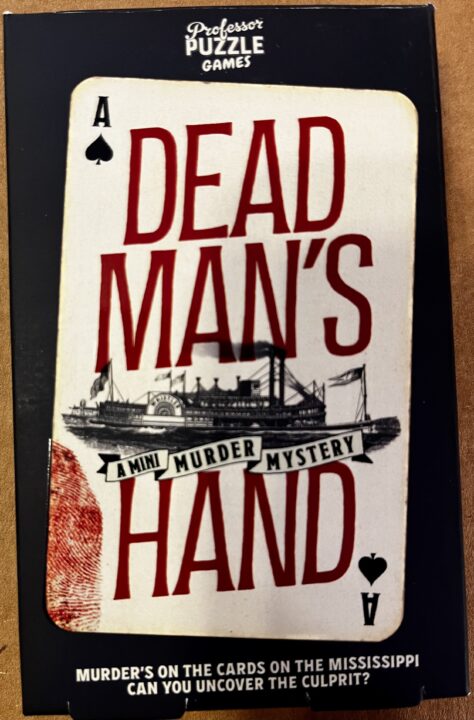

Welcome, partners! Today I’m slapping my dusty boots on the table for a review of Dead Man’s Hand. After lassoing my friends for a few evenings, I’ve put this wild west card game through its paces. Whether you’re a high noon hotshot or a greenhorn, I’ll tell you what works (and what shoots blanks), so you know if this is worth the gold in your saddlebag.
How It Plays
Setting up
First, everyone grabs a character card and their starting hand. Lay out the town cards in the middle, shuffle the action deck, and give each player some markers. Get your favorite cowboy hat ready. Optional, but highly reccommended for the vibe.
Gameplay
On your turn, you play cards to move around the town, shoot at rivals, or try sneaky actions. You want to outsmart other players, not just outgun them. Sometimes you’ll run into some wild events. Sometimes, your best-laid plan blows up when you draw a dud card. Be ready for table talk, alliances, and the odd betrayal (sorry, Dave!).
Winning the game
The last player left standing wins. Get rid of all enemies by knocking them out or getting them to run. Or, grab the most loot if you like finishing with style. Just don’t get shot in the back. Yes, that happened to me. Twice.
Want to know more? Read our extensive strategy guide for Dead Man’s Hand.
How Dead Man’s Hand Feels at the Table: Smooth Rides and Sudden Turns
So, what’s it actually like to play Dead Man’s Hand with your friends? I’ll tell you: this game moves at a pace that’s fast enough to keep everyone engaged, but not so quick that you spill your drink in the excitement. Every round starts with a burst of energy as players reveal their secret cards and wonder who’s about to get shot—or, if you’re like my friend Jake, who’s about to shoot themselves in the foot. Again. Nobody wants a slow game, right? Dead Man’s Hand mostly stays snappy. Its structure means you get those tense standoffs and quick decisions. The action keeps coming, but there’s also just enough downtime between turns to let you wolf down a handful of chips. (Vital for any game night at my place. Seriously, I should buy shares in tortilla chips.)
The game keeps everyone on their toes, which I love. The problem? Sometimes, when someone takes far too long to choose their move, the game slows to a crawl. My group always has that one friend who treats their outlaw like they’re writing a Shakespeare play. “To shoot or not to shoot,” and all that. But that’s rare. Most of the time, the excitement builds as you watch the table nervously, waiting for someone to make a cheeky bluff or a sneaky play. There’s not much room for zoning out either—you’re always a part of the action, even when it’s not your turn because you might be the next target.
Next up, I’ll talk about something that always gets card sharks riled up: is Dead Man’s Hand all about skill, or does luck rule the wild west?
Dead Man’s Hand: Does Skill Stand Tall or is it Just a Dicey Showdown?
I’ve always said a game can look pretty but if luck rules the roost, my poor little brain starts to cry. When my friends and I tried Dead Man’s Hand, we thought it would be a showdown of skill and grit. Well, partly true! There are moments when clever decisions help, like knowing when to play it cool or risk a wild move that makes everyone gasp (or groan). That made me feel like an Old West mastermind. But—and this is a big but—Dead Man’s Hand tips its hat a lot to the luck of the draw.
The deck in Dead Man’s Hand giveth and the deck taketh away. Sometimes you’ll get a strong hand and look like a genius, when really the card gods just smiled at you. I lost one round to my buddy who makes more mistakes than a cat on a skateboard, just because he drew the right stuff at the right time. There’s bluffing, sure, and you can try to outfox your friends, but the randomness does most of the heavy lifting. Even the best poker face in town can’t outplay a truly bad draw.
It’s not all bad news though. There is enough player agency to stop me from flipping the table—although my friend Larry came close—so I still like Dead Man’s Hand when I want a light, rowdy night. But if you hate losing to pure chance, give it a hard look before buying. I’ll tip my hat soon to the game’s theme and all those plastic cowboys and tiny, tiny barrels. Stay tuned, partner.
Dead Man’s Hand: Theme and Component Quality
Let’s talk about the best part of Dead Man’s Hand: the theme and all the cool bits and bobs it comes with. You get this wild west vibe right out of the box. I actually felt like Clint Eastwood for a second before my friend Jen shot me down. (In the game, not real life. She only once hit me with a foam dart in college.)
The artwork totally nails the “outlaw at high noon” look. Each card has pictures that could hang in a dusty saloon. I showed them to my brother, and he suddenly spoke in a cowboy accent for the next hour. The player boards are thick and sturdy—no surprise folding in the middle like last week’s sad pizza box. The tokens look and feel great. I actually flicked one across the room, and my dog thought it was a treat. Sorry, Max.
The rulebook? Clear as day. Even my uncle understood it, and he once got confused by tic-tac-toe. Everything feels well made and well thought out. It’s one of those games you can leave on the table just to show off. If I had one gripe, it’s that the cards feel a little glossy and can slip into a wild shuffle, but that’s nothing a card sleeve can’t fix.
So, the theme and components are top notch! But can Dead Man’s Hand keep the fun rollin’ when you bring different folks to the table? Next up, I’ll spill the beans on replay value with several groups of unsuspecting guinea pigs!
Does Dead Man’s Hand Stand Up to Repeat Showdowns?
I have hauled Dead Man’s Hand to all sorts of gatherings: my serious game club, a lazy Sunday crowd, and even a family BBQ where half the players thought the dice were just chunky Tic Tacs. Every group had a different ride, which says a lot about what you get from replaying this scrappy shootout.
With veteran gamers, the replay value is decent, but not sky-high. We found that after a few rounds, folks figured out their tricks. There was some bluffing, some clever shooting, but after the third game, Chuck started naming his cards things like “The Ol’ Reliable” and still lost. The core tactics start to repeat, so if your posse loves deep strategy, you might wear out the welcome faster than an outlaw at a sheriff’s party.
With casual or mixed groups, Dead Man’s Hand shines brighter. The theme’s fun, the pace is brisk, and the chaos gets laughs. In these situations, the same twists that make pro gamers sigh (randomness, wild card moments) actually boost the fun. You never know who’s about to go bust, and that keeps everyone in the game, even if they’re not the sharpest shooter in the saloon.
If your friends love games heavy on tactics, you might give this a pass after a few rounds. But for laid-back nights or welcoming new folks to the table, Dead Man’s Hand is ready for another round. I’d say saddle up, partner – but maybe not every single game night!
Conclusion
Alright, that wraps up my review of Dead Man’s Hand! If you like a wild west theme and want a game that’s easy to jump into with friends, it’s a solid pick. The art and components feel great in your hands, and the game is plenty of fun with casual crowds. But, if you want pure skill wins and hate losing to a bad draw, this one might give you a few grey hairs. I had a good time, but the luck factor means it’s not taking the top shelf spot at my game nights. Still, it’s worth a shot if you want a quick cowboy showdown! Thanks for riding along with me—now go shuffle up your cards, partner.