
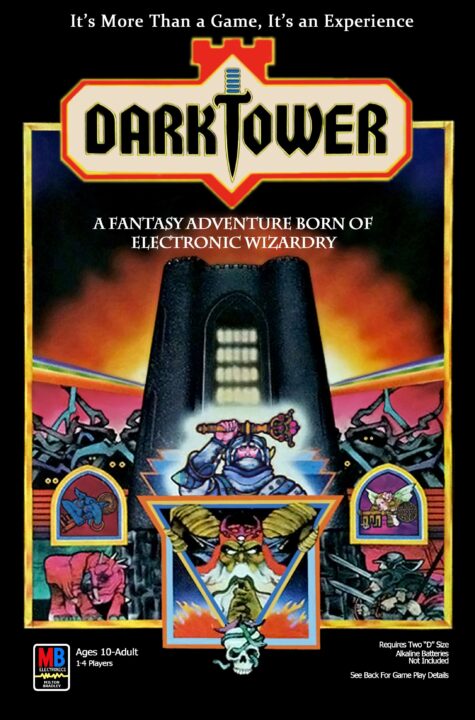
This review looks at Dark Tower, the old-school adventure game that turns a plastic tower into the loudest player at the table. Its quests, tense choices, and spooky sounds still create a great night of gaming, though luck and aging parts can cause a few grumbles.
How It Plays
Setting up
Each player chooses a kingdom, places their army on the board, and gathers starting supplies. Put the Dark Tower in the middle, add the keys and tokens, then switch the tower on. Yes, it really does boss everyone around.
Gameplay
On your turn, move your army across the map and choose where to explore, fight, trade, or search for a key. The electronic tower tracks your supplies and enemy forces, while its spinning lights and spooky noises tell you what happens next. Manage food, gold, warriors, and time carefully, because marching everywhere like a lost tourist gets expensive.
Winning the game
Gather the needed keys, build your strength, and enter the Dark Tower. You must defeat the enemy inside and claim victory before another player does. The first player to conquer the tower wins the game.
Want to know more? Read our extensive strategy guide for Dark Tower.
Dark Tower Electronic Tower: Atmosphere That Still Feels Magical
That little beep sounded like a warning from a haunted castle, and suddenly our kitchen table felt far too small. The tower does not just track the game. It creates the mood. Its lights flash during trouble, its voice calls out turns, and its odd little noises make every choice feel more serious. Even grabbing a small army token feels like signing a grim contract.
In our last play, Sam laughed at the first sound, then jumped when the tower barked out an alert. He knocked over his soda while trying to move a knight. This is wonderfully silly, yet the effect works. Dark Tower gives the room a shared story, even when everyone knows it uses old tech and chunky plastic. The sounds can grow repetitive after a long session, though. A few players may also find the voice a bit bossy, like a tiny wizard living inside the box.
Why the Tower Sets the Tone
The best part comes from the tension between silence and sound. Players lean close when the tower thinks, then cheer when it grants good news. The game never needs spooky music because the device supplies enough drama by itself. I like how this makes new players feel involved right away. Nobody sits quietly waiting for rules to finish. The table turns into a noisy little war room, with groans, cheers, and one very rude victory dance. Next comes Exploration, quests, and player choices, where brave plans meet the dark tower’s nastiest surprises together soon.
Dark Tower Exploration, Quests, and Player Choices
Exploration in Dark Tower feels like opening a cupboard at midnight: you know something lives inside, but you still reach for the handle. Players move across a broad map, visit strange sites, and reveal trouble through the tower’s prompts. The board gives you a clear goal, yet the route stays yours.
Quests With Teeth
Quests give each journey a proper shape. You may hunt a beast, rescue a captive, or gather clues before returning to the tower. These tasks push players outward instead of letting everyone sit safely near home. I liked how a quest could change our plans in seconds. A new clue might send us west, while a wounded hero forced us to choose a safer path. The game made those choices feel useful, not just decorative story fluff.
Discovery Makes Memories
Discovery also creates stories that stick. One friend found a shortcut, then led us into a dead end. Another chased a quest marker while we begged for a detour. Those moments gave the map personality. The locations did not feel like blank spaces between fights; they became places we remembered, feared, and mocked later.
Your Road, Your Regrets
Player choice works best when the table talks. We often split up to cover more ground, then learned that bravery has a nasty travel bill. Going alone saves time, but it also leaves you exposed. Staying together feels safer, though the map can punish slow teams. Dark Tower gives players room to make bold calls, and the consequences usually grow from those calls rather than random nonsense. Still, some quests can feel similar after several games, so repeat players may want house rules or a break between campaigns. Next up, Resource management and combat balance will show whether those brave choices survive the crunch.
Dark Tower Resource Management and Combat Balance
Counting Every Coin
Dark Tower gives each hero a purse of gold, food, and supplies before the march begins. Each choice nibbles at that stash. Do we buy a better weapon, hire a guide, or save coins for a healing spell? Then we spent all of it on gear and watched a roll turn our brave plan into soup. The game rewards planning, not just grabbing every prize.
Supplies Have Teeth
Food and torches create a clock. Carry too little and long trips become painful. Carry too much and your hero moves like a tired tortoise. This trade-off works well because the best answer changes with the quest. We learned to split supplies between heroes, which felt smart until one person got lost and ate the rations. That moment caused panic than the monster. Dark Tower makes resource loss matter without turning every choice into homework.
Combat Needs a Fair Fight
Combat uses gear, spells, and timing. Players can improve their odds by spending resources before a clash, but they never get a safety net. I like that tension. I dislike the fights that swing on one result, especially when a hero loses health after planning. Still, the system usually lets smart teams recover. The balance favors risk with a plan, not luck. That gives combat a push and pull: spend now for power, or wait and face a harder road. Next, Replay value and component reliability will inspect whether this clever box survives repeated table battles.
Dark Tower Replay Value and Component Reliability Review
Dark Tower offers more table time than its grand machine first suggests. Not because the rules changed, but because our party choices changed the story around them. One game ended with a bold rush. Another became a slow hunt for safer gear and better timing.
Replay Value
The tower’s audio calls, hidden events, and changing map pressure help each session keep its own shape. The game does not hand you a giant pile of random missions, so repeat plays can show some familiar faces. Still, the main adventure has a clear spine. After several plays, you may remember surprises and lose some of the mystery. I found that less spooky than the first run, but still tense when the tower made an unexpected sound. That said, the price feels easier to justify if you play with a regular group. Players can also swap heroes and starting goals, which creates fresh table stories without forcing everyone to learn a whole new game again.
Component Reliability
The biggest worry sits inside the electronic tower. It is clever, but old hardware can act moody. Ours worked well through every session, though the speaker sounded faint once, and one button needed a firmer press. We kept fresh batteries nearby, because nothing kills heroic drama like a tower asking for help and then going quiet. The plastic pieces also deserve care. A few tokens show light scuffs, but the board and cards held up nicely.
Final Verdict
I recommend Dark Tower for groups that want a rare, memorable game and can store its bulky box safely; just treat the tower like a temperamental pet, not a toaster.
Conclusion
This concludes my review of Dark Tower. Its sounds, lights, and bossy little beeps make every turn feel like trouble has entered the room. Exploration gives players real choices, while quests and resource use keep the game moving. Combat can lean on luck, but the risks usually feel exciting rather than unfair. The game also offers enough paths and surprises to bring us back for more. My main worry comes from the old electronic parts. A broken tower would turn this grand adventure into a very expensive box of plastic. Still, when it works, Dark Tower creates a rare table-top moment: everyone leans closer, talks trash, and fears one blinking machine. It is not perfect, but it remains a bold, funny, and memorable game. I happily give it 4 out of 5 stars.