
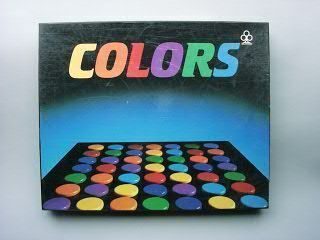
Welcome to my review of Colors! If you like guessing what your friends are thinking and arguing about whether teal is blue or green, you’re in for a treat. I’ve gathered my most competitive pals (and yes, the one colorblind friend just to keep things spicy), and after a bunch of laughs and the occasional argument over magenta, I’ve sorted out what makes this game pop, and where it sometimes just fizzles. Grab your favorite lucky sock, and let’s get started!
How It Plays
Setting up
Start by shuffling the colorful deck of cards and handing each player a dry erase board and marker. Arrange everyone so they can see each other’s faces—I know, terrifying. Make sure you’ve got a stack of the topic cards handy, too.
Gameplay
Each round, a topic card pops up. Players secretly write a color on their board that matches the topic. (“Color of envy”? Please, everyone knows that’s pizza sauce red.) When everyone’s done, everybody tries to guess who picked which color for that topic. Get it right, you score a point. Get it wrong, you live with the shame—until next round.
Winning the Game
After a set number of rounds (or whenever your pizza arrives), players tally their points. The one with the most points wins and earns bragging rights as the Color Oracle. If there’s a tie, well, you might need to settle it with a round of rock-paper-scissors.
Want to know more? Read our extensive strategy guide for COLORS.
How to Play Colors: The Rules and Tips for Bright Success
Alright, let’s shed some light (pun intended) on how to play Colors. It looked like a bag of Skittles had an identity crisis and became a board game. Each card is a different color, and every player gets a stack to start their journey through the rainbow.
The goal in Colors is simple: play your color cards in the best order based on the color prompt on the center board. Each round, a prompt pops up, asking things like, “Play the color that reminds you of something sour.” (Pro tip: Never play your blue card for this. No one thinks blueberries are that sour, even if you do!) Everyone secretly chooses a card and places it face down. Then, on the count of three, reveal! Chaos and arguments usually follow.
Points go to players whose color matches the judge’s favorite. Who gets to be the judge? That rotates each round, so the power (and chance for revenge) changes hands a lot. The winner gets a token, and everybody else gets a chance to plot their comeback. The first player to collect a set number of tokens wins. Simple? Yes. Easy?
The rules are quick to learn, and the game moves fast, unless your group can’t decide if magenta is pink or purple. (It’s clearly pink, but good luck convincing Dave.) So get your color instincts ready, because next up, I’ll talk about just how fierce and funny the competition gets in Colors. Spoiler: my friendships barely survived.
How Players Mix It Up: Interaction and Competition in Colors
I mean that in the nicest way. This game gets everyone talking, guessing, and side-eyeing the way only a game about colors can. If you think picking a color is simple, just wait till three people all glare at you for “stealing” green again. I swear, we almost started a family feud over turquoise.
The main form of interaction comes from bluffing and sneaky choices. Each round, you try to guess what colors match the word on the card—sometimes playing it safe, sometimes trying to outfox Angela, who always picks red for “anger.” You need to keep your wits sharp and maybe even do a bit of color psychology—”Would Dave pick chartreuse or play it safe with blue?” The guessing, bluffing, and playful accusations keep things lively and often hilarious.
Colors doesn’t let you hide in the corner and hope for the best. You’re always thinking about what others might do, and if your choices overlap with theirs, that’s when the sparks fly. The scoring means you really want to sync up with just the right folks—not too many, not too few, or you’ll end up with a rainbow of regret.
In terms of competition, things never get mean, but you will want to nudge your cousin “accidentally” the next time she picks mauve. The interaction is clever, direct, and often loud, in the best way. Next up, let’s squint at just how much luck and strategy mix together in Colors—get your lucky socks ready!
Luck vs. Strategy: The Colorful Tug-of-War
Now, let’s get to the juicy stuff. Is Colors all about clever moves, or do you just hope the board gods like your taste in teal? I’ve played enough rounds to say, it’s a bit of both—but the mix can get a tad lopsided if you’re not careful.
Strategy does exist, don’t get me wrong. You’ll want to play cards in a way that throws your friends off and maybe play to their weaknesses. But, and it’s a big but, a dollop of luck waltzes through every round. When you’re picking or guessing a color, sometimes you genuinely have no clue if your buddy’s favorite shade of green is more ‘forest’ or ‘radioactive sludge.’ I’ve lost points because I didn’t realize Sam has a vendetta against orange. Thanks for nothing, Sam.
Sometimes, you’ll feel like a colorful genius, reading everyone at the table—until the next round, when someone wins because they shuffled their cards in the exact right order by accident. That can be a bummer if you love outmaneuvering your rivals with perfect logic. Colors relies on gut feeling and social deduction, but if you crave deep strategy, you might find the randomness more than a little distracting.
Still, I love it when a game surprises me, and Colors does that. Just don’t expect to be the next board gaming mastermind based on your performance here. Next up, let’s see if Colors looks as good as it plays—will the pieces pop, or is everything fifty shades of beige? Stay tuned for the prettiest part!
Bright Bits and Bold Looks: Component Quality and Visual Appeal in Colors
I’ll be blunt: Colors might win the world’s most cheerful box award. The packaging is so bright you could use it to guide lost hikers back to camp. The box isn’t oversized—so it actually fits in my game shelf and doesn’t double as a cat bed. Points for practical design!
Once you pop the lid, every piece screams color (well, not literally; that would be weird). The cards are thick enough to survive life with my clumsy friends who seem to think shuffling means bending everything like a pretzel. No sign of flimsiness here, even with repeat plays, so I don’t see myself replacing these cards anytime soon.
Oh, and the color choices? They’re not just for show. Every shade pops—red isn’t some sad, faded apple skin color—it’s more like “sunburn at the beach.” The blue could wake up a sleeping dolphin. It does wonders for colorblind-friendly play too. My friend Mark, who struggles with certain shades, had no trouble at all. The symbols on the cards keep everything easy to spot, and the print quality is sharp, so nothing gets muddled.
The one downside: the insert is just a cardboard divider. All those pretty cards do jostle around in there if you take Colors on the road. But hey, it’s not a deal-breaker, just a minor quibble.
So, do I recommend Colors based on looks and quality? Absolutely. If you want a game that brightens the table and can handle a clumsy crowd, Colors is a solid choice. I just wish it came with sunglasses.
Conclusion
That wraps up my review on Colors! The game brings quick laughs to the table with its simple rules and guessing fun. Just watch out if you hate luck—Colors gives it plenty of room. Still, with its bright cards and easy setup, Colors is a strong pick for casual play. If you want a fast game that gets everyone talking (and maybe bickering over weird color names), give it a try. Thanks for reading, and may your colors never clash—unless you want them to!