
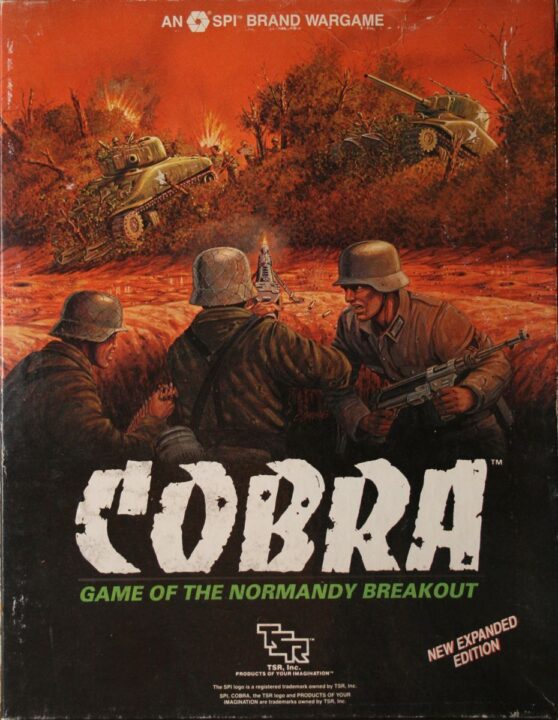
Cobra: Game of the Normandy Breakout: Box Cover Front
Cobra: Game of the Normandy Breakout - Middle of Turn X3, TSR Expanded Edition. - Credit: kryfam
Cobra: Game of the Normandy Breakout - Cobra consolidated charts SPI - Credit: Paul Q
Cobra: Game of the Normandy Breakout - Map - Credit: okiedokie
Cobra: Game of the Normandy Breakout - Counters Front - Credit: okiedokie
Cobra: Game of the Normandy Breakout - Cover of Magazine - Credit: okiedokie
Cobra: Game of the Normandy Breakout - Counters Back - Credit: okiedokie
  1. Cobra: Game of the Normandy Breakout: Box Cover Front
  2. Cobra: Game of the Normandy Breakout - Middle of Turn X3, TSR Expanded Edition. - Credit: kryfam
  3. Cobra: Game of the Normandy Breakout - Cobra consolidated charts SPI - Credit: Paul Q
  4. Cobra: Game of the Normandy Breakout - Map - Credit: okiedokie
  5. Cobra: Game of the Normandy Breakout - Counters Front - Credit: okiedokie
  6. Cobra: Game of the Normandy Breakout - Cover of Magazine - Credit: okiedokie
  7. Cobra: Game of the Normandy Breakout - Counters Back - Credit: okiedokie

Cobra Review

Cobra delivers quick rules, sneaky bluffs, and plenty of table laughs. Luck sometimes bites, but clever choices still matter. My friends demanded rematches, which says more than my wounded pride ever could.

  • Rules and learning curve
  • Bluffing and player interaction
  • Luck versus strategy
  • Replay value and components
3.8/5Overall Score

Cobra blends bluffing, strategy, and laughs into a quick game, though luck can upset careful plans and spark rematches often.

Specs
  • Number of players: 2–5 players
  • Playing time: Around 20 minutes
  • Recommended player age: 8 years and up
  • Game type: Light strategy and bluffing card game
  • Skill level: Easy to learn, with room for clever play
  • Best setting: Family game nights and casual gatherings
  • Replay value: Good, thanks to changing player choices and table talk
Pros
  • Easy rules to learn
  • Funny bluffing and table talk
  • Strong replay value
  • Quick, lively games
Cons
  • Luck can swing outcomes
  • Limited strategic depth
  • Bluffing needs confident players
Disclaimer: Clicking our links may result in us earning enough for a new pair of dice, but not enough to quit our day jobs as amateur board game hustlers.

After several games with my friends, I can say this review of Cobra comes with laughs, suspicious stares, and at least one terrible bluff from me. The rules took little time to learn, but the table soon filled with bold guesses, clever plays, and the odd groan when luck showed up uninvited. Smart choices matter, yet the game still keeps everyone guessing. I’ll look at how it plays, how much control players have, and whether the parts hold up after repeated matches. Bring your best poker face and maybe a snack.

How It Plays

Cobra is quick to learn and easy to teach. Players build their hands, play cards, and try to outsmart the other snakes at the table. The rules stay simple, but a well-timed move can still cause plenty of trouble.

Setting up

Shuffle the cards and deal each player their starting hand. Place the rest of the deck in the middle of the table, leaving room for a discard pile. Choose a first player, then get ready to hiss at your friends for perfectly legal reasons.

Gameplay

Players take turns drawing and playing cards. Each card can change the board, affect another player, or help you build towards victory. Watch what your rivals collect, plan your moves, and try not to give away your best plan too soon.

Winning the game

The first player to complete the game’s winning goal wins. You may need to collect the right cards, score enough points, or finish a set, depending on the cards in play. Keep an eye on everyone else, though. A quiet cobra can still bite.

Want to know more? Read our extensive strategy guide for Cobra.

Cobra Board Game Rules and Learning Curve

When I first taught Cobra to my friends, I expected a quick start. I was wrong, but only slightly. The rulebook looks serious, like it owns a tiny courtroom, yet the core rules settle in fast. Players take turns, follow the card instructions, and keep their plans tucked away. Our first round took about twenty minutes, mostly because Dan read one card upside down and blamed the table.

A gentle first game

The teach is simple once you show a sample turn. I recommend playing one open practice round before adding the sharper rules. This lets everyone see how actions link together without drowning in tiny details. New players usually grasp the goal after two turns, then spend the rest of the game pretending they had a secret plan. Cobra rewards clear timing more than rulebook memorizing.

Where players may pause

After the first game, the bumps appear. Some card effects need careful reading, and players may pause to check whether a move breaks a chain. That pause can slow the table, though it rarely feels painful. I found a small player aid helped loads: write the turn order and key actions on scrap paper. The game also teaches through mistakes. A poor early choice does not ruin everything, which keeps beginners from sulking beside the snacks.

What to expect next

Next, we will look at Bluffing and player interaction, where Cobra turns quiet rule knowledge into raised eyebrows, brave lies, and at least one very suspicious smile from Dan again.

Cobra: Game of the Normandy Breakout - Middle of Turn X3, TSR Expanded Edition. - Credit: kryfam

Cobra Bluffing and Player Interaction

Reading the Table

Cobra makes bluffing the main event, not a side trick. Every turn asks you to judge what another player really holds, or wants you to think they hold. That sounds simple, but our table got loud. Ben stared at his cards like they owed him money, while Mia smiled whenever she had absolutely no reason to. I knew trouble had arrived when she said, “Trust me,” then laughed before anyone asked why.

Pressure and Payback

Cobra rewards lies, but it also gives players room to push back. If someone claims a safe move, you can call the bluff, challenge the claim, or let them sweat. Each choice changes the mood. I once challenged Ben, felt smug for three seconds, and watched him flip the card I feared. My confidence left the room, grabbed a taxi, and never returned. This back-and-forth keeps every player involved, even when their turn sits far away.

The moments come from reads, not loud table talk. Cobra lets quiet players win space by watching timing, eye contact, and changes in voice. My friend Sara barely spoke, yet she spotted two fake claims in one round. Meanwhile, I explained my plan so badly that the table believed I had a secret plan. I did not. I had panic and a biscuit. Still, the game makes social play feel useful rather than forced. You can bluff with words, silence, or a timed shrug.

The only snag is that repeated groups may learn each other’s tells, which can make bluffs less fresh. Even so, Cobra creates funny clashes, and games stayed lively throughout; next, we will weigh luck against strategic control.

Cobra: Game of the Normandy Breakout - Cobra consolidated charts SPI - Credit: Paul Q

Luck Has a Leash, Most of the Time

Where the dice bite

Cobra gives luck a seat at the table, but it does not hand luck the keys. In my games with friends, random draws and rolls sometimes rescued a player who looked ready for the cardboard graveyard. That felt exciting, not cruel. The lucky player still needed to choose when to spend a good result, when to hold back, and which target deserved attention.

Skill keeps the scales level

That control matters more than the luck itself. A poor result can sting, yet smart planning often turns a bad turn into a small win. I have watched Sam waste a strong move too early, then blame the moon, the table, and my snack choices. Cobra rarely lets a player repair every mistake, though. A weak start can snowball, especially when the right cards refuse to appear. Players who fall behind may wait several turns for a useful chance to return.

Can smart play beat fate?

Still, I never felt that Cobra picked the winner by itself. Careful players read the board state, protect their options, and plan around likely risks. Luck adds drama, while choices shape the score. That balance kept our table engaged across several plays. I would not call Cobra a pure strategy game, but it rewards calm thinking enough to satisfy players who dislike coin-flip endings. That edge gives thoughtful players room to win, even when the deck tosses a banana peel into their plans.

Next up, I will rate Cobra’s replay value and component quality, including whether its table presence survives repeated family battles.

Cobra: Game of the Normandy Breakout - Map - Credit: okiedokie

Cobra Board Game Replay Value and Component Quality Review

After several games of Cobra with my usual group, I kept finding reasons to bring it back to the table. That matters more than a shiny first play. Some games make a big splash, then vanish beside the sofa forever. Cobra avoided that sad fate. Each session felt fresh because the game created new moments from the same core set. Our table developed little habits, jokes, and grudges, which gave later games a fun sense of history.

Does Cobra Stay Fresh?

Cobra offers solid replay value for its size. It does not need a mountain of cards or a rulebook the size of a phone book to keep players interested. The changing mix of cards gives each game a different shape, while the short play time makes a rematch easy to suggest. I often heard, “One more game,” just before midnight. That sentence has ruined many sensible bedtimes in my house.

The game works best when you play it in short bursts. After many back-to-back rounds, the fun can lose a little fizz. Cobra has a clear focus, so it will not satisfy players who want endless content or a huge pile of surprises. Still, it gives enough variety for regular game nights, especially when you rotate it with larger titles.

Cards, Tokens, and Table Presence

The components feel sturdy enough for busy tables and clumsy snack hands. The cards handle normal use well, and the tokens do their job without making players squint like tired owls. The artwork gives Cobra a bold look, though some details could pop more clearly under dim lights. Nothing feels cheap, but the production also does not aim for luxury shelf bling. It delivers a neat, practical package that travels well and stores without fuss.

My Verdict

I recommend Cobra for players who want a compact game with lasting table appeal and dependable components. It may not become your grand gaming centerpiece, but it earns repeat plays honestly. Just keep the snacks away from the cards. I learned that lesson the crunchy way.

Cobra: Game of the Normandy Breakout - Counters Front - Credit: okiedokie

Conclusion

That concludes my review of Cobra. After several games with friends, I found a fun mix of bluffing, table talk, and smart choices. Luck can still slither in and spoil a plan, but good play usually wins the day. The rules are easy to learn, the parts hold up well, and each rematch brings fresh laughs. Cobra will not suit players who want deep strategy with no luck, but it makes a lively choice for game nights. Just watch your friends closely. Someone is always holding the snake.

3.8/5Overall Score
Jamie in his proper element: With all of his board games
Jamie Hopkins

With years of dice-rolling, card-flipping, and strategic planning under my belt, I've transformed my passion into expertise. I thrive on dissecting the mechanics and social dynamics of board games, sharing insights from countless game nights with friends. I dive deep into gameplay mechanics, while emphasizing the social joys of gaming. While I appreciate themes and visuals, it's the strategy and camaraderie that truly capture my heart.