
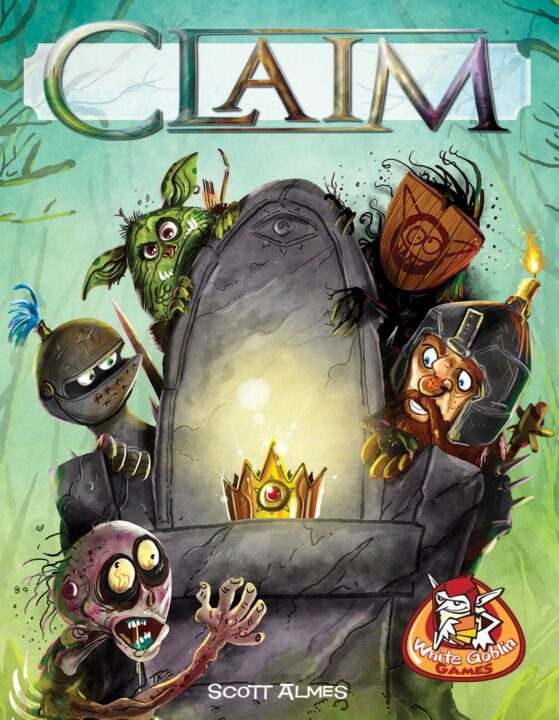
It’s review time and today I’ve got my hands on Claim, the trick-taking game that’s been making the rounds at my weekly game night. I’ve played this one with my usual gang of game-hungry friends, so you’ll get the honest scoop—warts, giggles, luck-driven groans, and all. Is this fantasy card fest a must-have for your table or just another box taking up space? Grab a snack, and I’ll tell you what worked, what didn’t, and why someone tried to bribe me with cookies to throw the game. Let’s get started!
How It Plays
Setting up
Shuffle the deck of fantasy folk cards and deal 13 cards to each player. Place the rest as a draw pile nearby. There’s no board, so just clear some table space. Pick who goes first. Usually, it’s the person who most recently battled a goblin (or, you know, just pick someone).
Gameplay
Claim is played over two phases. In phase one, players take turns leading with a card. The other player must follow suit if possible. The winner of the trick takes a face-down card from the draw pile, and their opponent takes the next one. The cards you win become your hand for phase two. In phase two, it’s the same trick-taking action, but now you’re fighting for the support of the five factions. Each faction has its own special twist, so keep an eye on those sneaky goblins!
Winning the game
After all cards are played, count how many tricks you won in each faction. Whoever has the most factions on their side, wins. If you end up tied, argue about it with your opponent for maximum fun.
Want to know more? Read our extensive strategy guide for Claim.
How Fair is Claim? Let’s Talk Gameplay Balance
Sounds pretty straightforward, right?
Well, not entirely. Claim has five factions, each with their own twist. Knights might stomp Goblins, Goblins sneak all over, Undead refuse to stay out of the game… and so on. Most of the time, the cards you draw decide your fate more than any long-term strategy. There’s some planning, but luck sticks its nose where it’s not always wanted. I’ve had rounds where my clever plan blew up because I drew a parade of useless dwarves, and my buddy just cackled as his goblins ran wild.
This isn’t to say Claim is unfair. It’s more that the game leans into surprises and swings. If you love trick-taking games with deep strategy, you might get annoyed when a random hand costs you the win. For me, it’s a game that’s best for folks who like their fair share of mayhem mixed with balance.
So, is Claim perfectly fair? I’d say it’s decently balanced, but luck can mess you up. Next up, I’ll talk all about how the cards and bits look and feel—so sharpen your eyeballs, because the art section is going to be a feast!
Claim’s Card Art and Component Quality: A Feast for Goblin Eyes
If you’re the kind of person who judges a game by how shiny the cards look, then Claim might just steal your heart (and maybe your lunch money).
The artwork keeps each faction feeling unique. The Knights look smug, the Doppelgangers are weirdly unsettling, and the Goblins remind me of my cousin Steve after three sodas. The illustrations are bright and clear, so you can spot the difference between an Undead card and a Doppelganger card even from across the table. Trust me, my friend Sam tries to cheat every game, but with Claim, even he can’t pretend to have the Knight when he’s actually holding a Goblin. That’s a win for all of us.
The cards themselves feel good in your hands – not too flimsy, not too thick, and they shuffle well, unless you’re the one person in every group who shuffles like they’re making a fruit salad. I can say after a dozen games, our deck still looks pretty new. The box is small and sturdy, which makes it easy to smuggle into game night without looking like you’ve packed for a three-day camping trip.
But enough talk about looks. Next, I’ll talk about replay value and whether Claim keeps players coming back for more, or if it’s a one-hit wonder that fizzles out faster than a fairy at a barbecue.
Replay Value and Player Engagement in Claim
Claim grabs your attention with its simple rules and quick turns, but what keeps us coming back is how every hand feels different. You can’t just sleepwalk through the game—every trick matters, and there is always a new angle to try. The unique powers of each faction keep players guessing, so you can try sneaky tricks with Goblins in one game and get revenge with Undead in the next. The game sets up fast, so you never feel like you’re waiting around, and there is almost zero downtime. I love how even a new player can pick it up but, after a few games, you’ll still spot new moves and strategies.
You always feel involved, so no one zones out (except my friend Carl, but he zones out during Monopoly too). Plus, the short playtime means nobody has to commit to a board game marathon: finish in 20 minutes, swap sides, and go again.
Next, I’ll spill the beans on how much luck and how much strategy really matter in Claim—hold on to your goblin hats!
The Great Debate: Luck vs Strategy in Claim
So let’s talk about the big ol’ elephant in the room when it comes to Claim: luck versus strategy. I love a good, fair slugfest in card games. But here’s what happened.
Strategy is there. Sure, you try to count cards and plan out your moves based on what suits you’ve won and which factions are left to claim your loyalty. You’ll want to make the most of your strong cards at the right moment, especially if you have a combo in mind. All well and good, until Lady Luck decides you’re not winning tonight.
Here’s the kicker: the card draw can ruin (or make) your day. Sometimes, no matter how smart you play, the cards refuse to cooperate. I remember one game where my buddy managed to snag all the big hitters in Round One, and I was left feeling like my deck had been cursed by the goblins themselves. No strategy saved me that time.
Luck definitely wears the crown in Claim. You can try your best, but the shuffle gods like to meddle. If you like certainty, you’ll want to look elsewhere. If you’re cool with a bit of chaos, this game is still a blast.
My verdict: Claim has its moments, but the luck factor is strong. I recommend it if you want wild swings and don’t mind a little mischief at the table!
Conclusion
Alright, folks, that wraps up my review of Claim. If you love quick card games with a splash of fantasy and don’t mind luck swooping in to mess with your plans, then Claim delivers plenty of laughs and groans (sometimes both at once). The quirky art and fast play kept my friend group hooked for several rounds. But, if you want pure strategy and hate when the deck betrays you — well, you might throw this one out the window (please don’t, it’s hard to find good card games in the bushes). Claim is a good time, but the luck means I give it 3 out of 5 stars. Grab it if you want easy fun, but look elsewhere if you demand fairness in your games. That’s it for this review. Till next time—keep your snacks safe from greedy goblins!