
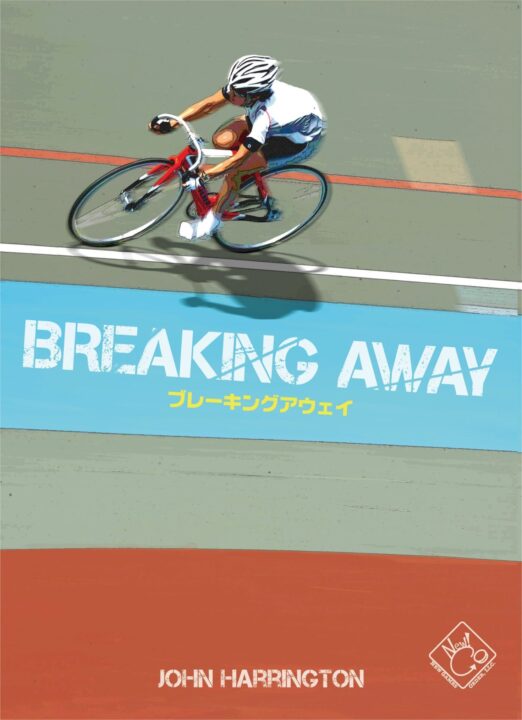
Ever wanted to lead your prancing plastic cyclists to glory while your friends glare at you across the table? Welcome to my review of Breaking Away, the quirky bike-racing game that had my game group yelling, cheering, and occasionally arguing over who should’ve washed their hands before touching the cards. If you’re on the hunt for a fast-paced, interactive strategy game, grab your helmet and let’s get rolling!
How It Plays
Setting up
Put the board out. Everyone takes a team of cyclists—mine were blue but I wanted pink. Put your cyclists at the start line. Sort the cards by number and give each player the right set.
Gameplay
Players pick cards from their hands to decide how far each cyclist moves. You move one cyclist at a time, starting from the front of the group. Drafting is a thing, so stay close to others if you can. There’s loads of blocking, planning, and the odd bit of shouting at your mate for trapping you behind an old lady on a tricycle (yes, it happened).
Winning the game
When the last turn finishes, add up points for where your cyclists end up. Cyclists near the front score more. The team with the most points wins! If you win, remember to brag until the next game.
Want to know more? Read our extensive strategy guide for Breaking Away.
How Does Breaking Away Handle Gameplay Flow and Rules Clarity?
The first time I set up Breaking Away, I was honestly worried I had walked into another board game trap. You know the type: rulebook thicker than my grandma’s knitting pattern, and everyone at the table gets that glazed donut look. But honestly, Breaking Away surprised me! The rulebook is short, clear, and—dare I say—friendly. It’s not IKEA furniture confusing, which is always a win in my book.
Here’s the rundown: You manage a quirky team of cyclists, each with their own energy stash. Every round, you secretly pick numbers to move your riders. The numbers run out, so you actually have to think a bit (painful, I know). Turns move fast. Everyone reveals choices at once, so there’s no waiting while Uncle Greg overthinks his next move for eternity. I love that the game keeps everyone involved.
Breaking Away keeps the decision-making simple but interesting. The board is easy to read, and movement is logical. There’s little room for arguing about the rules, so it’s mostly good-natured banter rather than heated debate. Only rule quirk? Some of the drafting rules (the thing where you suck up behind another cyclist) need a second read, but after a practice round, everyone gets it. Up next, let’s talk about strategy depth versus luck—because trust me, this game is more than just pedaling in circles!
Strategy or Luck? The Real Race in Breaking Away
When it comes to board games, I break all friendships if too much luck decides the winner. The question on everyone’s lips? Is this a game about skill, or do you win because you bribed Lady Luck?
Let me clear this up: Breaking Away is a game for the thinkers. You get the power to plan many turns ahead. The bike racing theme hides sneaky math, and there is a real joy in working out the perfect move. You decide speeds for each rider, decide when to lead, and when to draft. You have to watch how others split their energy and try to read their next move. If you’re good at reading people and counting, you will love it here. Yes, I felt like a velvet-lapel Bond villain half the game, planning everything three moves ahead. And when I lost, it stung because it was my own fault!
Does luck matter? Sure, a tiny bit. Sometimes your rivals make unpredictable choices or the breakaway group forms in a way you didn’t expect. But that’s not the game’s fault, that’s just life (and bad friends, looking at you, Dave). Unlike many racing games, there are no dice or random cards messing up your plan. The only real chaos is the other players—and your own brain fart moments.
If you love games where the best planner wins, Breaking Away will scratch your itch. But if you expect the universe to bless you with a win, look elsewhere. Next up, we’ll see just how close—or wildly unhinged—players can get with the engaging face-offs in Breaking Away.
How Breaking Away Gets Everyone Yelling at Each Other (In a Nice Way)
If you’re the type who likes quiet, solitary games where you can sip your tea and stare at the board in deep thought, Breaking Away is probably not going to be your jam. This game thrives on player interaction – and honestly, it is the reason I keep coming back for more.
Every turn, you’re eyeing your opponents’ teams like a hawk, trying to guess which cyclist will sprint ahead and which will dawdle at the back. The drafting system means you’re never safe from a sudden surge, and if you mess up your positioning, someone is always happy to take advantage. I once thought I had a win in the bag, only to get boxed in by two friends who teamed up for just long enough to ensure I finished a humiliating third. Betrayal stings, but it’s all in good fun here.
What gets me most about Breaking Away is how invested everyone gets, even if they’re trailing. There’s always some sneaky move possible, like blocking a rival or cleverly jumping into a slipstream. You can never switch off, and there’s very little downtime. At the end, win or lose, there’s plenty of grinning and mock outrage. That’s the magic of a great interactive design.
Wondering if this game has legs for more than a few plays, or if it drags longer than a Tour de France stage? Hold onto your handlebars—the next section is all about Replayability and session length!
Replayability and Session Length: Will Breaking Away Keep You Coming Back?
If you want a game that won’t gather dust on your shelf, Breaking Away is a sturdy pick. I’ve played this with my crew at least five times this month, and I still catch myself trying to out-think them in the shower. That’s a bit worrying, but hey, this is a safe space, right? Every race feels different. The action is wild, and you never know which rider will sneak ahead—or face plant dramatically. The simple rules and unique draft mechanics mean no two games play out the same. Planning teams, testing strategies, and watching someone misjudge their sprint so badly they land in last place… it just never gets old.
If you’re worried about a big time commitment, relax. Breaking Away races fly by. Most games finish under an hour, even with players who stop to narrate their cyclist’s tragic backstory. (Looking at you, Dave.) With four to six players, the pace stays brisk—a miracle for a game about slow burn tactics. If you want something quick that doesn’t melt your brain, this one’s a winner. Even better, it won’t eat up your entire evening unless you want a rematch. Or, in my case, three rematches.
Replayability really shines because you can try new team tactics, bluff other players, and even invent your own ‘commentator voice’ for the race. Every session feels a bit like the Tour de France, minus the Lycra. The only real replay hiccup is—if you hate planning or your group loves chaos more than strategy, maybe this isn’t your dream ride.
Would I recommend Breaking Away? Absolutely. It’s fast, clever, and just the right amount of silly. Bring snacks and your best game face.
Conclusion
If you’re tired of games where luck rolls over your dreams, Breaking Away is a breath of fresh air on two wheels. The rules are clear, the play is fast, and the strategy is deep enough to make your brain sweat a little. Sure, I wish the drafting rules needed one less reread, but that’s a small price for clever gameplay and high replay value. I’m wrapping up this review here, so if you like games that reward planning and trash-talk over pure luck, Breaking Away is a winner. I give it a proud 4 out of 5 stars—one of the best rides you can have without needing spandex shorts!