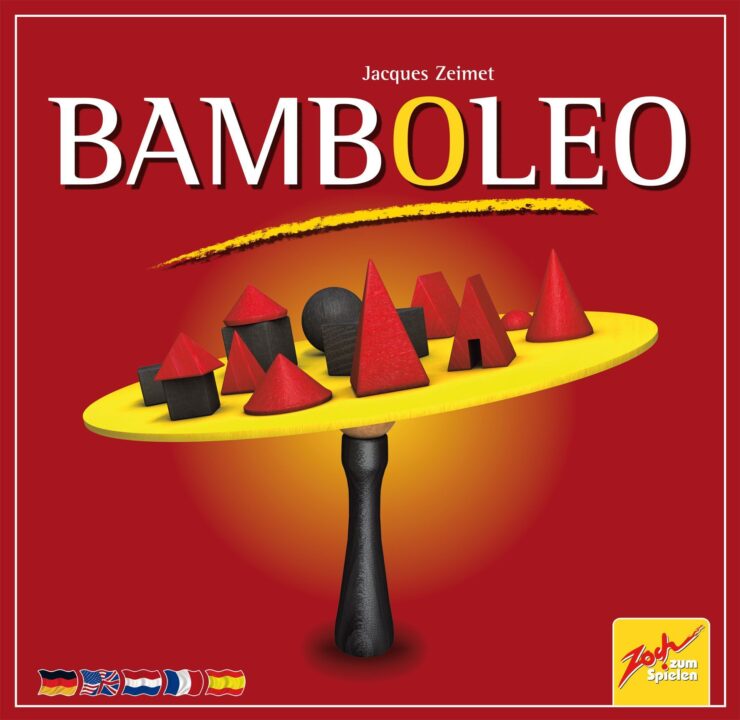

Welcome to my review of Bamboleo, the wobbly wooden game that turns a flat table into a tiny circus act. I played it with friends, and we spent as much time holding our breath as we did pretending to understand physics. The rules are simple, the pieces look lovely, and every move asks for a steady hand and a bit of nerve. It creates plenty of laughs without leaning too hard on luck, though one careless nudge can make your grand plan tumble like my dignity after losing three rounds in a row. Here’s how it handles skill, design, player interaction, and replay value.
How It Plays
Setting up
Place the wooden ball on the table, then balance the cork board on top. Scatter the wooden pieces across the board. Try not to bump the table unless you fancy a very short game.
Gameplay
Players take turns removing one piece from the board with one hand. Choose carefully, as every piece helps keep the board steady. If pieces fall during your turn, you collect the ones that hit the table. The board then gets balanced again before play continues.
Winning the game
When players have removed all the pieces, everyone counts their haul. The player with the most pieces wins. So, in Bamboleo, making the board wobble like a nervous pudding can still lead to victory.
Want to know more? Read our extensive strategy guide for Bamboleo.
Balancing Skill and Strategy in Bamboleo
In Bamboleo, balance is the whole show. Each player removes a piece from the wobbling platform and hopes the table does not suddenly become a tiny earthquake. That simple act makes every turn feel like a dare. You need a steady hand, but patience matters more. I once rushed a move because my friend claimed the platform looked safe. It tilted like a sleepy pancake, and my piece rolled away.
The game rewards reading the platform before touching anything. You can choose an easy piece, take a risky one, or leave a tempting shape for the next player. That choice creates real strategy, because every removal changes the weight and balance for everyone. A clever player watches which side sinks, then picks a piece that keeps future options open. Still, Bamboleo never lets skill take total control. The platform may shift in a rude little wiggle, and a careful plan can fall apart. Luck plays a small part, but your hands and timing decide most results. In our games, beginners often won early, while experienced players learned to stop showing off.
Bamboleo also handles player skill in a friendly way. A failed grab brings laughs instead of a long rules debate, and the table resets quickly. I like that pressure: the game tests nerve without turning one mistake into a lost evening. It suits families, but clever adults still find plenty to think about. Most nights, anyway. Next, we will inspect the wooden pieces and design.
Wooden Pieces and Design in Bamboleo
A Board That Wobbles
Bamboleo looks like a small circus act. Its board rests on a wooden ball, while chunky wooden pieces sit across the top like colourful passengers on a nervous bus. The whole thing feels warm, odd, and pleasingly old school. My copy came with pieces in many shapes, and each one had a solid weight that made it satisfying to pick up. Before play, my friends kept poking the platform. This did not improve our chances, but it did create a lot of laughter.
Simple, But Full of Character
The design keeps the rules visible quietly. There is no board covered in icons, no fiddly deck, or plastic castle. You simply see the platform, the wooden sphere, and the pieces waiting for trouble. That clean look helps new players understand the game. It also gives Bamboleo presence. Passers-by paused to ask what we were doing. I told them we were conducting serious research into gravity, then knocked half the pieces off.
Built for Hands-On Play
The wood also helps the game feel more like an object than a box of parts. The pieces have small marks and colour changes, but that suits the handmade charm. I would not call every edge perfect, and younger players may need care when they lift the platform. Still, nothing felt flimsy after several nights of play. Bamboleo earns its shelf space because it looks good before, during, and after a game. Next, we will see how player interaction and tension turn this wobbly display into a proper contest.
Bamboleo Player Interaction and Tension Review
Every Move Gets a Reaction
When we played Bamboleo with friends, nobody sat quietly for long. Each player watched the next hand hover near the wooden board, then offered advice that sounded helpful but usually meant, “please do not ruin my turn.” The table turned into a tiny courtroom, with every wobble treated like breaking news. I loved that shared focus. The game creates tension without needing timers, loud music, or a villain in a cape. Good table talk becomes part of the fun, although shy players may feel the spotlight arrive too fast.
Friendly Pressure, Real Stakes
Interaction in Bamboleo comes from the group, not attack cards or sneaky powers. Players can encourage a careful move, distract with a joke, or point out that the board looks ready to topple. That last trick sounds harmless, but my mate Ben once made me laugh as I reached across, and my hand shook like a squirrel. A small mistake can change the mood. The next person inherits the puzzle. Still, pressure stays fair because everyone faces the same danger. No player gets a secret bonus or lucky rescue. That matters when the structure leans at an angle that makes your confidence leave the building.
Best With the Right Crowd
The game shines with players who enjoy cheering for near misses and groaning at brave choices. Our group made rivalries. The tension rises when someone takes the final piece. Everyone leans in. When the board survives, the table erupts. When it falls, the player often bows like a stage actor who planned the crash. Bamboleo offers no deep negotiation. For family nights and groups, that gentle touch works well. It keeps the mood tense but kind, even after a blunder. Next, Replay value and setup will test whether Bamboleo earns another night.
Bamboleo Replay Value and Setup: Fresh Fun Without Fuss
Setup
Setting up Bamboleo takes less time than arguing over the last biscuit. Place the wooden board on its stand, spread the pieces across the surface, and find a steady table. A wobbly desk can turn a clever game into a furniture crisis. Once everything rests in place, players choose the turn order and start within minutes. Even the fussiest player only needs one look.
Replay
Replay value comes from changing layouts and changing moods. No two setups feel quite alike because the pieces land in new spots each time. My group starts with careful hands and sensible plans. Then someone gets cocky, nudges a piece too hard, and suddenly gravity becomes the villain. Those moments create stories worth retelling.
Because Bamboleo uses a short setup and no deck of cards, it fits neatly after dinner, between longer games, or during a family visit. New players understand the goal quickly, while regulars still find fresh ways to test their nerve. A round ends fast enough to invite another without fuss.
The main limit is that novelty may fade for players who dislike dexterity games or prefer deep strategy. Bamboleo has no missions, campaigns, or growing rule set. It offers a reset and puzzle each round. That suits groups better than players seeking a project. I kept bringing Bamboleo out because setup never became a chore.
Storage helps replay value too. Keep the pieces together, and the box remains easy to carry. Packing up takes little time. In short, Bamboleo earns repeat plays through speed and variety. I recommend Bamboleo for families and friends wanting a lively game that gets moving very fast.
Conclusion
That concludes our review of Bamboleo. After several games with friends, I found a clever little game with loads of charm, fair skill, and just enough wobble-induced panic to keep everyone grinning. The wooden pieces look lovely, setup takes moments, and each turn creates real tension without turning the game into a luck-fest. You can plan your moves, read the balance, and blame your shaky hands when everything goes sideways. Bamboleo works best with a lively group that enjoys laughs and gentle table talk. It does not offer deep strategy or endless variety, but it delivers a fresh, fun experience in a neat package. I happily recomend it for families, parties, and anyone who wants a board game that makes players gasp at a pile of wood.