
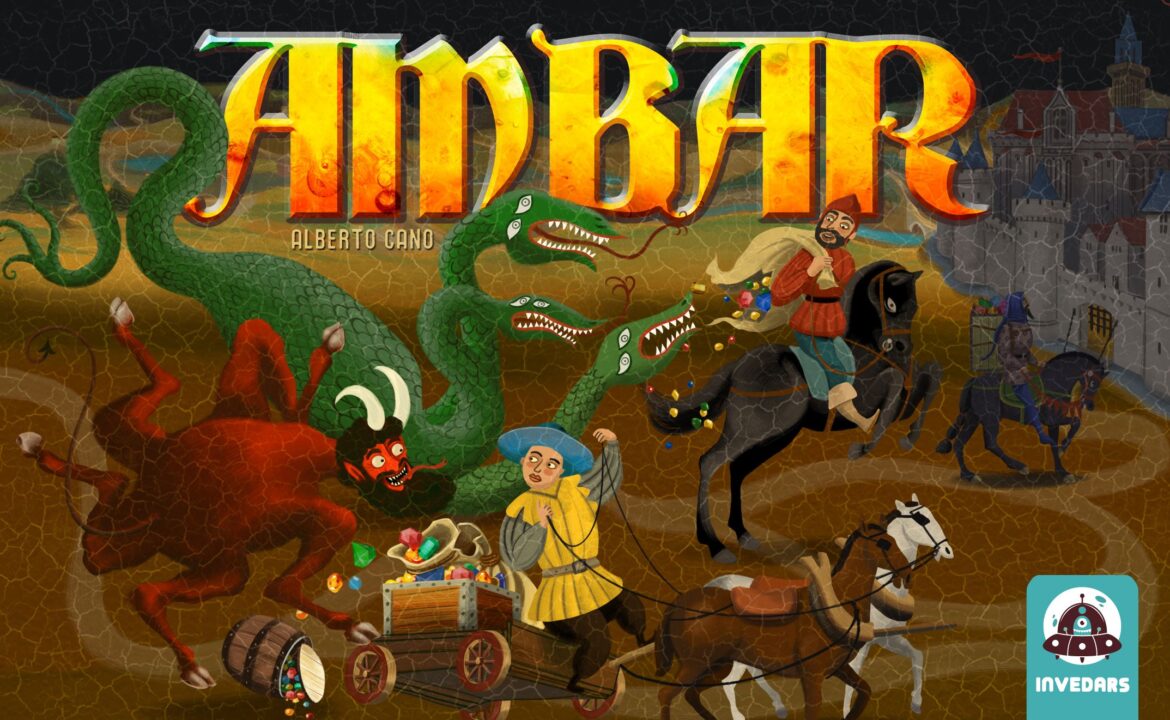
Welcome to my review! Picture this: four grown adults battling over glowing chunks of magical resin, one spilled drink, two questionable alliances, and someone yelling, “You stole my honey!” That’s just another Tuesday night with Ambar. I’ve played this one enough to have the rules haunt my dreams. If you’re on the hunt for a game with sneaky moves, some strategic elbowing, and a dash of beautiful forest bling, you’re in the right spot. Let’s see if this board game deserves a spot on your shelf—or the back of your closet next to that fondue set you never use.
How It Plays
Setting up
First, everyone grabs their merchant tokens and puts their player boards in front of them. Shuffle the amber and contract cards, then deal out some shiny amber to the market. Toss the rest in a pile—no peeking! Place the main board in the center, and hand out starting coins. Now pick a first player (we use the person who last saw a fossil, but you do you).
Gameplay
On your turn, you get to move around collecting valuable amber, fill up contracts, and try to outsmart your friends. There’s blocking, a bit of sneaky stealing, and a lot of planning. Players take actions by spending coins or resources, and the order you do things really matters, so don’t get distracted by snacks. Every choice might mess up someone else’s plans (which is half the fun).
Winning the game
Once the amber runs out, the game ends. Everyone counts up their finished contracts, leftover amber, and a few sneaky bonus points. The player with the most points wins and gets bragging rights until next game night! (Bonus: loser gets to do snack clean-up.)
Want to know more? Read our extensive strategy guide for Ambar.
Game Mechanics and Strategy Depth in Ambar: Not Just a Roll of the Dice
Let’s talk nitty-gritty: the game mechanics and strategy depth in Ambar. And I was right. Ambar stands out because it actually makes you think. I mean, you have choices that matter! You can go for resource gathering, try to snag the best ambar (that’s amber, for anyone who failed Spanish), or play it risky by bidding your points on artifacts. Each action pushes your luck, but not in a “hope-for-the-best” kind of way—more like a strategic dance-off where every move counts.
The game gives you several paths to victory, and I’ve never seen two games play out the same. You have to react to what other players do, but your own choices (like which cards to buy and when to jump into the market) will make or break your game. I found the best strategy is usually to stay flexible; if you stick to a rigid plan, you’ll get dunked. Still, if you hate games where a random draw can ruin you, good news: Ambar feels fair. Sometimes I mess up, but at least it’s my own fault!
So, if you like thinking a few moves ahead and outwitting your pals, Ambar has the kind of crunchy, balanced mechanics that keep you coming back. But hey, don’t put away your poker face yet—we’re about to jump into the wild world of player interaction and competitiveness next!
Player Interaction and Competitiveness in Ambar
If you like games that turn your friendly group into a flock of gold-hungry goblins, Ambar is calling your name. This game doesn’t let you float in your own bubble—no sir, everyone’s mining for resources in the same little pond. I once tried to go solo, quietly collecting my gems in the corner. Next thing I know, my so-called best friend scooped up the dragon I was eyeing, and my plans crumbled like a stale cookie.
The player interaction in Ambar is spicy but never cruel. There’s plenty of blocking, eye-rolling, and sneaky moves, but it rarely feels mean-spirited. You can mess with opponents’ plans, usually by nabbing resources they need or by jumping ahead in turn order when it matters most. I’ve seen some pretty wild bidding wars break out, but no chairs have been thrown (yet).
Competitiveness? Oh, it’s there—make no mistake. This game rewards clever timing and reading your friends better than a fortune-teller. Ambar isn’t for people who want to just play solitaire with more people at the table. You need to watch every move, plan your swipes, and maybe, just maybe, make alliances that last about as long as a chocolate bar in July. If your group likes a gentle, chill time, this might cause a few friendly rifts—but it’s all in good fun. Don’t say I didn’t warn you when your grandma blocks your perfect move!
Next up, let’s see if Ambar’s components shine like real amber, or if we’re stuck with pebbles and crayons…
Ambar’s Components and Artwork: Shine or Shambles?
When you first open Ambar, you’ll either gasp in delight or do that weird half-shrug, half-sigh thing. The components look above average, honestly. The gems are plastic, but they actually feel decently weighty! I dropped one on my cat, and she gave me a dirty look, so that’s my quality test right there. The player boards don’t feel flimsy—no tragic warping or torn corners, even after a few intense energy-drink-fueled game nights. There are some meeples that look kind of like stick-figure dwarves, which made my friend Dave declare, “These are my people!” Dave is also built like a garden gnome, so we all agreed.
The artwork? Not exactly a Michelangelo, but it does its job. The cards have this earthy, warm vibe with lots of browns and yellows. It’s like someone mixed a bunch of honey and decided, “That’s the color scheme now.” While you won’t hang the board on your wall, it definitely doesn’t distract or make your eyes bleed. It serves the theme and the gameplay, which is what really counts. I wish the rulebook added a bit more color or helpful graphics, but at least it’s not Comic Sans.
So, if you care about looks and build, Ambar does well enough to not embarrass itself. Just keep those gems away from small pets and you should be golden—pun intended! Now, let’s crack open the vault on replayability and game length, because nobody wants a board game that feels like reheated soup.
Replayability and Game Length: Treasure or Trash?
If you like your games as fresh as a new loaf of bread, Ambar actually holds up better than most. I’ve played it with my usual group about six times, and each game felt different—mainly because my friend Dave never plays the same way twice (mostly because he forgets the rules every time). The random setup and the variety of market cards make sure you can’t just copy-paste last game’s winning strategy. You’ve got to think on your feet, or you’ll be out-traded faster than a discount goblin jewel.
But—let’s talk about game length. The box says 45 minutes to an hour. That’s mostly true, unless my cousin Kelly starts philosophizing over every move like she’s solving world peace. Most games I’ve played clocked in at about 50 minutes, which is just enough time to get a good session in without your friends wondering when to order pizza. It’s short enough for a rematch, but not so short you feel cheated if you lose badly. (Thanks again, Dave.)
No game felt like a repeat. The market always throws new combos at you, and there’s enough room for wild, risky plays if you like to live on the edge. But if you want a bullet-proof way to win every time, you’ll have to look elsewhere. Ambar always keeps you guessing and cursing just a little.
So, should you play Ambar? I say yes! If you like a fast game with plenty of twists, this one’s a little nugget of gold.
Conclusion
Well, that wraps up my review of Ambar! If you want a fun, competitive game that rewards smart moves and gives you space to mess with your friends (but not too mean), this one will do the trick. Its art and pieces won’t blow your socks off, but they get the job done in style. I love that you don’t need to rely on luck to win—just your wits and maybe some sneaky blocking moves. As always, thanks for reading and happy gaming!