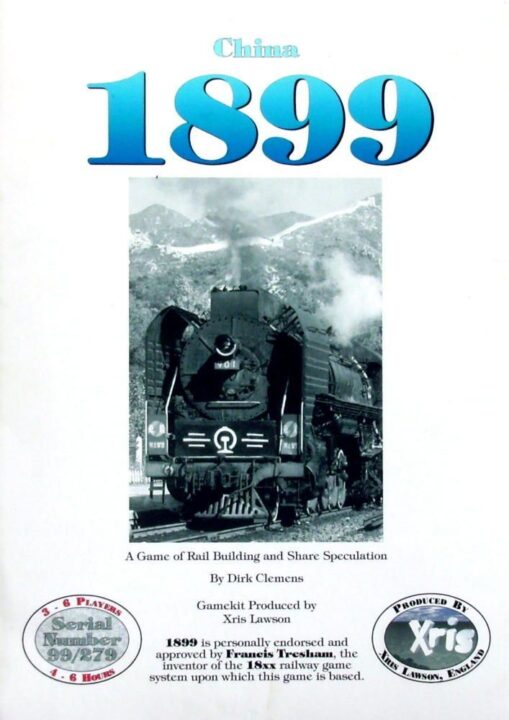

Welcome to my review of 1899, the board game that turned my polite game night into a cutthroat battle for imaginary dollars and train tracks. If you ever wanted to see your friends cry over mock stocks while screaming, “Not my railway!”, this one’s for you. I got my people together, grabbed snacks (and tissues), and gave this train tycoon showdown a proper run. Is it a first-class ticket to fun, or should you wait for the next train? Let’s find out.
How It Plays
Setting up
First, unwrap all the pieces and try not to lose the tiny tokens in your sofa. Each player grabs a starting private company and, if you’re like me, tries to pronounce their names with a wild accent. Spread out the map, lay out the companies, money, and trains, and use the player aid if you don’t want to flip through the rulebook every two minutes. Decide who gets the honor of being first auctioneer (usually the person who most recently took the train—good luck, Uber folks).
Gameplay
Players start the round by auctioning companies—this is where friends become enemies. The person who wins a company runs the train company, laying tracks and buying trains for profit. You spend, you expand, you invest in companies your rivals are running, and sometimes you make alliances that last about as long as my willpower at a snack table. Every so often, someone forgets to save for a critical train and the whole table bursts out laughing (or groaning). The game moves in tight rounds with a mix of planning and on-the-spot decisions.
Winning the game
The winner is the player with the most money at the end. Share values and clever investments matter more than your ability to hoard cardboard trains. Stack your cash, count your stocks, and try not to spend it all just to block a rival—unless you want bragging rights for epic plays, not actual victory.
Want to know more? Read our extensive strategy guide for 1899.
Gameplay Flow and Player Interactions in 1899
Let’s talk about how things actually play out in 1899, because oh boy, this game can turn a polite game night into a cage fight over railway shares. We start simple: each player snaps up companies in a tense auction. I’ve seen people stare daggers over a $1 bid! Every turn, you fight to expand railroads, buy trains, and get those glorious payouts. It’s not just about building; it’s about messing with your friends’ plans while pretending to help them. My buddy Tom spent one round grinning at the table, then bankrupted half of us by the end. Never trust a man with a beard during a stock round.
Player interaction isn’t just a side thing—it’s baked into every decision. When you lay tracks, you’re thinking less about pretty routes and more about shutting down your friend’s network. And every share you buy can mess with turn order or leave someone holding a bag of rusted train parts. Once, I tanked a company’s value just to see if my pal Steve would cry (update: he did, a little). It’s cutthroat, but also super hilarious if you like your friendships mildly toxic.
The flow can slow down if players overthink every step, but the thrill of outwitting your friends keeps it lively. You can’t hide in 1899. Every move is out in the open, and everyone has a stake in your stuff. Next up, let’s see if the gods of luck or the architects of strategy hold more sway in this cardboard colosseum!
How Much Does Luck Really Matter in 1899?
I know, I know—every time you read about a train game, someone warns you about luck. Well, let me put your mind at ease (or possibly make you sweat): 1899 is far more about how you think than how you roll. Strategy rules the rails here, mostly because you’re making big decisions every single turn. Picking routes, timing your investments, and even the way you interact with other players all have a massive impact on how your game unfolds.
That being said, I have to admit, there’s a pinch of luck baked into the dough. For example, the order in which companies become available can sometimes nudge your plans sideways. Once, I plotted the perfect takeover, only for a key company to show up just out of my reach—I swear, it was like the game could smell fear. But, unlike some games where the dice decide your fate, in 1899 you usually have options on how to respond. A bad draw can sting, but your cleverness can nurse the wound.
What really makes 1899 shine for me is how most of the tension comes from human brains, not the shuffle of the deck. If you mess up, it’s almost always on you. And trust me, my friends regularly remind me of my mistakes, usually with the kind of gentle affection only board gamers and hungry sharks possess.
So if you hate losing to random chance, 1899 won’t make you pull your hair out (maybe just some mild, stylish tousling). Next up, let’s talk about the look and feel of this game—brace yourself for cardboard glamour!
Component Quality & Visual Appeal: Is 1899 a Feast for the Eyes?
When my group first unboxed 1899, we stared at the contents for way too long—partly with excitement, partly because we couldn’t believe there were so many trains. The game comes with chunky cardboard, bright tokens, and a board that looks like a railway tycoon’s fever dream. I’ve played with cheaper train games where the board warps if you breathe too hard. Not here! 1899’s board stays flatter than my first attempt at pancakes (which is saying a lot).
The artwork strikes a nice balance between classic and clear. Color-coding keeps everything tidy. I didn’t need to squint or check the rulebook every 10 seconds to remember what things were supposed to be. That’s a small miracle in the train game world, trust me. Tokens feel weighty, and the banknotes are sturdy enough to survive a few heated bidding wars. I did wish the note designs were a bit more inspired—if you’re expecting Monopoly money with wild colors, you’ll just get clean, functional cash instead. But hey, at least you won’t mistake a five for a fifty. Also, the player mats are smooth and surprisingly thick, perfect for tracking your growing railway empire. My one nitpick? The wooden train meeples look suspiciously like strange-shaped sausages from a distance. This led to much snickering, but only until someone ran out of trains and the panic set in.
Next up, let’s talk about replay value and learning curve—because even the prettiest game box can’t hide a snoozefest.
How Many Times Can You Play 1899 Before Your Friends Leave You?
I’ve played a bunch of train games, but 1899 brings a special flavor to the table. Here’s the thing: the replay value of 1899 is pretty high if you’ve got the right mix of folks. Every game ends up differently, thanks to the player-driven company choices and constant shifty-eyed negotiations. My friend Dave even tried pretending he was bad at math so we wouldn’t suspect him of ruthless corporate sabotage. Didn’t work. He still destroyed us.
The game takes a couple goes to really click. The rules themselves aren’t hard (I’ve seen IKEA instructions that gave me bigger headaches), but knowing when to push for a risky investment or bail on a sinking company takes time. First play? Expect mistakes, like a rookie investor caught buying shares in “Hot Air Balloon Streaming Services.” Game three? You’ll feel a bit slyer, and maybe even win!
What keeps things fresh is the huge range of combos from the different companies, the shifting alliances, and the pure unpredictability of human greed. No two sessions feel quite the same, and every time someone learns something new—sometimes the hard way. 1899 rewards repeated plays, and if your group is into cutthroat interaction, it’ll stay on the table for a long while.
Would I recommend 1899? If you like clever moves, some laughs, and a bruised ego or two, absolutely. Just don’t blame me when your friends stop trusting you over dinner.
Conclusion
And there we have it—my thrilling (and sometimes humbling) journey with 1899 comes to an end. If you’re after a game with brains over luck and love watching your friends squirm at a tense auction, this one is a winner. The rules might make your forehead wrinkle at first, but once you get rolling, there’s lots to do and plenty of room to outsmart the table. The components are solid, the replay value is high, and you can almost smell the old-timey train smoke (don’t actually sniff the board though, trust me). It’s not for folks who hate being outfoxed or want everything fair and square every time, but if you like a challenge, 1899 is a strong pick. That wraps up my review—see you next game night!