
How To Play: Brew
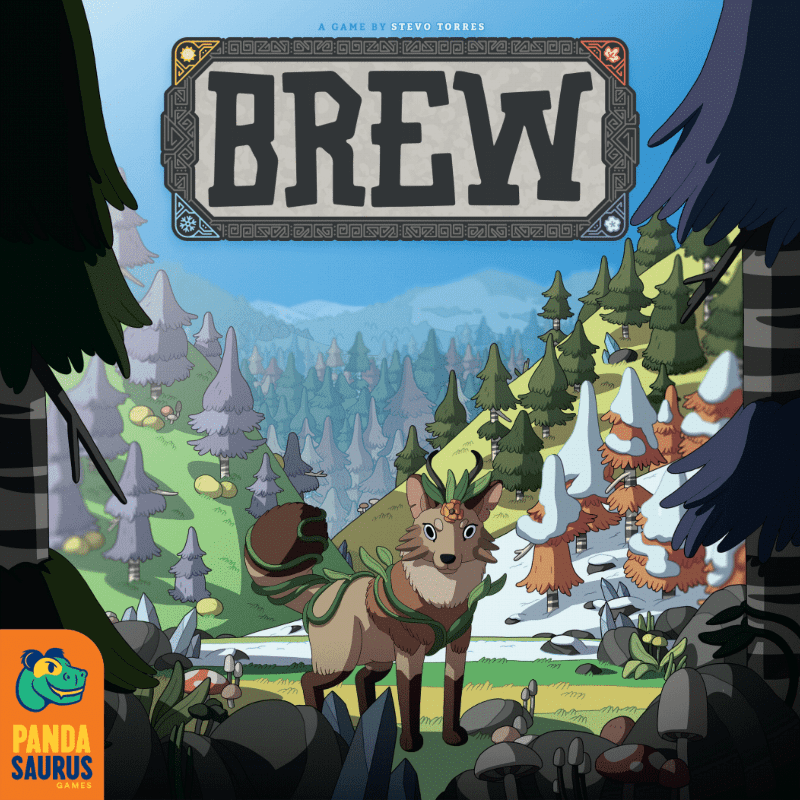
Brew is a tactical woodland game where players roll dice, claim forest spaces, gather resources, and use creature powers to restore the land. Each turn brings tough choices: chase rare ingredients, block rivals, or save dice for powerful actions. After the final round, the player with the best mix of forests and potions wins.
Overview
Brew turns a quiet forest into a very busy day at the office, except the workers are dice and the boss is a grumpy woodland creature. I’ve played it with friends, and every round brought a fresh mix of clever plans, bad rolls, and dramatic groans. This guide gives you a clear outline of the game rules, from placing dice to using potion powers, plus the best strategies for winning without starting a forest feud.
What’s in the box
- 1 rulebook
- 20 dice
- 12 forest tiles
- 4 player boards
- 4 player aid cards
- 16 creature cards
- 16 potion cards
- 4 town tiles
- 40 ingredient tokens
- 4 player markers
- 1 first-player marker
How To Play Brew: Rules Summary
Brew turns a cosy forest into a tiny, dice-filled battle for control. Players roll elemental dice, place them to gather goods, claim forest tiles, use creature powers, and make potions. The game lasts four rounds. By the end, the player with the most points wins. So, grab your dice, protect your mushrooms, and try not to start a woodland war over one berry.
Setup: Prepare the Forest
- Give each player a player board, a set of matching dice, creature cards, and a control marker in their chosen colour.
- Shuffle the forest tiles and place the required number face up in the centre of the table.
- Place the village board, ingredient supply, potion cards, and creature deck where everyone can reach them.
- Give each player the starting ingredients and cards shown in the game setup. Keep all unused pieces nearby as a supply.
- Choose a first player. The rulebook suggests a suitable method, but the person who last saw a real forest works fine.
- Set the round marker to the first round. Each player then rolls their available dice and keeps the results visible.
Gameplay: Place Dice and Use Powers
- Starting with the first player, take one turn at a time. On your turn, choose one unused die and place it in a legal space.
- Place dice on forest spaces to compete for control of forest tiles. Match the die’s element to the symbol on the space whenever possible.
- Place dice in the village to collect ingredients, gain useful effects, or take another action shown on that space. The village helps when the forest refuses to give you what you need.
- Resolve the space as soon as you place the die. Gain the listed ingredient, benefit, or action before the next player takes a turn.
- Use a creature ability when its condition allows it. Creature powers can change placement rules, improve actions, or help you gather more goods.
- Spend the ingredients shown on a potion card to brew that potion. Then place the potion in your play area and use its effect when the card allows it.
- Continue taking turns until every player has placed all available dice. Afterward, resolve each forest tile and check which player has the strongest claim.
- The player with the most influence on a forest claims that tile and takes its reward. If players tie, use the tie-breaking rule on the tile or player aid.
- Return dice to their owners, refresh the forest, refill any open village spaces, and pass the first-player marker clockwise. Then begin the next round.
Winning: Score the Best Forest
- Play all four rounds before checking the final score. Keep your claimed forest tiles, completed creatures, potions, and other scoring pieces in your play area.
- Add the points printed on your forest tiles and any points shown on your creatures and potions.
- Apply any end-game bonuses from cards, tiles, or player boards. Read each card carefully because some bonuses reward sets, spare ingredients, or special combinations.
- Compare total scores. The player with the most points wins and becomes the forest’s new boss. Please use this power kindly.
- If players tie, follow the game’s tie-breaker. Usually, the tied player with the most remaining resources or claimed forests wins.
Special Rules & Conditions: Watch the Fine Print
- Each die can take only one action on a turn. Once you place it, you cannot move it unless a card or space gives you permission.
- A die must fit the space you choose. Element symbols matter, so do not treat every die as a wild result unless its face or a card says you can.
- Resolve effects in order. First place the die, then check its symbol, and finally collect the reward or use the power. This order prevents many table arguments.
- Use a creature or potion power only when its timing condition matches. Some powers work during your turn, while others work during scoring or another player’s action.
- Pay all required ingredients before brewing a potion. If you cannot pay the full cost, you cannot take that potion yet.
- Keep your resources visible unless a card says otherwise. Players need to know who looks rich and who merely has very confident pockets.
- When the supply runs out, use the game’s shortage rule rather than inventing new ingredients. In most cases, players take as much as the supply contains.
- Follow the text on a card or tile when it conflicts with a general rule. Specific effects beat normal rules.
- After the fourth round, stop taking turns and score the game. Do not start another round just because someone still has a dramatic plan.
Best Brew Strategies
Win the Forest Before Your Dice Cool Off
Claim valuable ground
- First, target spaces that offer two resources. This move improves your next turn and denies an opponent each round.
Block with purpose
- Then, place a die beside a rival’s likely route. Even one blocked space can wreck a tidy plan.
Time your push
- Early in the round, claim key spots. However, save one flexible die for later, because rivals reveal plans first.
Finish the fight
- Finally, spend your last die to seal a forest or collect a needed resource. My friends hate this trick, which proves it works.
Forest Restoration Priorities: Heal the Right Land First
In Brew, restoration rewards patience, not random heroics. First, repair forests that offer strong future actions. Next, protect spaces opponents can exploit. Finally, save flexible areas for the closing turns.
1. Choose High-Value Forests
- Restore forests that provide useful actions.
- Prefer spaces matching your current plan.
2. Deny Easy Points
- Repair a rival’s target before they reach it.
- Block valuable bonuses whenever possible.
3. Keep Options Open
- Hold one flexible forest for later.
- Adapt when dice create better chances.
4. Finish With Purpose
- Complete linked forests near game end.
- Score progress instead of chasing tiny gains.
Turn Small Powers into a Winning Brew
Creature and potion abilities can win Brew when you plan their timing. First, pick powers that support your current goal. Next, hold flexible effects until opponents commit. Meanwhile, use potions to repair a weak turn or boost a key action. Finally, chain effects instead of firing them off alone. In my games, the best player often looked quiet, then used two small abilities together and grabbed the win. Also, watch the cost. A flashy effect that ruins your next turn may be a trap. Keep one answer hidden, because surprise beats showing off every shiny trick.
Choose Helpful Creatures
- Match powers to your plan.
- Skip effects with poor timing.
Save Flexible Abilities
- Wait for rivals to commit.
- Use reactions at key moments.
Use Potions with Purpose
- Repair weak turns quickly.
- Boost your best action.
Chain Small Effects
- Combine modest powers together.
- Keep one surprise in reserve.
Make Every Die Count
Brew rewards players who plan ahead but stay ready to change course. Place dice with a purpose, restore the forests that offer the best mix of points and power, and save creature and potion abilities for the moment they can swing a round. In my games, the boldest plan often fell apart after one awkward roll—usually mine, naturally. The best players adapt without wasting turns. Keep an eye on your rivals, grab chances before they vanish, and remember that a clever final move can beat a perfect opening. Play Brew with a plan, a little nerve, and just enough mischief.
Want to know what we think of Brew? Read our detailed review of Brew here