
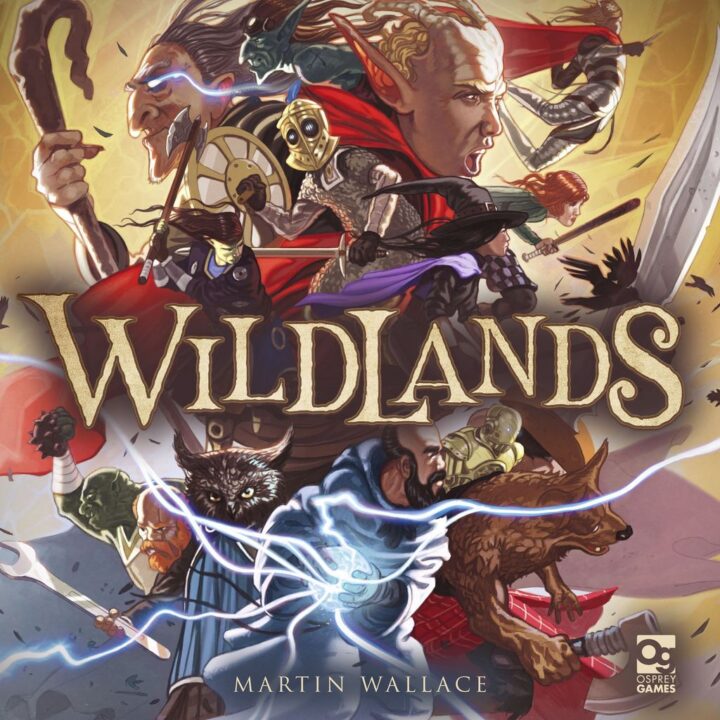
Welcome to my review of Wildlands, a tense skirmish game where clever movement matters more than lucky dice rolls. The rules stay fairly light, but each turn still gives your brain a small workout. It is not perfect, and a few matchups can feel less even than others, yet the game keeps pulling us back for one more battle. Grab your team, guard your cards, and try not to look too smug when your plan works.
How It Plays
Wildlands is a fast skirmish game for two to four players. Each player controls a small warband, hunts for objective tokens, and tries not to get bonked by enemy warriors.
Setting up
Choose a warband and place its warriors on your starting spaces. Shuffle your deck, set out the objective tokens, and build the board with the supplied terrain tiles. Each player draws a starting hand of cards.
Gameplay
Players take turns activating one warrior. Cards let that warrior move, search for objectives, or attack an enemy. You can also use cards to defend or support your plans. Then play passes to the next player, so every move matters. Warriors can carry objective tokens, but enemies can chase them down and steal them.
Winning the game
You win by completing your warband’s victory goal, usually by collecting enough objective tokens or defeating enough enemy warriors. Check your warband’s rules before the game, because each group scores in its own way. The first player to meet the goal wins and gets to act smug for at least five minutes.
Want to know more? Read our extensive strategy guide for Wildlands.
Wildlands Tactical Movement and Positioning
Every Step Matters
In Wildlands, movement feels like a tense game of hide and seek, except everyone carries knives and nobody gets a snack break. Each fighter has a hand of movement cards, so every step asks for a choice. Do you sprint toward an objective, creep behind cover, or save that card for a better moment? I have watched players make plans, then freeze because one route vanished from their hand. That pressure makes the map feel alive without making luck the boss.
Reading the Board
Positioning matters more than speed. High ground gives sightlines, but it can also turn you into an obvious target. Cover blocks attacks and lets you threaten a capture point without shouting “please ignore me.” I love how a narrow passage can protect a weaker fighter, while an open square can expose an entire plan. Moving several heroes together feels safe, yet it leaves fewer places to search and makes one enemy ambush painful.
Watch the Enemy
Good players watch patterns, not just spaces. A corner often says more than a dramatic charge. In one match, my friend Ben kept circling a ruin. I chased him twice, then realised he wanted me away from the centre. On my third turn, I held back and scored instead. His trap sat there looking proud and useless. Next, Faction powers and play styles will show how each crew bends these movement rules.
Wildlands Faction Powers and Play Styles
Wildlands gives each faction a clear identity, and that choice changes your plan from the first turn. In our games, nobody picked the coolest mini. We picked the faction that matched our mood, then blamed it when our clever idea fell over. Every group has tools, limits, and a distinct way to score wins.
Different tools, different tempers
The Golems suit players who like control and steady pressure. Their tough fighters hold ground and make enemies think twice. They do not sprint around like caffeinated squirrels, so patience matters. The Scourge reward a sharper hand. Their fighters hit hard, but their best turns need good card timing. It worked right before my friend hid behind a wall.
Small teams, big personality
The lawmen feel flexible and direct. They can answer several threats, but they rarely dominate one job. The Chosen play strangely, using tricky powers to make trouble where nobody expects it. They ask you to plan ahead, then laugh when plans change. This gives Wildlands a range of moods: careful, bold, sneaky, or gloriously daft.
Balance without blandness
My main praise goes to the factions’ balance. Their powers feel strong, but each power comes with a cost. I never lost and thought, “Well, that faction just cheated for me.” I also never felt doomed at setup. Still, some powers take longer to understand, and a first game can leave a player unsure about their best route. A handy faction guide would help. Once the table learns the tricks, each team opens a fresh puzzle without turning the game into a luck fest. Next up, Combat, risk, and fairness will test whether those stylish powers can survive a punch in the face.
Wildlands Combat: Risk, Fairness, and Smart Attacks
Every Shot Has a Price
In Wildlands, combat feels sharp because every attack asks you to risk something. A fighter may charge an enemy, but a missed strike can leave that fighter exposed and easy to catch. The attack cards give players options, yet they never feel like a magic escape button. You still need the right range, the right angle, and a bit of nerve. I once sent my best fighter into a scrap with two wounds already showing. My friend grinned, blocked the hit, and claimed the point I had foolishly left nearby. That mistake hurt, but it felt earned.
Fair Fights, Not Free Wins
The combat system also avoids the ugly swing that ruins many skirmish games. You do not toss dice and pray for a miracle. Cards control attacks, blocks, and damage, so luck may open a door, but good timing walks through it. That keeps both sides involved, even when one gang looks close to defeat. Fair play really matters.
Risk Makes the Battle
What I like most is the clear cause and effect. If you attack too soon, you may lose your best card. If you wait too long, another player may grab the prize or surround your hero. The game rewards bold moves, but it does not praise silly ones. Still, nobody blamed the rules. The result came from choices we could see and judge.
Next, I’ll look at replay value and game length where Wildlands proves whether sharp battles stay fresh.
Wildlands Replay Value and Game Length: Is It Worth Returning To?
Short Games, Big Rematches
Wildlands keeps each game short enough to avoid the dreaded board game fade. A session usually takes 30 to 60 minutes, depending on player count and how quickly everyone makes decisions. We could finish a game, complain about one silly mistake, then start another before the snacks ran out. Nobody had time to grow old at the table.
That quick pace gives Wildlands strong replay value. The game never demands a whole evening, so trying again feels easy. Each match creates a fresh story because players make different choices and react to the changing table.
Fresh Enough, But Not Endless
The replay value still depends on your group. Once everyone learns the main tricks, some sessions can feel familiar. Wildlands offers plenty of room for rematches, but the base box does not provide a huge campaign or endless scenario changes. Players who want a brand-new puzzle every night may reach that limit sooner than expected.
That said, the compact length helps more than it hurts. Wildlands fits a lunch break, a casual weekend, or a quick contest after a heavier game. It also feels easy to teach when a new player joins. Nobody needs to study a rulebook the size of a phone directory, thank goodness.
For me, the sweet spot sits at two or three games in one night. After that, tired choices start wearing clown shoes. Wildlands stays fresh enough to bring back often, while its small scope keeps expectations sensible. You get a sharp, repeatable skirmish, not an endless hobby project with homework. I recommend Wildlands for players who value quick sessions and regular rematches.
Conclusion
That concludes my review of Wildlands. Movement and positioning matter every turn, which kept us plotting like tiny war generals with very poor maps. The factions feel different, and the short play time makes rematches easy. A few matchups may need care, and new players can feel lost at first, but the game teaches through play. If you enjoy tense battles, clever card use, and a little table-top mischief, Wildlands earns a solid recommendation.