
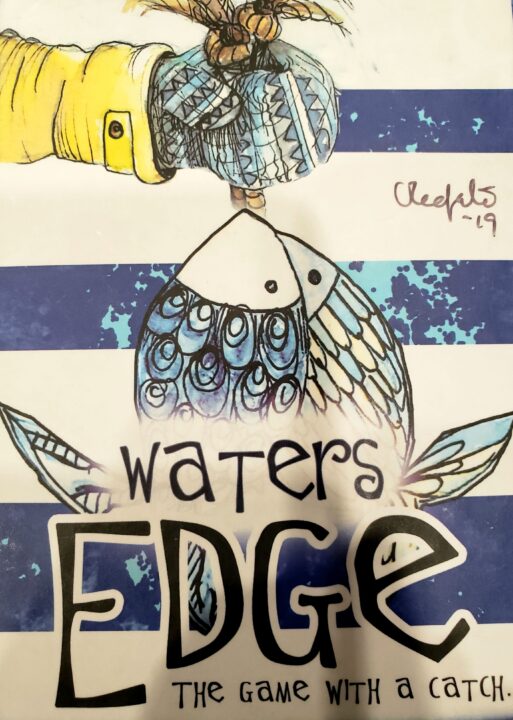
Waters Edge: Box Cover Front

Waters Edge Review

Waters Edge offers bright art, clever choices, and enough replay value to keep game night afloat. A little luck can rattle the boat, but smart play usually keeps you sailing.

  • Gameplay and turn choices
  • Luck versus strategy
  • Components and artwork
  • Replay value and player count
3.8/5Overall Score

Waters Edge offers clever choices, bright artwork, strong replay value, and lively fun, though luck sometimes splashes into your plans.

Pros
  • Clever strategic choices
  • Bright, attractive artwork
  • Strong replay value
  • Fun with groups
Cons
  • Luck can swing outcomes
  • Tiny tokens feel fiddly
  • Best with three or four
Disclaimer: Clicking our links may result in us earning enough for a new pair of dice, but not enough to quit our day jobs as amateur board game hustlers.

This review looks at Waters Edge, a bright and breezy game about making clever choices by the shore. After several plays with friends, I found plenty to like: turns move quickly, the artwork adds charm, and each player gets room to form a plan. Luck can still splash into the game and ruin a fine idea, though. I’ll cover the gameplay, strategy, components, and replay value, so you can decide if it belongs on your shelf or near the nearest lifeboat.

How It Plays

Waters Edge gives each player a small set of actions and goals. You collect useful items, improve your position, and try to make the best choices before the shared supply runs dry.

Setting up

Place the board in the middle of the table, then sort the cards, tokens, and other pieces into their marked areas. Each player takes a starting set of pieces and any personal cards. Reveal the starting supply, and you are ready to get your feet wet.

Gameplay

On your turn, take your available actions to gather resources, claim cards, and build towards your goals. You must watch what other players want, since taking one useful item can leave them paddling in an empty pool. Timing matters, and a clever move often beats a flashy one.

Winning the game

The game ends when the main supply or another listed end condition runs out. Players then score their cards, resources, and completed goals. The player with the most points wins. It sounds simple, but those final few choices can turn a quiet game into a proper splash fight.

Want to know more? Read our extensive strategy guide for Waters Edge.

Gameplay and Turn Choices in Waters Edge

Simple actions, tricky timing

Waters Edge gives each player a patch of water and a pile of cards. On your turn, you choose one action: place a tile, gather a resource, move a boat, or use a card. The rules stay tidy, so new players can start without a rules lecture. I taught it to friends, and nobody asked if the fish had a rulebook. That felt like a win.

Choices that matter

The part comes from how each choice affects the next turns. A tile may open a fishing spot, but it can block your boat’s route. Taking a resource feels helpful now, yet a player may grab the space you wanted while you tidy your hand. Cards add more bite. Some let you chain actions, while others reward careful timing. I often held a card too long, waiting for a moment that showed up. My friends noticed, of course, because friends exist mainly to enjoy your mistakes.

Turn order matters, but it never feels cruel. You can usually find a useful move, even after someone snatches your best spot. The game asks you to weigh short gains against a better position later. Do you fill your boat now, or save space for a larger catch? Do you spend a card for speed, or keep it for a scoring push? Those questions make each turn feel like a puzzle instead of a chore.

Still, before I crown every clever choice, the next section weighs Luck versus player strategy, because even a sharp captain can meet a stubborn tide at sea once.

Waters Edge Luck vs Strategy: Can Smart Play Beat the Draw?

In our games of Waters Edge, luck often arrived like a seagull stealing chips. The random element never felt cruel. A poor draw could spoil a tidy plan, while a lucky card could rescue someone who made a bold, slightly daft choice. That swing kept everyone alert, though one friend groaned.

Luck Rewards Preparation

The trick is to build options before chance speaks. Players who save useful resources, watch the information available, and avoid chasing one perfect result usually recover well. I learned this after waiting three turns for a rare outcome, only to watch another player win with less flashy plan.

Waters Edge gives players ways to soften a bad run. You can change your target, take a safer reward, or make a move that leaves several results open. Those choices matter more than hoping for a miracle. Luck decides events, yet strategy decides how much trouble each event causes. This kept us arguing.

Still, chance can wobble the game. In four-player sessions, a lucky chain created a gap careful play could not close. The leader did not always deserve the lead, while the trailing player needed a miracle. I never saw this ruin a match, but the final stretch felt less earned. Players who hate swingy results may frown.

For me, Waters Edge lands in a middle. Luck adds stories and surprise, while good choices remain the best path to victory. I enjoy that tension, even when my winning plan sinks faster than a biscuit in tea. Next up, I’ll inspect the Component quality and artwork, where the table gets its sea legs.

Waters Edge Component Quality and Artwork Review

After three game nights with friends, I inspected Waters Edge. The cards feel thick, shuffle smoothly, and stayed flat after several plays. Their soft finish avoids the sticky clump that turns a card game into a small wrestling match. The tokens feel solid too, not like tiny bits that vanish under the sofa. Our copy has survived my friends.

Artwork and theme

The artwork gives Waters Edge its best splash of charm. Bright water colors, clean lines, and lively fish make each card easy to enjoy. The scenes stay friendly without looking sugary. I liked how the artists show the ocean theme without covering every space with waves. My friend Lena spent five minutes naming fish, then declared one crab looked too smug. She was right. The crab knows it.

Table presence and small flaws

Table presence matters, and this game looks inviting from across the room. The colors pop without becoming noisy, while the icons stay clear once players learn them. The player aids add handy reminders and resist bends after rough handling. Still, smaller tokens can blur together in low light. Players with weak eyesight may want a brighter lamp or homemade labels. The box insert leaves some wasted space, but the parts still pack away well enough.

Overall production

These flaws do not sink the production quality. The cards handle repeated shuffling, the board resists scuffs, and the printed colors stay crisp. I would welcome thicker player aids and stronger token contrast in a future print, but the current set feels sturdy and cared for. It gives Waters Edge a pleasant table presence without demanding museum gloves.

Next comes the Replay value and player count section, where I test Waters Edge with different sized groups around my table.

Waters Edge Replay Value and Best Player Count

Waters Edge earns a spot on my shelf because each group makes it feel new. At two players, it becomes a quiet tug of war. You can read one rival well, but each choice feels exposed. My friend Sam played like a man hiding his last biscuit, and kept everyone guessing. This count suits players who enjoy a close contest without much table chatter.

Three or four players bring more energy. The table fills with rivalries, odd deals, and promises nobody believes next round. Four-player games gave us the funniest moments, although noisy groups can make turns feel less personal. The game lasts long enough to feel like an event, yet short enough to stop someone checking the fridge for cheese.

Replay value comes more from changing personalities than new rules. The same plan can work with a cautious partner and flop with a bold one. I enjoyed returning after a week away, since our group had invented grudges and victory dances. Still, players seeking a huge campaign may find Waters Edge light. It offers a strong repeat loop, but not endless content.

Best Player Count

For casual groups, families, and friends who enjoy changing alliances, I recommend three or four players. Two-player games work when both people like mind games, but the experience feels sharper and more tense. If your group dislikes repeat plays or wants a giant story arc, look elsewhere. I recommend Waters Edge, especially for three or four friends who enjoy returning to a game and making table stories.

Conclusion

That concludes our review of Waters Edge. After several games with friends, I found a bright, friendly game with simple choices, nice pieces, and enough strategy to keep us thinking. Luck can sometimes splash into the wrong place, but smart timing usually helps you stay afloat. Three or four players gave us the best games, while smaller groups felt a little quieter. The replay value is solid, though serious strategists may want more depth. Overall, Waters Edge makes a fun choice for families and casual groups who enjoy a light game with a few tasty decisions.

3.8/5Overall Score
Jamie in his proper element: With all of his board games
Jamie Hopkins

With years of dice-rolling, card-flipping, and strategic planning under my belt, I've transformed my passion into expertise. I thrive on dissecting the mechanics and social dynamics of board games, sharing insights from countless game nights with friends. I dive deep into gameplay mechanics, while emphasizing the social joys of gaming. While I appreciate themes and visuals, it's the strategy and camaraderie that truly capture my heart.