
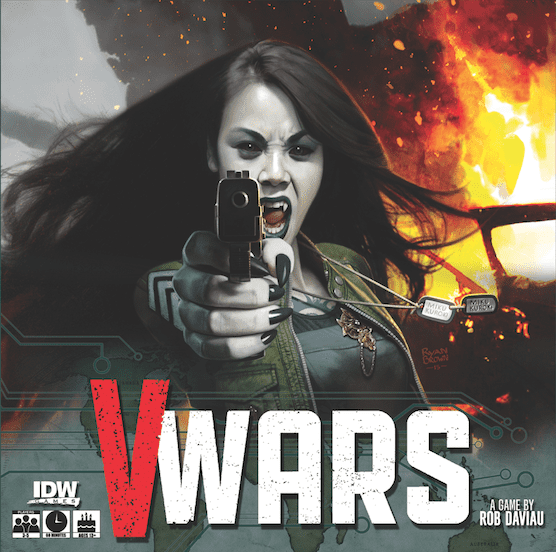
V-Wars turns a night with friends into a tense fight for survival, where one bad choice can make you the snack instead of the hero. This review looks at how well those parts work together, from the human resistance to the vampire factions hunting for control. It has a strong theme and creates some cracking stories, though luck can still barge in and kick over the table. So, grab your garlic and your most patient friends. Things are about to get messy.
How It Plays
In V-Wars, each player leads a faction fighting for control as a deadly virus turns people into monsters. You gather resources, move units, use special powers, and try not to get eaten. A normal Tuesday, really.
Setting up
Choose a faction and take its board, figures, cards, and starting pieces. Place the main board, infection cards, tokens, and dice where everyone can reach them. Each player then follows their faction’s setup rules and draws their opening cards.
Gameplay
Players take turns performing actions such as moving, recruiting, attacking, gathering resources, and playing cards. Factions use different powers, so humans may focus on defence while vampires spread infection and hunt for prey. Combat uses dice, cards, and faction abilities. The table can change fast, so keep an eye on rival plans.
Winning the game
The game ends when a faction completes its victory goal or the final round finishes. The player with the most victory points wins. Your score comes from controlling areas, completing objectives, and meeting your faction’s goals. If your clever plan falls apart after one bad roll, welcome to the apocalypse.
Want to know more? Read our extensive strategy guide for V-Wars.
V-Wars Faction Powers and Vampire Strategies
V-Wars gives each faction a sharp identity, and that matters from the first turn. It changes how you hunt, spread, and bully your rivals. The vampire clans feel dangerous without making every power feel like a cheat button. That is a big win.
Vampire Faction Powers Reward Planning
The vampires all share hunger, but their tools push different plans. One faction may gain strength by turning infected humans into loyal followers. Another thrives on stealth, slipping through cities before opponents notice the bite marks. A third option rewards brutal attacks, yet leaves you exposed when the table fights back. These powers create clear paths, but they never remove hard choices. Good.
Build a Strategy Around the Infection
That went badly. My fancy infection chain stalled because I ignored the board state. In V-Wars, strong faction powers still need timing. A clan that spreads fast can run out of safe targets. A clan built for combat may lose ground while waiting for the perfect fight. I now watch the map, track rival resources, and save nasty tricks for the right moment.
Team Combos Make the Night Weird
Faction powers also shine in team games. When friends control different vampire groups, their abilities can lock together like a very evil zipper. One player spreads infection, another blocks roads, and a third cashes in when the panic peaks. This teamwork feels clever rather than lucky. Still, some powers depend on the right cards appearing. If the deck refuses to cooperate, even a smart plan can sit in the corner like a sad vampire at brunch. Next, Human resistance and survival choices will take center stage, where brave humans meet odds, worse snacks, and my poor planning.
V-Wars Human Resistance and Survival Choices
Scraps, Supplies, and Nerve
Playing V-Wars as a human feels less like commanding an army and more like running a very angry apartment block. Every turn asks you to spend scarce resources on shelter, medicine, weapons, or recruitment. We saved one neighbour, then lost the fridge.
Hard Calls Under Pressure
The human side shines when players make hard calls. Do you fortify a useful location, or send people out for supplies? Do you protect a skilled survivor, or risk them to save a whole district? These choices create tension without needing a giant rulebook. I liked that survival never felt automatic. Even a strong plan could crack when another player demanded help, moved a threat, or grabbed the last useful card.
Every Survivor Matters
That pressure also gives humans a clear identity. They win through teamwork, careful positioning, and knowing when to retreat. You cannot treat every survivor as a disposable pawn. Losing one may remove a needed skill or leave a safe area exposed. Still, the game sometimes asks humans to recover from a nasty early hit with very few tools. New players may feel doomed before they understand the best escape routes. A short player guide would help here, because the first session can feel like learning by tripping over furniture.
That rough edge did not ruin our fun, though; it gave every human victory a scrappy, earned feeling, and made losses sting. Next up, I will test Combat luck and game balance.
V-Wars Combat Luck and Game Balance Review
When the Dice Bite
V-Wars uses cards and dice to settle fights, so every attack carries danger. A smart plan can still look really silly. I once lined up a strong strike, then rolled the worst result. Our assault became a group hug with the enemy. Funny? Yes. Fair? Not quite.
Can Players Recover?
Luck works best when players can soften it. Rerolls and target choices give recovery options, but they cannot erase every bad roll. One player built a scary attack, then whiffed twice. He stared at the dice like they owed him rent. They really did not pay.
A Mostly Fair Battlefield
Balance stays strong because no faction gets a free pass in combat. Big attacks can fail, while small forces can score lucky wins, yet both sides keep choices. Trouble starts when one failed fight wrecks a turn. That swing feels harsher when players have fewer cards and less time to recover. I prefer games that punish choices, not dice.
With four or five players, balance gets messier. Alliances can gang up on a leader, but table talk may rescue someone who should have been finished. Combat feels social, not tactical. One friend called it “politics with fangs.” Accurate, honestly. At two, luck stands out more because nobody can distract from bad result.
Overall, V-Wars earns three stars for combat balance. Luck adds drama, but steals control from smart play. I want to bend odds late in a match. Still, combat creates cheers, groans, and accusations about loaded dice.
Next comes theme, replayability, and player interaction, where vampire flavor meets table talk and surprises.
V-Wars Theme, Replayability, and Player Interaction
The World Feels Alive
V-Wars creates a grimy comic-book world where every meeting feels like it could end with a bite mark and an emergency room. The art sells that mood well, mixing chunky colours, creepy faces, and enough blood to make my snack look suspicious. It never feels like a dry spreadsheet wearing a vampire cape.
A Story Made by Players
One friend promised peace, then quietly ruined my evening while smiling like a man who had stolen the last doughnut. Another player became the group’s loud voice, making deals and stirring trouble even when silence would help. Those moments give V-Wars a strong social pulse. You watch faces, remember grudges, and wonder who will suddenly change sides next round.
Plenty of Reasons to Return
Replayability comes from shifting setups, different player counts, and the strange mix of personalities around the table. The game changes a lot when cautious friends replace reckless ones. That variety keeps the box fresh, though new players may need a few games before they spot the clever choices hiding under the chaos.
Interaction Without Table Thumping
Player interaction drives the experience, but it stays mostly verbal and tactical rather than nasty. You can trade favors, read loyalties, and push someone into a bad choice without shouting across the room. Still, players may feel overlooked when louder voices grab every moment. I recommend V-Wars for groups who enjoy stories, suspicion, and playful arguments, but skip it if your friends hate negotiation or social bluffing.
Conclusion
And that concludes the review of V-Wars. The human side makes tough choices, while the vampire powers create big swings and cheeky moments. Combat can lean a bit too hard on luck, and one bad roll may ruin a fine plan. Still, the theme, player attacks, and changing alliances kept us coming back for another game. V-Wars works best with a group that enjoys take-that play and a little chaos. It is not perfect, but it delivers a great monster brawl with enough bite to earn a solid recommendation.