
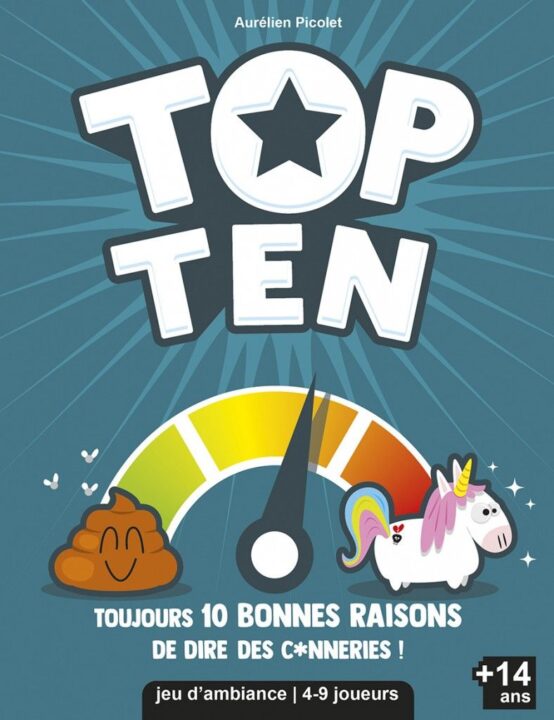
This review looks at Top Ten, a party game where secret numbers, silly clues, and brave guesses collide. The game rewards clever answers, teamwork, and a judge who can keep a straight face. It also creates the sort of table chat that makes snacks go cold. So, grab some mates, prepare for odd answers, and let’s see if the ranking scale can survive us.
How It Plays
Setting up
Place the five tokens on the unicorn side of the board. Choose a captain for the first round, then draw a theme card. Each player gets a secret number from 1 to 10. Keep it hidden, unless you enjoy ruining your own fun.
Gameplay
The captain reads the theme. Everyone gives an answer that matches their secret number. A low number should mean a mild answer, while a high number should mean something big, wild, or very dramatic. The captain then places the answers in order from lowest to highest. Players reveal their numbers, and the group checks the order.
Winning the game
If the captain makes a mistake, flip one unicorn token to its dark side. Play five rounds, changing the captain each time. Keep at least one unicorn token showing at the end, and the whole group wins. Flip them all, and the game wins instead. Rude, but fair.
Want to know more? Read our extensive strategy guide for Top Ten.
How the Top Ten Ranking Scale Works
In Top Ten, each round starts with a simple task: players secretly give answers that match a number from one to ten. The host then mixes those answers and reads them aloud. Players must place every answer in a rising order, from the answer that feels most like one to the answer that feels most like ten. This sounds tidy until someone offers “a mildly damp sock” for number three.
The scale does not measure facts; it measures how well the group can read the hidden numbers. A low number should feel small, calm, weak, or boring, while a high number should feel huge, wild, strong, or gloriously daft. During our games, one friend called a number two “a sneeze at a library,” while another played number nine with “a bear driving a taxi.” Both answers made sense, which caused the table to erupt and our score to suffer.
Everyone wins or loses together, so the ranking feels like a puzzle rather than a test. The group earns points when the order matches the secret scale, but a wrong move can bump several answers out of place. That shared risk keeps the mood kind, even when my pals confidently ranked “volcano” below “warm tea.” Top Ten gives no clue system; players must trust tone, word choice, and friends’ odd logic.
The next section, Funny Answers and Group Creativity, looks at how those odd clues turn team talk into the real prize, even when our score limps home in defeat once again.
Funny Answers and Group Creativity in Top Ten
Each player hears a theme and picks an answer that feels right. That sounds tidy, but the fun starts when everyone explains what they chose without giving away too much. My friend Ben once claimed his ideal dinner guest was “a haunted toaster,” then defended it with the calm voice of a museum guide.
Why the Jokes Work
The best laughs come from the gap between a clue and the person answering it. One player may hear “most heroic act” and picture rescuing a cat. Another imagines opening a jar for grandma. Both ideas reveal a little character, which makes the table feel warm rather than like a quiz show. We laughed hardest when quiet players offered strange, careful answers. Their odd little choices gave louder friends fresh material, and nobody needed to perform a stand-up routine.
Group creativity also grows when players build on the mood around them. A serious answer can inspire a silly twist, while a wild answer can push the next person toward something sweet. Our best round moved from “a polite monster” to “a dragon who writes thank-you notes.” The chain felt silly, yet each reply still fit the theme. That shared rhythm keeps Top Ten lively, even when the group has played several rounds.
It does need the right crowd: shy players may need a nudge, and tired groups can lose steam. Next, we’ll tackle Reading clues and judging fairly, where good ears meet merciful judges on duty.
Top Ten Review: Reading Clues and Judging Fairly
How Clues Can Mislead
Reading clues in Top Ten sounds simple until someone says “a snack that feels illegal.” The clue sits somewhere on the ten-point scale, but the judge must decide whether the answer fits the number, not whether it matches their own taste. That small gap creates most of the table’s best debates.
Keep Personal Bias Off the Scoreboard
A fair judge reads the clue aloud, then checks the answer against the scale before reacting. They should not reward a clever line just because it made everyone laugh. They also should avoid punishing a quiet answer that fits perfectly. In our games, a calm player once said, “a sandwich with one corner slightly bitten off.” We laughed, then placed it far higher than the loud, silly answers. That felt right.
The game gives no hard rule for close calls, so players need a sense of scale. A chat helps: “Would this answer still work if the number were one step higher?” That question stops bias from grabbing the wheel. It lets players explain thinking without turning the round into a courtroom drama. Unless your group enjoys courtroom drama, in which case bring snacks.
Reward Fit, Not Volume
Reading tone matters too. A clue may sound extreme, but the answer can land well if the player sells the mood. Judges should focus on intent and fit, not demand one interpretation. Still, players need to explain leaps. “A haunted toaster” might suit a high number, but it needs more than a spooky voice. This balance keeps judging fair while letting odd ideas survive. Next, I’ll test replay value and player count to see whether Top Ten keeps its table magic alive.
Replay Value and Player Count in Top Ten
Replay Value
Replay value is where Top Ten earns its keep. Each round feels fresh because the prompts change, but the spark comes from the people around the table. One night, a friend gave the same calm answer to three wildly different prompts. We still accuse him of having only one setting.
That freshness gives Top Ten replay value, though it does not last forever. After several plays in one week, our answers started to sound alike. Thankfully, the game works well between heavier games. It asks little from players, sets up fast, and finishes before anyone starts checking the clock like a prison escapee.
Best With a Crowd
Player count matters more than the box suggests. With four to six people, Top Ten feels lively and balanced. Everyone gets enough chances to speak, yet turns move along. At eight or ten players, the room gets louder and funnier, but downtime creeps in.
Three players can work, but the social mix feels thinner, and one person may carry the whole show. Two players? I would pick another game. Top Ten needs several minds bouncing off the prompt.
The best player count is four to seven, in my book. That range keeps the table busy without turning every turn into a coffee break. Replay value also depends on the prompt cards. If your group burns through them quickly, you may want to mix in house prompts, but keep them clear and kind. Top Ten offers enough laughs for many returns, especially with a changing group. It stays funny without feeling like work. I recommend Top Ten for four or more players who enjoy light party games and can handle a little noise.
Conclusion
That concludes my review of Top Ten. The ranking system works well, and the game rarely feels unfair because everyone helps shape the result. It plays best with five to eight people, though smaller groups still work. The main weakness? It can fall flat if players give dull clues or one person judges like a grumpy tax inspector. Still, with the right crowd, Top Ten creates big laughs with very little fuss. I would happily bring it back to game night, especially when nobody wants to read a rulebook the size of a phone book.