
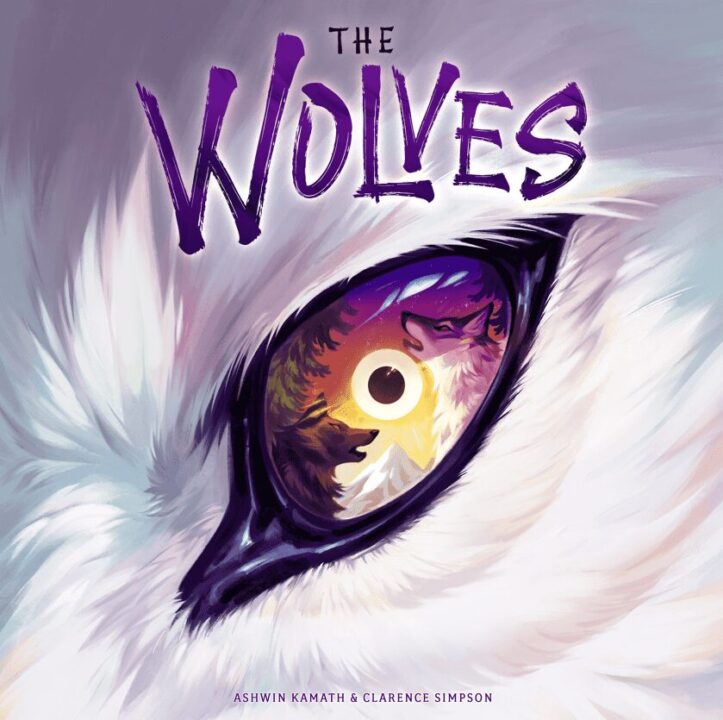
Welcome, fellow cardboard chompers! This is my review of The Wolves, a game where you lead a pack of furballs on a quest to outsmart everyone else at the table. I’ve wrangled my most cunning pals for several nights of howling, growling, and strategic jawing. I’ll break down exactly what makes this game tick, what made me nearly bark with joy, and where it almost had me chasing my own tail. Let’s sniff around and see if The Wolves is worth letting loose at your next game night—or if it deserves to be left in the doghouse.
How It Plays
Setting up
Pick your wolf pack. Lay out the modular board and sprinkle the prey tokens, dens, and lairs all over. Everyone grabs their pack tracker and some wooden wolves. Don’t fight over the coolest wolf color. (Everyone wants blue. Every time.)
Gameplay
On your turn, howl and make moves! You spend terrain tiles to slip your wolves across meadows, forests, and ice. You’ll recruit lone wolves, claim den sites, and try to avoid your pack straying off like my uncle at a buffet. Move smart—area control is everything. Block rivals, upgrade your abilities, and keep an eye on the moon phase, which shakes things up midgame.
Winning the game
When the final moon sets, count up your points from controlled regions, recruited wolves, dens, lairs, and your (hopefully not too bruised) pride. The pack with the most points rules the wild, gets bragging rights, and probably howls at the ceiling fan in celebration.
Want to know more? Read our extensive strategy guide for The Wolves.
Herding Instincts: Pack Movement and Area Control in The Wolves
Let me tell you, The Wolves is not your average, friendly romp through the wilderness. Right off the bat, the pack movement mechanic caught us by surprise. Instead of just moving a single wolf, you have to coordinate your furry friends together. Think synchronized swimming, but with a lot more howling and trying to steal each other’s lunch.
Every turn, you can split up your pack or keep them close for some group intimidation. There’s a real sense of power when you corner an opponent, which I did to my buddy Steve. (Sorry, Steve, but my wolves were just hungrier than yours that night.) The game makes you plan ahead—if you wander too far solo, you might lose ground faster than you can say “lone wolf.” But stick together, and your pack can muscle out the competition and claim territory like it’s Black Friday at the meat counter.
Area control is the juicy steak in the middle of this game. You’re not just controlling spaces, you’re marking them with your territory, converting lone wolves, and sometimes snatching dens right under someone else’s nose. There’s a satisfying chain reaction when you time it perfectly, but it stings when your territory gets gobbled up. My advice: don’t underestimate a sneaky move from the quiet player (I’m looking at you, Denise—you’re ruthless.)
I’ll say the area control feels fair, as skill beats luck every time. But just wait until we talk about strategic depth and how players mess with each other—that’s where The Wolves gets wild!
Sharpen Your Fangs: Strategic Depth and Player Interaction in The Wolves
If you ever wanted to know what it feels like to be at the top of the food chain, The Wolves gives you that chance. You’re not just running around, biting random sheep. Every move matters. My friend Sarah tried to dominate early, rushing her wolves into every region possible. She got cocky, then suddenly found herself surrounded like a hotdog at a wolf convention. Strategic depth? Absolutely.
Each turn, you have to plan ahead, reading your opponents like they’re storybooks and you’re a bored librarian. You need to anticipate, adapt, and sometimes even pretend you don’t care about a region, then snatch it when everyone looks away. My one complaint? Player interaction is high: alliances form, betrayals happen, and you constantly try to block, outmaneuver, or outright annoy the packs nipping at your heels.
The game rewards cunning over chance. You can lure lone wolves from other packs, or snatch a landmark just before it slips away. It’s a tug–of–war where the rope bites back. Don’t expect to doze off: The Wolves makes you think, plot, and sometimes sweat. Be warned, though—if you’re not paying attention, someone will gnaw through your plans in no time.
Next up, I’ll take a sniff at the component quality and game art—get your paws ready to judge some cardboard fur coats!
Howl-Worthy Components and Eye-Catching Art in The Wolves
Let’s talk about what you actually touch and see when you play The Wolves, because who wants a board game that feels like it was printed on soggy tissue paper? Not me—and not my rowdy group of board gamers who eat potato chips with reckless abandon. The moment I opened the box, I could tell the folks behind The Wolves actually care about their wolves (and our gaming tables). The cardboard is nice and thick. My friend Ben tried and failed to “accidentally” bend one of the tokens. So yes, the components can stand up to a bit of abuse from overexcited wolfpack leaders.
The wolves themselves look great on the board—no lazy blobs here! Each wolf token has personality, and the den pieces actually stand up and demand attention. The color palette is easy on the eyes, with enough contrast to keep things clear even as the board gets crowded. You won’t spend your whole night squinting, trying to tell your wolves apart from your friend’s pack.
The board art helps sell the theme. Forests, rivers, and landscape elements all look vibrant. There are even little details like animal tracks and pretty moon icons, which made my friend Sarah howl with approval (literally). If you like board games that look as good as they play, The Wolves won’t disappoint.
But here’s the real cliffhanger—does this game treat everyone fairly, or will you be howling at the moon about balance? Stay tuned for my thoughts on how well The Wolves handles balancing and fairness across play sessions!
Balancing and Fairness: Are the Wolves All on an Even Playing Field?
Let’s get down to the meat (or should I say, the juicy elk steak) of The Wolves: is it fair, or am I just doomed to be the runt of the pack every session? After more playthroughs than my dog has chewed socks, I can say the game handles balance pretty well. No single wolf pack color seems to have a weird magical advantage, and the powers you unlock feel strong, but nothing is overpowered (unless you count the power of my friend Karen to convince everyone she’s not a threat – pure black magic).
The biggest reason it works? The Wolves is mostly about reading and outplaying the people at the table. Your best move can become your worst if you don’t keep an eye (or snout) on your rivals. The terrain and prey are distributed well, so nobody just sits in a perfect spot and racks up points without a fight. If anything, pack leaders can quickly become targets—which I found out the hard way when I got a little too cocky and was ganged up on faster than you can howl at the moon.
That said, the game can be a little swingy if someone is new or hasn’t found their inner wolf yet. But that’s more on the players figuring things out, not the rules themselves.
Would I recommend The Wolves? Absolutely. It keeps the fur flying and delivers a fair, tense battle for territory every night we play. Just don’t get too close to Karen – her bark is very much as bad as her bite.
Conclusion
After running wild over the table with my pack, I can say The Wolves is a howling good time. The game rewards clever moves, teamwork, and watching your friends get chased off a territory (sorry, Dave). The pieces look sharp, and the art jumps off the table. Most important, skill trumps luck, so every win feels earned and not just the result of a lucky roll. Sure, the theme is a bit silly when my pack forms a conga line, but that’s half the fun. If you want a smart area control game with great bits and less whining about unfairness, this is it. That wraps up my review—now, if you’ll excuse me, I have some howling to do.