
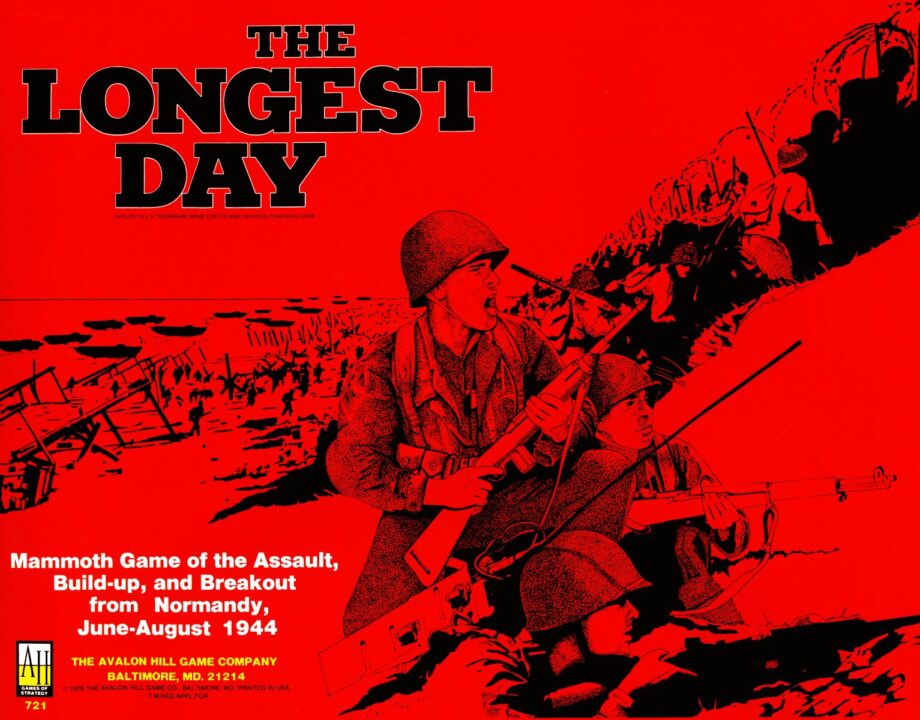
Strap in and grab your tactical maps, because this is my review of The Longest Day. This board game is a monster on your table—both in size and in ambition. If you’ve ever wanted to simulate D-Day with enough detail to make your history teacher faint, you’re in the right trench. Now let’s see if this classic is worth your hard-earned leave time—or if it’s best left on the shelf next to Uncle Bob’s war memoirs.
How It Plays
Setting up
First, clear your table. No, seriously, you need a LOT of space. Unfold the map, which will cover any reasonable table, and grab your army counters. Sort Allied and Axis pieces, and place them in their historical starting spots. Don’t panic if you knock over a few—happens to me every time. Shuffle the cards or event chits if you’re using them. Assign a player (the most trustworthy, ideally) to keep track of the turn clock.
Gameplay
The game is played in turns, each one representing a chunk of June 1944. On your turn, you choose which troops to move, where to attack, and which objectives to focus on. There’s a lot to keep track of: zones of control, weather, supplies, reinforcements—if you like spreadsheets, you’ll love this. Combat comes down to attack and defense values, with dice rolls shaking things up (and, if you’re me, ruining your perfect plan at least twice per game). It’s tense, slow, and perfect for history nerds.
Winning the Game
Each side has victory conditions. The Allies need to capture key locations within a set number of turns. The Axis aim to stall them, holding on until the clock runs out. If you want fast games, you’re in the wrong invasion. If you want to out-think your mate over 12 hours, this is your beachhead.
Want to know more? Read our extensive strategy guide for The Longest Day.
Historical Accuracy and Theme Integration in The Longest Day
Fine, it was a spaghetti strainer. Still counts.) The Longest Day promises a deep, historical take on the D-Day landings. And you know what? It nails the details, right down to the tiniest cardboard soldier.
This isn’t just a game where you move tanks around and yell, “Attack!” as loud as possible (though I recommend you try it, your neighbors will love you). The research here is wild. Every unit, terrain piece, and event tries to mirror real situations from June 6, 1944. Some of my buddies felt like they were in a history class, but with way more dice and fewer pop quizzes. I could trace actual Allied beach landings while shoving my plastic army dudes into the chaos. The designers clearly love World War II history. You can feel it with each decision you make.
The theme also shines through in the way you plan, argue, and occasionally mutter, “Well that’s it, the invasion’s failed, I’m out.” You really sense the pressure that went into the real operation. Sure, the game isn’t perfect—sometimes the scale is so huge I lose track of who’s who and which river is which. (I once tried to land in Belgium by mistake. Oops.) But if you want to feel like you’re storming Normandy, this game brings you closer than most.
Now, if you think storming the beaches was tough, wait until you try to tackle the gameplay rules—my next section is all about how tricky (or not) The Longest Day is to learn. Grab some popcorn for that one!
Gameplay Complexity and Learning Curve in The Longest Day
Let me tell you, The Longest Day is not the game you whip out when Aunt Susan asks, “What’s a wargame anyway?” This beast is for folks who lick their lips at the mention of counters, hexes, and setup instructions that look like my grocery list after a month of not shopping. If you’re new to wargames, you might want to keep your stress ball close and your patience even closer. My buddy Tim actually brought a pillow to his first session — not for comfort, but so he could scream into it.
The rulebook should come with its own bookmark and maybe a therapist on speed dial. You’re not just learning a game, you’re basically earning a minor in military history. And once you think you’ve got the rules down, The Longest Day throws you a curveball with little details like supply lines, weather changes, and the sheer number of units on the board. I felt like a logistics officer trying to get socks to forty divisions while being shot at. It’s both a brain burner and an endurance test.
But! There’s a weird thrill in figuring it all out. That “a-ha!” moment after a five-hour game night (and about three cold pizzas) feels amazing. It also makes for some epic bragging rights. Still, it’s not something you master in a few sittings. Prepare for some head scratching, Google searching, and the occasional rules debate that lasts longer than the actual D-Day landings.
If you’re thinking this sounds complicated, just wait until we talk about how fair — or unfair — The Longest Day actually plays. Trust me, you’ll want to read the next part with your referee whistle handy!
Game Balance & Fairness: Normandy Under the Microscope
Let’s talk balance. Not yoga balance—I mean, can both sides actually win, or does one player spend most of The Longest Day stuck in the sand like a confused crab? To my relief, the creators really put some thought into this. You’ll notice each side—Allies and Germans—gets its own advantages. The Allies start with a muscular pile of tokens, but the Germans have strong defensive perks. It’s a real seesaw battle, not a lopsided brawl where someone’s holding the board upside down.
He tried his best to break it. Didn’t work! No obvious ‘win’ button here, and you can’t just luck your way to victory. Strategy matters, and the luck of the dice only spices things up instead of deciding everything. There’s still a bit of randomness (this is a wargame after all), but you live or die by your choices, not by flipping the world’s luckiest coin.
However, you’d better have patience. Some scenarios feel like they drag on longer than the actual D-Day! If you’re one of those players who can’t sit still, you might find yourself secretly hoping for a rules mishap just to speed things along.
So overall, balance gets a solid thumbs up—but maybe pack snacks, just in case. Next up, we’ll see if The Longest Day is one to replay for years or just feels like an endless Tuesday afternoon…
Replay Value and Session Length: Can The Longest Day Keep You Coming Back?
Alright, let’s talk about replay value and session length, because I know some of you are wondering if The Longest Day is a one-and-done marathon or a repeat shindig for your gaming group.
For starters, this game lives up to its name. Expect a session to last from dusk to the kind of dawn where birds are judging your life choices. At minimum, you’re looking at 10+ hours. No, that’s not a typo. You want a short game? Try Uno. You want an experience? The Longest Day is here to test your stamina (and your relationships).
On replay value, the map is big, the options are vast, and no two games play the same—unless your group includes a guy who insists on the same strategy every time (looking at you, Dave). The ever-changing flow of battle, with multiple approaches for each side, means there’s always a reason to set it up ‘just one more time.’ But, let’s be honest, you probably need a calendar invite and snacks for days to finish an entire campaign again.
If you love long, immersive historical games and have a patient group, I recommend The Longest Day. It’s not for the casual crowd, but it rewards commitment like few others. Bring caffeine.
Conclusion
After long hours, a few lost friendships, and some heated debates about dice, I can say The Longest Day is not a game for the faint of heart. It’s a monster of a wargame—epic in scope, rich in history, and full of tiny cardboard counters that will haunt your dreams. But those who stick it out will find a strategy feast, with deep tactical choices and a theme that makes you feel like you actually invaded Normandy (minus the sand in your shoes). It takes patience to learn, strong coffee to finish, and a passion for WWII history to enjoy fully. The game is fair and rewards smart play, but don’t expect quick wins or easy learning. If you want a challenge and love grand strategy, you’ll get your money’s worth and then some. But if you want something quick and easy, maybe sit this one out. That wraps up my review—now excuse me while I try to pry some chips out of my carpet.