
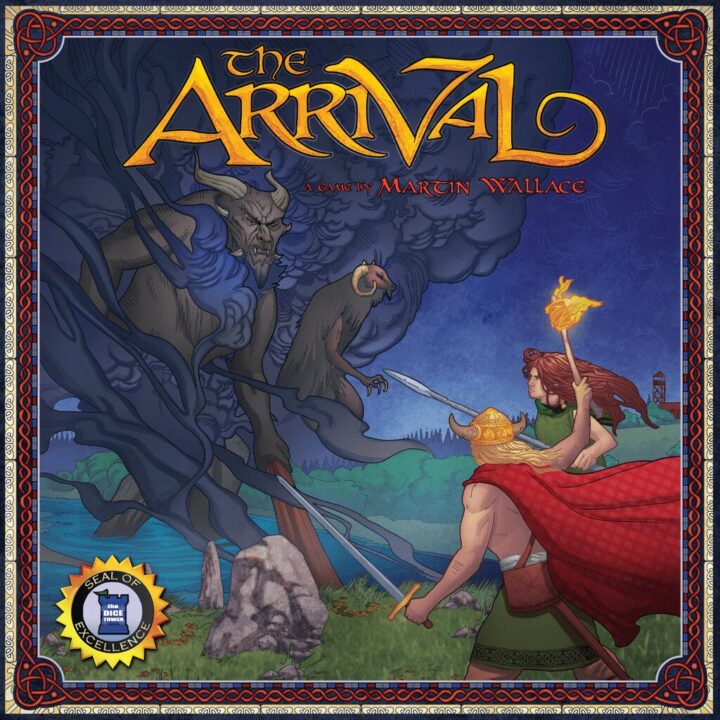
Gather round, folks, because today I’m reviewing The Arrival—a game where Celtic heroes, monsters, and your sneaky friends all want a piece of the action. Is it a tense battle of wits or just a box full of cardboard chaos? After wrangling my own gang of aspiring warlords through several rounds (some with more snacks than strategy), I’ve squeezed out every last pro and con to help you decide if this beast should join your collection. Let’s get on with it!
How It Plays
Setting up
First, put the big and moody game board in the middle. Hand out player boards and tokens. Everyone grabs their own set of wooden cubes and screens. Set out the Fomori monsters—yes, those creepy things—where the rulebook tells you.
Gameplay
Each turn, players draw resource cards and secretly choose how to use them. You can build defenses, expand, or call in those pesky Fomori monsters to mess with others (or yourself, if you’re not careful). Reveal choices, then fight for spots on the map and try not to accidentally doom the entire island before anyone wins.
Winning the game
The game ends when too many Fomori show up or someone fills their board with their own strongholds. Score points for land you control and how many monsters you have stopped (or let in by accident). The player with the most points wins, and gets bragging rights as savior—or destroyer—of ancient Ireland.
Want to know more? Read our extensive strategy guide for The Arrival.
The Arrival: Game Mechanics & How Players Clash
Let’s talk mechanics, because that’s where The Arrival tries to flex. At first glance, the game looks a bit like a tactical tug-of-war, where everyone is fighting the same horde of monsters, but at the same time, we’re all sneakily tripping each other up. My buddy Tom tried to ruin my region every chance he got. Classic Tom. But here’s the thing: the core mechanic is a lovely mix of resource management, area control, and a wicked action selection system. Each round, you draw tiles with a mix of good and bad stuff on them, then you secretly decide what you want to keep. That might sound simple, but let me tell you, it’s the move that sends you down a path of either being a hero or becoming the villain who brought doom to everyone. I spent way too long thinking I was the hero—ended up flooding the land with monsters by accident. Sorry, folks.
Player interaction in The Arrival is high. There’s scheming, alliance talk, and backstabbing. It’s not enough to just focus on your own board; you need to keep an eye on everyone else—especially sneaky Aunt Linda, who somehow always has too many resources. I appreciated that the choices mattered and there’s very little downtime, so you can’t just snack your way through other people’s turns. If you mess up, it’s on you—not the dice. That felt fair, even if Aunt Linda always wins.
Next up, I’ll take you on a wild ride through the murky forests and moody artwork of The Arrival’s theme. You’ll want to see these gloomy goblins, trust me.
The Arrival: A Rain-Soaked Celtic Nightmare? Theme & Artwork Quality Explored
I’ll be honest: The Arrival is not a game you bring to brighten up your Saturday afternoon. This thing oozes mood. The theme throws you into ancient Ireland where you, a chieftain, have to defend your land from these ugly, slimy monsters called the Fomori. It’s like Game of Thrones got trapped in a bog and can’t find its shoes. The artwork really leans into that dark and mythical vibe, with gnarled trees, rain-streaked cliffs and little hints of Celtic knotwork popping out where you least expect it. I half expected my friend Martin to start speaking in runes after staring at the board for five minutes.
The components in The Arrival deserve applause, even if not a standing ovation. The board is big, glossy and feels like it should come with a warning label: May induce chills. The monster tokens look like they crawled out from under my bed, and the cards do a great job showing both the menacing monsters and the brave but probably doomed defenders. My only complaint? Some cards can have busy art that makes your eyes cross if you stare before your morning coffee. Other than that, everything looks like someone really cared about the story behind this game. If you love a creepy, fantasy setting, you’ll be happy as a clam (a very worried clam) here.
Alright, now that we’ve seen how The Arrival paints its brooding fantasy world, let’s throw the spotlight on what really gets gamers talking: is it all down to luck, or can your brain actually save you from the rain-soaked doom?
Luck vs. Strategy: How The Arrival Keeps You Guessing
So, you want to know if The Arrival lets you show off your big brain, or if the dice just laugh in your face? Great question! There’s some luck here, for sure. You draw tiles that give you resources, evil demons, or even the odd curse, and sometimes the tile gods smile on you, sometimes they snicker. But—big but here—most of the action is down to what you do with your stuff.
The real meat comes from your decisions. Should you use resources to fight off the Fomori? Or do you focus on spreading your influence, Stepping on your mate Steve’s toes in the process? Every choice matters. You need to plan, watch your rivals, and sometimes pull a sneaky move that leaves everyone groaning (in a good way, of course). If you lose, it’s probably because you slipped up or got too greedy, not because the game decided your fate.
The Arrival does have its swings. Sometimes you pull a rotten tile and mutter uncool words under your breath. Still, it never feels like you can blame luck alone. Strategy wins out. If you like games where you can blame your own brain, or lack of snacks, for your loss, this one’s for you. Now, if you’re still awake, let’s see how The Arrival shakes out with different groups and if it’s worth pulling off the shelf again and again!
Does The Arrival Stay Fresh With Different Groups?
Let me tell you this: The Arrival is like the weird mystery sauce at a questionable diner—different every time, but somehow enjoyable… as long as someone else is brave enough to play with you. I’ve played The Arrival with my usual crew of competitive friends, with my family on board game night (the dog observed but did not participate), and with a bunch of non-gamer newbies. Each time, the game felt totally fresh and unpredictable.
With strategic folks, The Arrival becomes a puzzle. You get that chess-like intensity, and you can almost hear the wheels turning in people’s heads. Each person tries to outwit others by blocking moves and hoarding resources. There’s backstabbing, plotting, and more than one ‘accidental’ knocking over of pieces (looking at you, Steve).
But with my family, the game slowed down a bit. My mom got distracted by the little art details, and my brother kept asking if the Fomori monsters were friendly. The good news? The Arrival welcomes slower players without breaking. It still gave us plenty of tension, and even the less cut-throat folks got into the spirit—especially when someone’s plans went up in smoke due to a sneaky move.
Now, with newbies, you’ll need to explain a few things twice. The rules aren’t super light, but once people get the flow, they’re hooked. I’ve never seen two games of The Arrival play out the same way. It’s a game that adapts, thrives, and might just break up a friendship or two (all in good fun, I promise).
So, would I recommend The Arrival? Heck yes. It delivers a new flavor with every group, and I guarantee you’ll want to play again to see what happens next.
Conclusion
The Arrival is a tense, smart board game where your choices matter and luck takes a back seat—just how I like it! The moody Celtic theme and dark artwork pull you in, even if some cards are a wee bit busy. I loved how each group played so differently, making every game feel fresh. If you value strategy over randomness and enjoy a bit of friendly sabotage, The Arrival is worth your table space. That wraps up my review—now excuse me while I go plot my next monstrous invasion!