
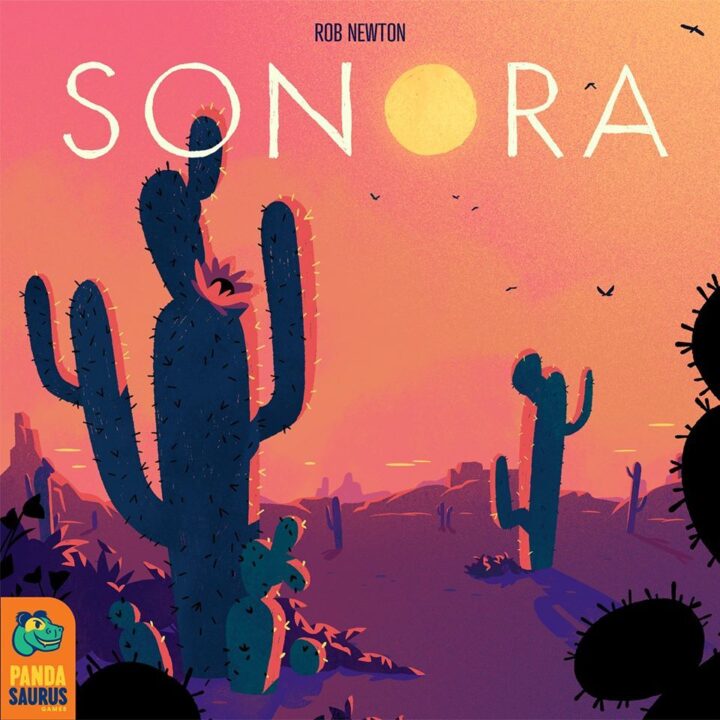
Welcome to my review of Sonora. You ever want to flick things across a table and call it strategy? Well, that’s what I did last game night—and I only hit my friend in the eye once. Sonora mixes skill shots with colorful boards, mini-games, and a sprinkle of mayhem. But does it flick past the competition or land in the dust? Let’s find out if your tabletop needs this wild western showdown, or if you should save your shelf space for something less… flick-y.
How It Plays
Setting up
Each player grabs discs in their color, a dry-erase marker, and a player sheet. Lay out the big, wild board in the center. Place your discs on the flicking edge. Get ready to channel your inner slingshot!
Gameplay
When it’s your turn, flick a disc onto the board, aiming for your favorite scoring zone. The board has four areas with different mini-games. After everyone flicks, players take turns using their discs in the zones where they landed, marking their sheets and earning points for clever moves. Discs bumping into each other is both fun and allowed (watch out for those wild ricochets).
Winning the game
After several rounds of flicking, scoring, and possibly grumbling about missed shots, add up your points from all zones. The player with the most points becomes the flicking champion of the desert. No sand in your shoes, just victory… or not, if you missed every shot like I did once.
Want to know more? Read our extensive strategy guide for Sonora.
Flicking Mechanics: Precision, Skill, and the Sonora Experience
Let’s talk about flicking, and no, I don’t mean what happens when you try to eat peas with chopsticks. Flicking in board games is all about using your finger to launch a piece across the board, and Sonora nails this mechanic. You need a steady hand and a cool head. One slip and your perfect aim will send your disc flying into the abyss (or worse, your friend’s lap). My friend Paul once tried to channel his inner Messi and sent his disc skittering onto the floor, missing all the high-scoring spots. Pure comedy gold.
With Sonora, the skill factor is front and center. The game rewards practice and control, not just blind luck. That means your wins (or embarrassing failures) are all on you. Unlike roll-and-move games where you can blame bad dice, here your fingers get all the credit for both glory and disaster. Don’t get me wrong, sometimes you need a lucky bounce, but if you lose, you can’t yell at the dice—you can only yell at your own traitorous finger.
Still, not everyone loves flicking games. If you are all thumbs, or you’ve recently eaten fried chicken, be prepared for greasy misfires and awkward moments. But if you love games where skill matters and your aim improves with every match, Sonora is a treat. It’s a skill-fest that rarely feels unfair—unless, of course, you’re playing against my little cousin, who has somehow transformed into the board game version of a dart champion.
Next up, let’s check out how Sonora’s unique board layout and top-notch artwork create a gorgeous ‘flicking’ landscape that’s almost too pretty to launch discs across!
The Colorful Chaos: Sonora’s Game Board Layout and Artwork
Let me just say—Sonora’s board is a wild bit of eye-candy. I showed it to my buddy Greg and his first words were, “Did a cactus explode in here?” And honestly, that’s not far off. The board is super bright, filled with pinks, greens, and oranges, which fits the whole southwest desert vibe. It looks like someone took inspiration from Arizona, mixed it with a box of highlighters, and thought, ‘Yeah, that’ll do.’ It’s busy, but not confusing, which is an achievement on its own.
Sonora’s board is sectioned into four big zones, kind of like having four mini-games happening at once. I find this cool because it gives you options. Want to draw shapes? There’s a spot for that. Want to build up points in a more chill way? There’s a space for that too. Each area has its own style, so it almost feels like you’re in a different corner of the desert each round. Also, every zone has its own artwork, with little lizards, cacti, and riverbeds.
The only hiccup is that all that color and detail can get overwhelming at first glance. My friend Jamie tried to read the board upside down (we all make choices) and just stared at it for a good two minutes before realizing he was looking at the scoring track for the wrong zone. So yeah, be ready for chaos—but once you’re used to it, it’s a playground for your flicking fingers.
Alright, that’s enough about the looks—next up, I’ll break down Sonora’s scoring system and let you know if the balance is as slick as a lizard on a hot rock.
Scoring System and Player Balance in Sonora
Let’s talk numbers—because in Sonora, points are everything. You score by flicking your discs (or in my case, shamefully missing your target and pretending you meant it) into one of four different zones. Each zone has its own minigame on your player sheet, like connecting cacti or grabbing sun tokens. This keeps everyone juggling priorities and looking to out-score their pals at every turn.
Each area’s scoring works a little different. One rewards big combos, another wants you to plan ahead, and yet another just likes straight lines. My buddy Dave tried a wild strategy of only focusing on one area. He lost. The balanced approach is better, but you always feel like you’re one flick away from greatness—or disaster.
Sonora feels fair because everyone gets the same chance to flick discs and fill up their sheet. The game’s player balance is strong, with no special powers or swingy event cards to mess things up. If you lose, it’s probably because your aim is as bad as mine when I’m holding a slice of pizza in my left hand.
There’s very little luck here. You have to earn your points the hard way. That means skilled players usually win, and if you’re like me you’ll find yourself practicing flicks on coasters when nobody is looking.
How Many Times Can You Flick Sonora Before Losing Friends? Replay Value and Player Interaction
Let’s talk about how often you’ll want to drag Sonora off the shelf, and how much your friendships can handle it. I once thought I was a flicking genius, and then my friend Hannah rocketed a disc clear off the table, taking my dreams (and her cat) with it. The chaos is part of the charm.
Sonora mixes competition with indirect mischief. You can bump rivals’ discs just enough to ruin their plans without feeling like a cartoon villain. There’s no direct attacking, so it avoids the rage that comes from games where you lose everything because someone targeted you. The passive-aggressive disc flicking gives just enough tension to keep things spicy but not so much that folks storm out of game night. Well, unless they’re really bad at aiming.
Replay value is also boosted by the four unique zones on the board. Each has a different minigame, so you won’t get bored just flicking and hoping. You can try new tactics every time, focusing on different zones or even specializing in sabotaging your buddy’s perfect lineup (which I definitely do for science, not for revenge).
So do I recommend Sonora? If you like a mix of skill, giggles, and not-too-mean interaction, give it a shot.
Conclusion
Well, that wraps up my flick-filled review of Sonora! If you want a blend of skill and strategy, plus some sweet art, Sonora delivers. It’s got replay value, balanced scoring, and low luck—exactly what my board game group loves. Sure, the board’s busy and you’ll lose a disc under the couch, but that’s part of the charm. If you like your games with a dash of chaos and a lot of skill, give Sonora a shot. Just maybe clear some space first. Now if you’ll excuse me, I’m off to hunt for my missing orange disc.