
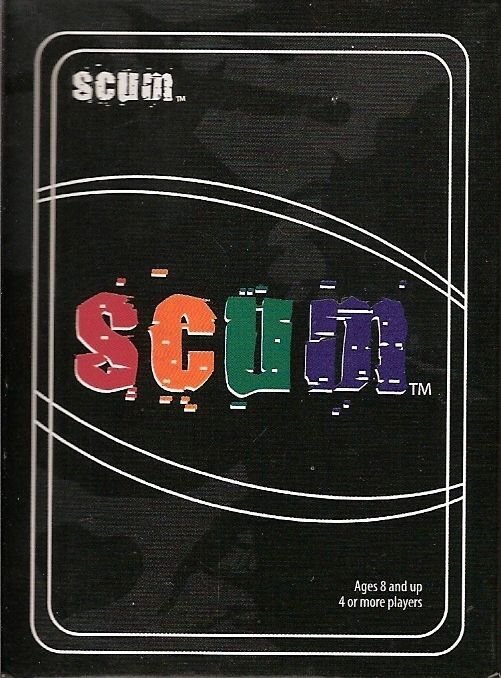
Welcome to my review of Scum, the party card game that can turn a quiet night into a chaotic mess of laughing, scheming, and honest-to-goodness backstabbing. I’ve played this game with my loudest friends, my quietest friends, and even with people I barely knew (it got awkward fast). Let’s see if it’s worth bringing to your next game night or if you’ll wish you’d stayed home folding laundry instead.
How It Plays
Setting Up
First, grab a deck of cards (no jokers—save those for your jokes). Deal all the cards evenly to each player. No peeking at your neighbor’s hand, no matter how tempting.
Gameplay
The person with the three of clubs starts by playing it (or the lowest card). Play stays clockwise. Each player must put down a higher card or a set of matching cards, or they can pass. When no one can (or wants to) go higher, the pile clears and whoever played last starts the next round. Keep those sneaky wild combos handy for the right moment!
Winning the Game
The first player to get rid of all their cards becomes President (a.k.a. Boss, Kingpin, or your choice of title). The last player stuck with cards is the Scum, who gets to shuffle and deal for the next round. No pressure, but your reputation’s on the line.
Want to know more? Read our extensive strategy guide for Scum.
How Scum Turns Friendships into Frenemies: Player Interaction and Social Dynamics
Let’s talk about what really makes Scum tick: the people you play it with. If you’ve ever wanted to see your friends turn into charming backstabbers or witness an uncle unleash his inner trickster, this game delivers big time. Scum is all about climbing that social ladder, booting others down, and maybe—just maybe—holding a grudge until next game night. Every round, you see personalities come out stronger than the smell of microwaved fish in the office kitchen.
The best part? Table talk, alliances, and minor betrayals aren’t just allowed—they’re an essential part of the fun. The proud “President” flexes their power by bossing others around, often with a smug smile, while the “Scum” plots their sticky comeback from the bottom. Last week, my friend Paula made an unspoken alliance with me, and together we bullied Gary into giving up his high cards. Sorry, Gary! But beware: alliances in Scum are more unstable than my wifi when I need it most. You’re all smiles one round, then boom—someone flips on you faster than I can spill soda on the rules booklet.
Scum thrives on these micro-dramas and shifting relationships, so every game feels different. Even the quietest player gets a chance to pull off a sneaky move. If you’re the sort who loves watching your friend group devolve into “Game of Thrones” by dessert, you’re in for a treat. Just wait until you see the fireworks in the next section, where I’ll break down Luck versus skill balance in Scum like a fortune cookie at a poker table!
Luck vs Skill: Is Scum Just a Card-Flipping Fiasco?
But is it all bad luck, or can you outsmart the draw?
Scum is a weird beast. You deal the whole deck out, so the lottery of which cards you get is real. If you’re stuck with junk, you’re gonna struggle, especially in the early rounds. As you climb the social ranks—President, Vice President, and, yes, the lowly Scum—you get to swap cards with other players. That means the best players get even better hands! At first, this rule annoyed me. Why give the winners more ammo? But it adds a twist: skilled players can build momentum, but one dumb move (or a sneaky bluff from another player) can send you tumbling down the ranks.
So yes, luck helps (or ruins) you, but skill keeps things spicy. Good memory, reading opponents, and timing your big plays make a big difference. Still, if you’re allergic to randomness, Scum might leave you scratching your head and blaming your fate. For me, it sits in the middle: not too lucky, but not chess-level skill either. I give it 3 stars for balance. Oh, and if you thought waiting for your turn was a pain—just wait until we talk about game flow and downtime next!
Game Flow and Downtime: Why Scum Keeps You on Your Toes
If you hate waiting around, Scum might just be your new best frenemy. Players zip through tossing cards, and since you have to watch out for sneaky plays and plan your own move, you’re glued to the table like a moth to a porch light.
I’ve played lots of games where one turn drags on longer than my grandma’s holiday stories, but Scum spares us all from that pain. Even if you end up as the lowly Scum in the last round, you’re still in the game and you can plot your comeback—no player elimination nonsense here. Turns are short unless someone has an existential crisis about whether to play their last seven or save it for later (looking at you, Dave).
Of course, if you’re playing with rule lawyers or folks who take ages to decide, you might get a little downtime. But honestly, that’s true for most games, and Scum’s simple rules and quick pace help keep it rare. Overall, the game flow fits perfectly into a night where you want fun, banter, and not-too-much waiting. It won’t leave you twiddling your thumbs or scrolling through your phone.
Next up, I’ll talk about replay value and how playing Scum with different groups is like ordering mystery meat at a cafeteria—you truly never know what you’re going to get.
How Scum Stays Fresh: Replay Value With New Groups
If there’s one thing Scum delivers, it’s a fresh experience every time you bust it out for a new gang of players. I’ve played this with my rowdy cousins, my brainy board game group, and even my parents (who still think Uno is peak gaming). Each time, it feels different, and not just because my uncle still doesn’t get the pecking order after three rounds. The personalities at the table shape the game. Got a group of loudmouths? Expect trash talk, wild plays, and someone pretending they’re ‘President for life.’ With shy folks, the game becomes a subtle dance, all back and forth glances and hesitant power grabs. I once saw a silent coup that would’ve made a chess master cry.
Scum really gets legs from its flexibility. It’s easy to teach to newbies. You can play four people or ten, and chaos still reigns. Add house rules (like passing the worst card or a silly hat for the ‘Scum’), and suddenly your family wants to play three games in a row. Even the grumpy aunt who only joins for snacks starts pleading for a rematch. It’s that contagious.
Sure, gameplay doesn’t change much, but swap out your players and it’s like opening a new bag of chips: same flavor, but now your friends might spill salsa all over the table. As long as you like games that thrive on social energy, Scum won’t gather dust on your shelf. I recommend it for parties, game nights, or whenever you want to see who truly runs the table. Just be warned— friendships might get tested!
Conclusion
So, that’s my official Scum review! I’ve played this game with loud friends, quiet family, and even that guy who always over-explains the rules. Every time, Scum brought out laughs, banter, and the occasional grudge (sorry, Aunt Marge). I love how easy it is to teach, and the way it gets everyone talking and plotting. It’s best with groups who don’t mind a bit of silliness and power-swapping. Luck does play a role, so if that grinds your gears, keep that in mind. But if you want a quick, social, and slightly chaotic card game, Scum will earn its spot on your shelf. Thanks for reading, and may you never end up as the scum!