
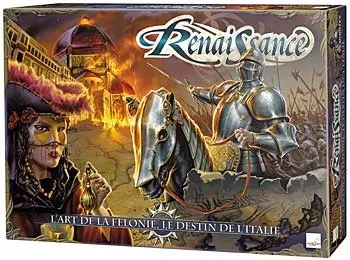
This review looks at its smart choices, smooth action flow, player interaction, replay value, balance, and luck. The game rewards planning, but it still lets you change course when another player ruins your lovely plan, which happened to me a lot. We found the turns quick and the competition fair, though a few lucky draws and runaway leads can cause trouble. Overall, it offers a lively mix of tactics and table talk without turning game night into homework.
How It Plays
Renaissance is a strategy game where players build influence, gather resources, and make clever deals while trying to grow their power. It looks calm at first, but someone always has a plan. Usually, it is Dave.
Setting up
Give each player their starting pieces and resources. Place the main board, cards, tokens, and shared supplies in the middle of the table. Shuffle any decks, choose a first player, and you are ready to cause some polite trouble.
Gameplay
On your turn, take the available actions shown by the game. You may collect resources, claim cards or areas, improve your position, and use special effects. Players must watch the board closely, since one person’s move can open a chance for another. Turns move along until everyone has taken the required number of turns or the end condition appears.
Winning the game
When the game ends, players score their influence, completed goals, resources, and other bonuses. The player with the most points wins and earns the right to explain their victory in far too much detail.
Want to know more? Read our extensive strategy guide for Renaissance.
Strategic Depth and Meaningful Choices in Renaissance
Renaissance rewards players who plan ahead, but it never turns each turn into a dusty maths exam. My friend grabbed the better long-term option, then used it to block my route. That small slap taught me the main lesson: strong choices need timing, not just big numbers.
The choices have teeth
Each choice asks you to weigh points, position, money, and future options. You may take a quick reward, save for a stronger move, or claim a space before another player reaches it. None of these paths feels like a free win. The best moments came when I changed plans after spotting a rival’s threat. Renaissance lets you recover, yet recovery costs time and can leave your engine feeling one turn behind.
Planning without a crystal ball
The game rewards flexible planning. You can set a goal, but opponents can alter the board before your next turn. That pressure keeps the table awake and makes every choice feel personal. I enjoyed building plans with two or three steps, then bending them when events changed. Players may stare at the board like it owes them rent. A player aid would help, especially during the first game. Once everyone learns the icons, though, the choices become cleaner and more satisfying. Next, we will tackle action economy and turn flow.
Renaissance Action Economy and Turn Flow Review
Smooth Turns
Renaissance keeps each turn moving without making players feel rushed. On your turn, you usually take a set of actions, then pass control along. This simple rhythm makes the game easy to follow, even when four players crowd around the table. Nobody waits through a long chain of tiny moves while one person checks every rulebook like it contains the last biscuit.
The action system gives you a budget, but it never feels like loose change. Each choice spends time, workers, or another useful resource. You can finish several small tasks, or save your energy for one bigger job later. That choice creates a nice push and pull. The table laughed, because Renaissance quietly rewards players who leave room for the unexpected.
Turns rarely stall because the game gives players action windows. You know when you may act, what each action costs, and when your turn ends. This clarity helps new players join without asking, “Wait, can I do that now?” I still explain a few timing details during a first game, but nobody needs a lecture. Once the rhythm clicks, turns feel crisp and purposeful.
The best part comes from flow between turns. You stay involved because other players may change your next action. Downtime stays low, yet the game never feels frantic. Renaissance also lets players recover easily after a poor move. Next comes player interaction and competition: let the elbows fly.
Player Interaction and Competition in Renaissance
Renaissance puts players in the same room and makes them watch each other closely. You cannot build quietly while ignoring the table. A shared space may become a prize or a trap, and one choice can ruin another’s plan. That creates lively competition without making every turn feel like war. My friend Carl still sulks when I take his favourite spot before he notices it.
Pressure Without Pick-On Play
The strongest interaction comes from timing. You might claim a bonus, block a route, or take a card an opponent needs. Those moves feel fair because everyone can read the board and respond. I enjoyed watching a quiet move make players change plans. Renaissance lets you interfere, but rarely lets one person bully the table. A player who falls behind can recover through choices, keeping the contest tense.
Competition also becomes personal. We started tracking habits as well as cards. Sam saves options; I make big plans and forget rules. You learn when to threaten a shared reward, when to hold back, and when to grab a prize before rivals react. Renaissance rewards attention and nerve, not just loud talk. The best player wins by spotting an opening, not by receiving a lucky miracle.
Still, conflict will not suit every group. I enjoyed it with friends who like plotting, but I would explain the meaner moments before teaching Renaissance. A quiet player can feel pushed aside if everyone fights for one prize, though table talk helps. Watch your plans, question sudden deals, and remember that a smile can hide a theft. Next comes Renaissance’s replayability, balance, and luck, where its long-term charm must prove it can survive many more game nights.
Renaissance Replayability, Balance, and Luck Review
Each session felt different, mostly because the game gives players new targets and changing paths to value. I never felt like I was following one perfect script. That keeps each return worthwhile.
Fresh Games
Fresh games come from the mix of goals and the way the board shifts. A plan that sings in a four-player game may sound flat with two. That gave us a good reason to bring Renaissance back out, even when one friend claimed he had “solved” it. He had not. He just wore a smug hat for twenty minutes.
Is Renaissance Balanced?
Is Renaissance balanced? Mostly, yes. Strong choices exist, but they do not make every other choice look silly. Our scores stayed close across several games, even when players used very different plans. New players also had a fair shot after one rules pass. I spotted a few moments where an early lead became hard to shake, though. A lucky bonus at the right time can widen that gap. The game usually lets the table catch up, but not always. That small wobble keeps the contest exciting, yet it may annoy anyone who wants perfect control.
How Much Luck?
Renaissance uses luck as seasoning, not the whole meal. Random results can change the value of a round, but they rarely erase good choices. I enjoyed that tension. Still, a poor draw can sting when your plan needs one exact result. Players who hate chance may want a puzzle. Overall, Renaissance keeps luck low for me to recommend it for groups.
Conclusion
And that concludes the review of Renaissance. The low luck makes wins feel earned, while the mix of plans and small tactical moves gives each game its own shape. It does have a learning curve, and a player who grabs an early lead may stay hard to catch. Still, the balance holds up well, and the replay value impressed us. Renaissance is not flashy, but it rewards good thinking without turning the table into a maths exam. I happily recommend it to players who enjoy fair competition and clever choices.