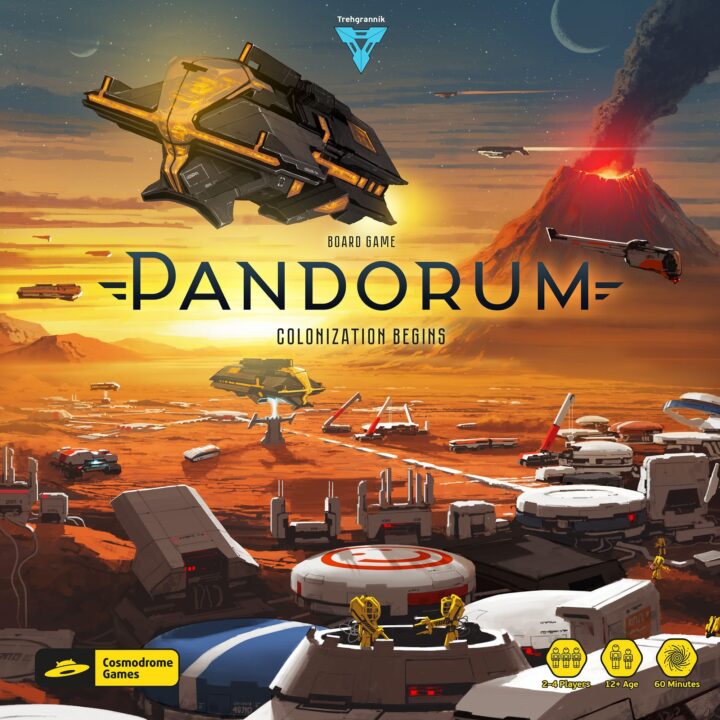

Alright, friends, gather ’round—I’ve braved the depths of the cosmos just for you and your shelf space. Today, I’m reviewing a sci-fi board game that flirts with strategy, mocks luck, and almost made my brain spring a leak: Pandorum. If you love outsmarting your buddies more than out-rolling them, stick with me—I’ve got the good, the bad, and the weird that happened when we played. Let’s see if this game should land on your table—or get launched into a black hole.
How It Plays
Setting up
First, pick your favorite color. Then lay out the modular board tiles in the center—be sure not to drop them on your cat. Hand out player mats, cubes, and a secret mission card to each player. Shuffle all the decks and place resource tokens nearby. It looks a bit like you’re prepping for alien bingo night.
Gameplay
On your turn, you’ll use action points to expand, mine resources, and build structures. You can block opponents or sneak in and grab the best spots. Each player tries to outsmart the others by choosing the right actions at the right times. There’s a bit of bluffing, a dash of strategy, and only a sprinkle of luck—just enough to keep things spicy without causing actual table flips.
Winning the game
The game ends when the resource pool runs dry or a player finishes their final structure. Count up victory points from your structures, missions, and any bonus cards. Whoever has the most points is crowned the ruler of this oddly cube-heavy planet. Bragging rights are included, but a real crown is not (I checked).
Want to know more? Read our extensive strategy guide for Pandorum.
How Fair is Pandorum? Game Balance and Strategy Tested
If you ever wanted to see a board game make your friends question their life choices, Pandorum does it. I say this as the only one in my group who didn’t lose spectacularly in our first two games. My mate Jess still insists the board was tilted. (It wasn’t. The table was just uneven.)
Pandorum’s balance is actually impressive. Every player gets the same starting resources and goals, so no one gets an unfair head start. You can build, expand, mess with opponents, or play it safe and turtle in a corner. And those options all work! Unlike games where a single strategy always wins, Pandorum makes you adapt. I tried hoarding energy points while my friend Griff got aggressive and blocked my supply lines. He nearly won—until he got too greedy, and I backstabbed him. Sweet, sweet revenge.
The game gives lots of ways to catch up, too. If you fall behind, you can use ships or special cards to swing things back your way. But the real trick is reading your rivals and knowing when to push or turtle. If you misjudge, you’ll pay for it. Still, if you lose, mostly it’s your fault, not the game’s. That feels fair.
So, Pandorum nails strategy and balance. You win or lose mostly on brains, not luck (though a sprinkle of luck is there, but more on that next). Next up, I’ll spill the beans on how Pandorum juggles luck and skill—prepare for a few spicy opinions!
Luck vs Skill: Who Really Wins in Pandorum?
If you’ve played enough games with my usual gang, you’ll know that luck can sometimes feel like an uninvited guest on board game night. Pandorum, though, swings that door open just a crack. Yes, there’s a bit of luck in the deck draws and resource grabs, but skill still runs the show if you know how to work it.
During our last round, my friend Doug tried to blame his miserable score on unlucky card draws instead of his very risky approach of spending all his oxygen in the first ten minutes. Sorry Doug, the game might sprinkle in some random twists, but it’s no excuse for tactical clumsiness! In Pandorum, your choices—where to explore, who to ally with, and how to block your opponents—matter a lot more than which card you happen to pull at any given moment.
Don’t get me wrong, nobody’s immune to a surprise asteroid or the occasional event card that turns the game upside down. But if you lose in Pandorum, it’s usually because someone outwitted you, not because you drew the short straw. There’s a sweet adrenaline rush when your plan works out, and if you mess up, well, at least you can claim it was all part of your “master plan.”
So, if you want to win at Pandorum, you’d better bring more than just lucky socks. You’ll need to actually pay attention and adapt on the fly. Speaking of things you can see and touch, let’s beam over to our next section—Component Quality and Design, where I’ll confess which game pieces I tried (and failed) to sneak home!
Pandorum’s Components: Eye Candy or Eye Sore?
Let’s talk about the parts you actually touch and stare at in Pandorum. When we first cracked open the box, it was like unwrapping a sci-fi gift from a mysterious aunt—exciting and slightly confusing. The board is pretty slick, with flashy planets and a color scheme that would make a space disco jealous. I admit, our cat tried to nap on it. That’s a quality stamp you can’t buy.
The tiles in Pandorum feel sturdy, not like those cheap ones that peel at the first sign of Cheeto fingers. I did try dropping a few (totally by accident, I promise) and they didn’t show any signs of wear. The cards are easy to shuffle, which is vital because my friend Steve shuffles like an angry pasta chef. No bent corners so far, even after a tense showdown involving three energy crystals and questionable alliances.
The player tokens are… well, they’re chunky. They’re not going to win beauty contests, but you can tell what’s what from across the table. I do wish the art was just a little more distinctive, though. When there’s four of us squinting at the same blue blob, confusion can happen. On the plus side, the resource markers stack like a dream. If you have ever stacked little cubes to annoy your friends during their turn—this game is for you!
Overall, Pandorum feels solid and looks nice, even if a few pieces could use a style update. But hey, in the dark, mysterious corners of the galaxy, who’s judging fashion, right? Next up, let’s see how this game gets players talking—or not—when it comes to player interaction and replayability.
Pandorum’s Player Interaction & Replayability: Will You Keep Coming Back?
I’ve wrangled many a space game, but Pandorum really surprised me. Let’s talk about playing with others, because this isn’t just a solo stargazing mission—oh no, you need to actually care what everyone else is up to. In Pandorum, every move you make can block, help, or annoy your friends. When my buddy tried to sneakily claim a sector, I pretended not to notice and then cheerfully locked him out. He’s still grumbling about it.
Pandorum’s board is basically an invitation to mess with each other. You all compete for space and resources, but it never feels mean—more like sibling rivalry than full-on intergalactic war. I love that you’ve got to actually watch your back (and your front and sides). The tension’s real but not so cut-throat that you storm off to sulk by the snack table.
Now, when it comes to replayability, I tip my space helmet to Pandorum. The board setup changes every time, and there’s always a new twist thanks to different sector layouts and objectives. One evening we played twice in a row—something I almost never suggest—and both games felt fresh. Sure, you’ll have to switch up your plans because your clever strategy will only work once before your friends catch on. (Ask me about my failed mineral monopoly attempt—no, actually, don’t.)
So, do I recommend Pandorum? Absolutely. It’s interactive without being unfriendly, and with so much replay value it basically pays rent in my shelf. Just watch out for sneaky friends and be ready for a rematch!
Conclusion
Alright, space explorers, that wraps up my review of Pandorum! I had a great time plotting, strategizing, and even grumbling when my friends snatched resources right out from under my nose. Pandorum delivers a solid balance of skill and just enough luck to keep things spicy, without making you want to flip the table. The components look slick, the board’s a real looker, and the player interaction keeps everyone laughing (or plotting revenge—good-natured, of course). If you’re after a sci-fi game that rewards clever moves and offers loads of replay value, I’d say blast off with this one. Just don’t blame me when you can’t stop playing! Until next game night, keep your meeples safe and your strategies sneakier than your friends’.