
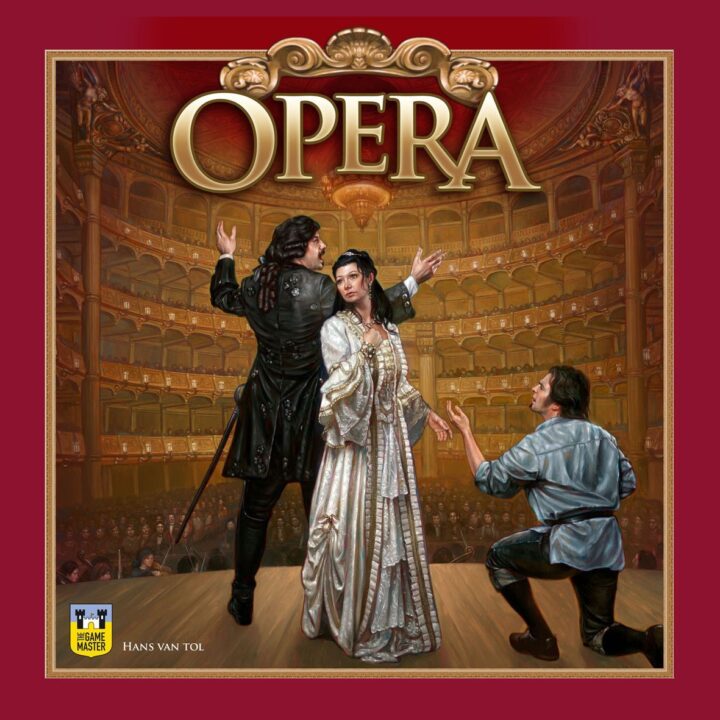
Ever wanted to feel fancy for a night but can’t hit those high notes or afford a tux? Well, grab your friends and gather around, because this is my review of Opera, a board game that lets you step into the world of composers, prestigious halls, and cutthroat musical business—without having to learn a single note. Let’s see if this game hits the high C or falls flat on its face!
How It Plays
Setting up
Set out the board and give each player their own stash of coins and markers. Shuffle the opera family tiles and put them out. Place all six librettos, maestro cards, and opera houses in their starter spots. Try not to spill your drink on the fancy gameboard while you’re at it.
Gameplay
Each round, players use money to bid on famous opera folks, put on grand productions, and build opera houses in cities. You plan your moves like a sneaky impresario, bluffing and blocking rivals. Each player tries to get the best spots and pile up cultural influence. It’s like a cutthroat talent show with wigs and music.
Winning the game
After a set number of rounds, the game ends. Players add up their points from productions, opera houses, and having the best cities. Whoever has the most points wins. That person gets bragging rights and can try singing a high note in victory (optional, but highly encouraged).
Want to know more? Read our extensive strategy guide for Opera.
The Art of Scheming: How Opera’s Game Mechanics Set the Stage
Let’s talk about the moving parts in ‘Opera.’ You know those games where the best plan melts faster than cheap ice cream in August? Not here. ‘Opera’ actually rewards planning. You can almost smell the burning brains at the table when people try to outthink each other in this one. The main mechanic? Clever bidding. Each round, players bid for the best seats in the opera world, snagging composers and shady advisors as if this was a Sunday market for musical geniuses. You need to set your priorities, manage cash, and predict the sneaky moves of others. One wrong step and you’ll have to settle for a composer barely fit to hum in the shower.
The real fun comes from player interaction. It’s not a solitary puzzle. You’ll have to read your rivals and sometimes, just straight up bluff them. I once threw my friend Dave off by pretending I wanted a composer so badly, he bankrupted himself just to stop me. Guess what? I didn’t even want him! The table may erupt in laughter or dramatic sighs. If you don’t like games where people can (and will) block or outfox you, then this might not be your jam. But if you do, you’re in for a treat. It’s sharp, but not mean-spirited, like a good opera roast.
Next up, get ready to feast your eyes: I’ll share how Opera looks and feels, and whether the theme sings or sours. Stay tuned!
Theme and Artwork Quality: A Grand Night at the Opera
So here’s the deal: if you’re looking for a board game that oozes class, Opera brings it right to your table. I mean, I felt like I needed to put on a tux just to open the box. The game doesn’t just say, “Hey, this is about opera.” Nope, it practically sings it at you (thankfully not in my voice, or everyone would have left). Each board element screams 17th-century elegance. The designers didn’t half-bake the theme—they really went for full-on velvet curtains, glitzy theaters, and dramatic portraits of composers who look like they’d judge my Spotify playlist.
Now, about the artwork: it’s top notch. The main board pops with rich colors, and the city illustrations make it clear where you’re touring the great opera houses of Europe. But hey, credit where credit’s due—the attention to detail is wild, right down to the little musical notes scattered across the components. The composer tiles are especially snazzy, with each maestro looking ready to drop the hottest symphony of the century. Tokens and money look like they belong in an old-world treasury, not in my clumsy hands.
If I have to nitpick, the game board can get a little crowded if you’re playing with a full crowd, but that’s a minor hiccup in what’s otherwise a visual treat. For anyone who’s a fan of classical music or just wants to pretend they are, Opera will lure you in with its lush design and keep you staring. Next up, I’ll tell you if this game’s got legs, or if it’s just a one-hit wonder—let’s talk about replay value and strategy depth!
Is Opera a One-Hit Wonder or an Encore-Worthy Hit?
The replay value? Let’s just say, it hasn’t even started to lose its charm yet. Each game brings different choices to the table. You can go for a big buildup of prestige, focus on one composer, or spread your influence thin like cheap opera glasses. The strategies in Opera twist and turn like a dramatic aria. There are layers here that keep you coming back to prove you can outwit the group (or, in my case, that you still can’t win against Sarah’s sneaky plays).
What makes Opera’s strategy depth stand out? Every decision matters. Whether it’s where to invest your money or how to stall your rivals, there are enough options to keep your brain humming along. The tactical part shines when you predict your opponents’ moves—which I still struggle with. If you’re board gaming with the same people over and over, trust me, the metagame gets very funny as you start second-guessing everyone’s life choices.
Opera doesn’t hand you a golden path; it lets you create your own master plan. You can adjust your approach every time the curtain rises, and the outcome never feels set in stone. This gives Opera some legs for the long run.
Hold on to your programs—next I’ll tell you whether Opera lets skill take center stage or gives luck a standing ovation!
Opera’s Brainpower Showdown: Is Luck or Skill Center Stage?
One thing I always worry about with new board games is getting bamboozled by a fluky winning streak. If you’ve ever seen Aunt Mabel roll sixes like she’s got loaded dice, you know my pain. Thankfully, Opera keeps luck backstage and invites skill to the spotlight.
Every round, you’ll make big choices: which cities to expand your musical empire to, where to plop down a new opera house, and what you’ll spend your money on. Nothing feels random. You could play a hundred times and still lose because your friends outfoxed you—not because they drew the lucky card. That’s a compliment, not an insult (even if it stings when I lose, which, let’s be honest, is more than I’d like to admit).
There’s some unpredictability, sure. Someone might make a move you didn’t expect or outbid you on the composer you wanted. But surprise, that’s called outsmarting, not dumb luck. When I win at Opera (rare, but sweet), I know it’s because I read my opponents and made a killer plan. No dice gods or spinning wheels to blame or thank—just pure tactics and a sprinkle of sneaky mischief.
If you hate games where rolling well makes you royalty, Opera will tickle your strategy-loving heart. It rewards clever moves, not good fortune. I’m giving Opera a very enthusiastic thumbs-up (with jazz hands!) for its skill-focused gameplay. If you want more brains and less bingo in your board game night, this one deserves a standing ovation.
Conclusion
If you love planning, bidding, and outsmarting your friends without a dice ruining your masterpiece, Opera is your box seat ticket to fun. The artwork sets the scene, the theme sings, and the replay value? Encore worthy! It’s deep without being dry, and every game puts your strategy chops to the test. Sure, if you can’t stand classical music or you want pure chaos, you might look elsewhere. Thanks for reading—this wraps up my review of Opera. Time to polish that monocle!