
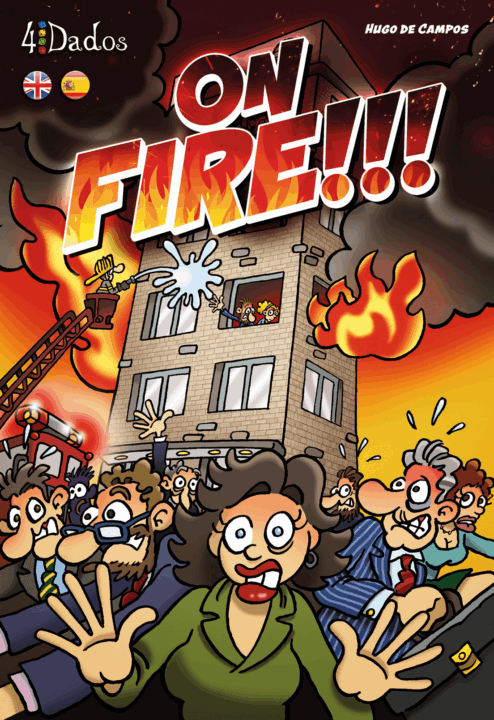
This review looks at On Fire!!! after several games with friends, where clever choices, cheeky take-that moves, and one very loud table kept us busy. The rules are easy to grasp, but the game still gives players room to plan, bluff, and cause small disasters. Luck adds some spice without grabbing the steering wheel, which I always like. It plays at a brisk pace and begs for another round, though keen players may want more variety over time. So, grab your pals, protect your plans, and try not to set the whole table on fire.
How It Plays
On Fire!!! is a quick card game about taking risks, managing your cards, and trying not to get burned. It is easy to learn, but the table can get loud once everyone starts pushing their luck.
Setting up
Shuffle the cards and deal each player a starting hand. Place the remaining deck in the middle of the table, then choose a first player. Keep space nearby for played cards and any fire cards that appear.
Gameplay
On your turn, draw and play cards as the rules allow. You can build your score, use effects, or make life harder for another player. Watch the growing danger, though. Push too far and your turn may go up in smoke.
Winning the game
Players keep taking turns until the game ends or the deck runs out. Add up your points, apply any bonuses or penalties, and crown the player with the highest score. Try not to look too smug. The fire always remembers.
Want to know more? Read our extensive strategy guide for On Fire!!!.
Core Gameplay and Player Choices in On Fire!!!
On Fire!!! turns each round into a small test of nerve, timing, and table talk. In our first game, I grabbed a safe action early, then watched my pals build a much hotter run beside me. That choice looked clever for about two minutes. Then the board shifted, and my “safe” plan sat there like a cold chip.
The core loop stays easy to grasp: each turn, you pick an action, resolve its effect, and decide whether to press on or bank what you earned. The rules give you a clear goal, but they leave room for cheeky plays and bold timing. You might chase a big reward before another player steals the best spot, or slow down and protect your lead. Both plans work, yet neither feels automatic. I like that tension because every choice changes the table, not just your own score.
Player choices also shape the mood around the table. You can block a rival, help a friend, or make a deal that lasts exactly until the next turn. That mix gives On Fire!!! a nice social bite without turning it into a noisy shouting match. Still, the game can drag when one player finds a strong pattern and repeats it. I wanted one more way to shake up late turns, especially with four players.
With friends, the choices stay fun because we argue over risk, trade small favors, and laugh when a perfect plan catches fire in the worst possible way. The system rewards careful reading of the board more than wild guesses, which suits me. Next comes the Luck versus Meaningful Strategy section, checking whether smart choices can survive a cruel card, roll, or flaming turn at sea.
Luck Versus Meaningful Strategy in on fire!!!
Luck Helps
After several games of on fire!!!, I kept asking one question: did I win because I played well, or because the cardboard gods tossed me a life jacket? The answer landed in a pretty happy spot. Luck matters, but it rarely grabs the steering wheel. A lucky draw can rescue a player, yet it does not build a winning plan on its own. I have watched friends cheer a great card, then waste it with a daft choice five minutes later.
Skill Still Matters
The best decisions come from reading the board, not praying to the deck. I often had two useful options, each with a cost. Do I grab a safer move now, or chase a bigger reward that may vanish? Those choices felt clear enough to matter, but never so neat that I could solve the game like a maths worksheet. My group really loved that tension. We blamed the cards, then blamed Dave for making the silly move he had planned.
Luck also helps keep players in the race, which matters when your mate treats the rulebook like a cursed tax form. A strong player can still recover by spotting a better path and timing a move well. That said, the game sometimes hands one person the perfect answer while another gets crumbs. That gap never felt huge in our sessions, but turns did feel more fixed than fair. I would enjoy a small catch-up tool for the player who falls behind early.
Still, I never felt robbed of a win. The game rewards memory, timing, and brave guesses more than luck. If group hates random swings, you grumble, but I found the mix tasty enough. Next, Player interaction and table chaos will turn the table into a circus.
Player Interaction and Table Chaos in On Fire!!!
On Fire!!! gets loud in the best way. Players watch one another closely, waiting for the moment someone overreaches, panics, or makes a move that looks clever until the whole table spots the flaw. In my games, quiet turns never stayed quiet for long. Someone would point at a risky play, another person would laugh, and suddenly everyone had an opinion. The game creates that friendly storm without forcing players to shout over each other.
The Loud Side of the Table
The strongest interaction comes from reading people. You learn who likes to play safe, who loves a dramatic gamble, and who makes a plan so strange that it somehow works. I enjoyed guessing what my friends wanted before they acted. A well-timed choice can spoil another player’s plan, but it rarely feels cruel. Most players still have room to react, which keeps the table lively instead of sour.
Arguments With Smiles
On Fire!!! also creates plenty of table talk. Players question motives, defend odd choices, and make deals that last about twelve seconds. My group spent more time saying, “Trust me,” than anyone should trust a person holding a game piece. That banter gives each round a story. Even players who fall behind can stay involved by watching for openings and nudging others into trouble.
Chaos That Still Feels Fair
The game handles chaos well because player choices cause most of the drama. A wild moment usually comes from someone pushing too hard or spotting a chance to interfere. The rules keep the mess easy to follow, so the table can enjoy the noise without stopping every minute for a rule check. Still, players who dislike direct attention may find the constant talk tiring. This game rewards people who enjoy being noticed.
After several plays, I found the interaction more memorable than any single result. On Fire!!! turns friends into cheerful suspects, and that makes each round feel fresh. Next, we’ll see whether Replay Value and Game Length keep that fire burning after the first few noisy matches.
On Fire!!! Replay Value and Game Length Review
Quick enough to stay hot
On Fire!!! respects your evening. Our first game took about 35 minutes, while later plays landed between 25 and 30. Setup moves fast, turns stay snappy, and nobody sits around waiting for a player to build a tiny cardboard empire. That pace suits the game’s bright, noisy mood.
That short run time also makes On Fire!!! easy to bring out on a weeknight. It works as a warm-up before a longer game, though our group often planned one more match and then somehow played three. The box earns its keep because it does not demand a whole afternoon.
More than one spark
Replay value comes from how each group handles the same challenge. You may spot new ways to stretch a turn or chase a safer result after a silly first attempt. Our table changed over time too. One friend played boldly. Another became the careful accountant of every move, and I turned into the person who said “one” more game while shuffling the cards. That mix keeps the room fresh again.
Still, the replay value has a ceiling. If you play On Fire!!! every night for a week, you will learn its rhythm and notice the familiar beats. The game does not offer a pile of scenarios or a huge campaign. It offers a fast experience instead. For my group, that trade works because we can return without a big time commitment. Players seeking a deep challenge may want more variety than the box provides here.
I recommend On Fire!!! for groups wanting short games with plenty of replay value and laughs.
Conclusion
That concludes the review of On Fire!!!. After several games with friends, I found a quick, lively game with smart choices, cheeky player interaction, and enough chaos to keep everyone awake. Luck can swing a moment, but it rarely steals the whole game, which kept us from launching the cards into the bin. The short play time also makes it easy to play again, though regular groups may want more variety after many rounds. Overall, On Fire!!! brings plenty of laughs and fair competition to the table. It earns a solid recommendation for casual groups who enjoy fast games with a bit of heat.

