
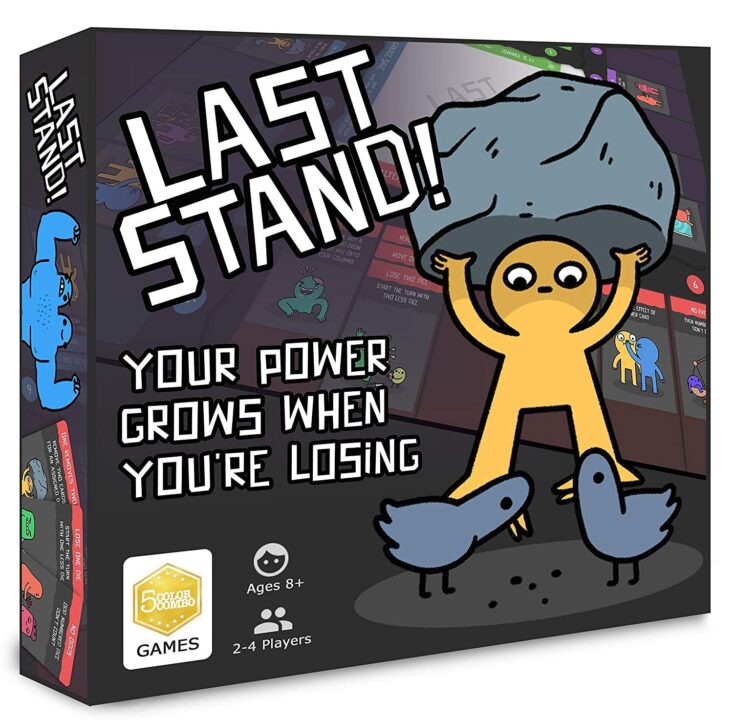
Welcome to my review of Last Stand, a tense survival game where smart choices, table talk, and a little luck decide who makes it through. It offers strong player interaction and good replay value, though luck can sometimes shove strategy into the bushes. Here’s how it handles gameplay, balance, tension, and those all-important final moments.
How It Plays
Last Stand is a tense survival game where players gather supplies, strengthen their position, and try to hold off growing threats. Every choice feels important, especially when the snacks run low. Which, sadly, happens faster than you think.
Setting up
Each player takes a character, starting supplies, and any matching pieces. Place the board, threat cards, tokens, and other shared parts within reach. Shuffle the decks, set the threat level, and choose who goes first.
Gameplay
Players take turns completing actions such as collecting resources, moving, building defenses, and dealing with threats. After each round, new dangers appear or existing ones grow stronger. Players must work out when to play it safe and when to take a risky chance for better rewards.
Winning the game
Players win by meeting the game’s main objective and surviving until the final stage. They lose if the threat reaches its limit, their base falls, or another loss condition is met. If the game tracks individual scores, the player with the most points among the survivors wins.
Want to know more? Read our extensive strategy guide for Last Stand.
Core Gameplay and Survival
Last Stand puts you in a rough spot from the first turn. Your group has limited food, water, gear, and time, while danger keeps knocking at the door. Each round asks you to choose between pushing forward for supplies or stopping to patch wounds and build a safer camp. In our games, I often picked the brave option, then watched my plan fall apart when a mutant chewed through our best barricade.
The core loop feels easy to learn, but it keeps creating tense choices. You can send a survivor into a ruined shop, search a tunnel, or stay home and guard the supplies. Every worker has useful skills, yet every trip costs energy and raises the risk of injury. I liked that survival never meant simply grabbing the biggest reward. Sometimes the smart move meant leaving medicine behind because the return trip looked deadly.
Your choices also shape the table. Taking one resource can deny another player a key tool or force them toward a worse route. This adds bite without turning the game into a nasty shouting match. The best moments came when someone risked a low health survivor to rescue a trapped ally, then celebrated like they had won a medal.
Last Stand rewards planning, but it also makes you accept hard losses. A failed mission can wreck your next turn, yet smart play helps you recover before the danger gets worse again. Next, Balance between luck and strategy will decide whether plans survive.
Balance Between Luck and Strategy in Last Stand
Smart Choices Matter More Than Lucky Rolls
Random events can wreck a tidy plan, but they rarely decide the whole game alone. You still choose when to spend supplies, when to take a risky route, and when to save a useful card for a worse day. That mix gives each turn a little bite without making players feel doomed from the start.
The luck works best when it creates problems rather than answers. A bad draw might block a path or raise a threat, yet clever timing can soften the hit. In our games, I often watched Mia turn a rotten card into a small win by trading early and planning two turns ahead. That felt fair. The game rewards calm players, not just the person who pulls the shiny miracle token.
Still, the balance wobbles in a few spots. Some early luck can leave a player short on key tools, and recovery may take too long. We had one match where Ben drew three rough events in a row and spent half the session playing catch-up. He made smart choices, but the board had already slammed the door on him. More ways to reroll, trade, or gain a small comeback boost would help. I would not call the system unfair, but I would call it a bit moody.
For me, that trade-off keeps Last Stand exciting, though perfectionists may grumble. Next, I will look at Player interaction and table tension, where friendly plans can turn into cardboard warfare before the snacks arrive.
Last Stand Player Interaction: Tension Around the Table
They came when one player watched another edge toward safety and quietly said, “Please don’t make me choose.” This game creates tension through attention. Everyone studies the table, watches hands, and waits for a rival to reveal a plan. Even quiet players start making faces like soap opera actors.
Watching Friends Squirm
The best interaction comes from shared pressure. Players can point out threats, but they cannot control another person’s choice. That makes every warning feel useful and a little sneaky. In our four-player game, Maya kept asking who held the strongest position. She never gave advice for free. Her “helpful” comments pushed two players into a standoff, while she slipped past the fuss. We all spotted the trick, but too late. That table talk gave us a better laugh than any card could manage.
Pressure Without Bullying
Last Stand keeps this conflict fairly light. Players compete, yet they still share enough information to read the room. The game does not force direct attacks every turn, so sore losers have room to grumble without flipping the board. I prefer that style. Some games turn player interaction into a nasty pile-on, where one person becomes the table punching bag. Last Stand avoids most of that. Still, a player who falls behind may feel ignored if everyone chases the same target. Our newest player spent two rounds watching others argue, which felt a bit flat.
Timing Creates Trouble
Timing shapes the mood. A player may wait, then steal the spotlight with one sharp move. We laughed, groaned, and blamed the cat. Next comes Replay value and game length, our section for repeat plays.
Last Stand Replay Value and Game Length Review
How Long Does Last Stand Take?
Last Stand usually takes 45 to 60 minutes with four players, once everyone knows the rules. By game three, we finished in 42 minutes. That shorter run time makes it easy to suggest another round, even when the snacks have vanished and someone has started eating the cardboard coins.
That pace supports replay value without asking for a whole evening. Last Stand feels best as a repeat visit rather than a weekly campaign. You can play twice in one night. The box also works well for mixed groups because setup stays quick and the rules remain easy to recall.
Replay comes from the changing mix of scenarios and the small goals that push each session in a new direction. The design gives enough variety for regular play, though it may feel familiar after many sessions.
The replay value depends on your group. Those rules gave sessions a fresh coat without adding work. Still, Last Stand does not offer endless content. Players who demand a new map every night may want more variety.
For me, that limit feels fair. A game should know when to leave the table before it wears out its welcome. Last Stand hits that sweet spot: long enough to feel worthwhile, short enough to replay on impulse. I recommend Last Stand for weeknight sessions, and nobody has regretted the second game yet.
Conclusion
That wraps up this review of Last Stand. The game delivers tense choices, lively table talk, and enough variety to keep each match feeling fresh. Smart play matters more than luck, though a rough early draw can still make life hard. If you enjoy survival games with bite-sized turns and plenty of groans around the table, Last Stand earns a place on your shelf. It is not perfect, but it gave us more good stories than bad ones—and that counts for a lot.