
Overview
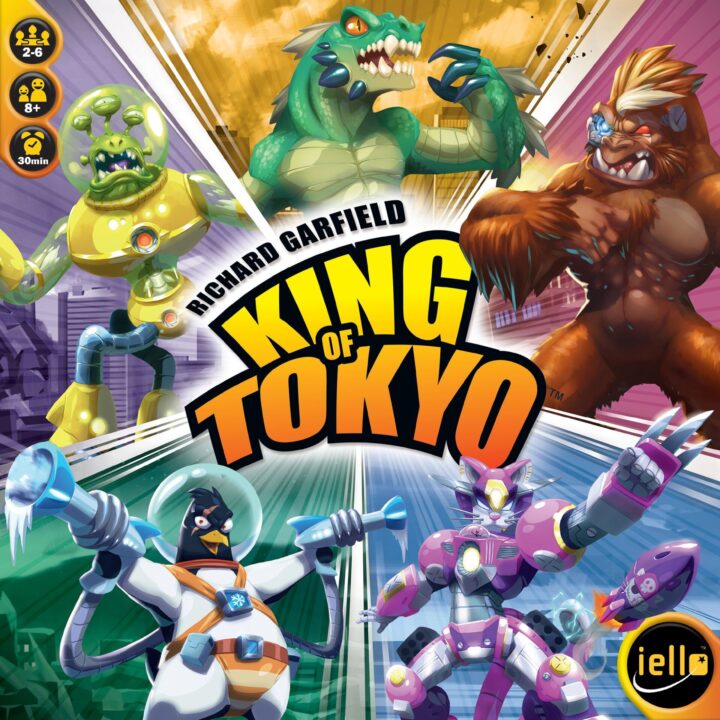
Welcome to this review of King of Tokyo, a game that’s an all-out brawl to become the one true king of behemoths in a city ripe for destruction. This review will smash into the dice-rolling combat mechanics that are the heart of this monstrous fray, explore the vast buffet of power-up combinations that can turn the tides of battle, and dissect the interactive dynamism that makes every game a thunderingly social experience. Whether you’re roaring with victory or whimpering back to the depths from whence you came, King of Tokyo promises a table-flipping good time—and we’re here to see if it delivers on that monstrous promise.
How It Plays
Embark on an adventure of strategic monster battles with ‘King of Tokyo’. True to its core, this board game engages players in a fight for supremacy within the iconic city of Tokyo. Player goals vary, but ultimate dominance prevails as the common thirst.
Setting Up
The initial stage involves each player selecting a unique monster and placing their figure on the game board. Every competitor receives a scorecard to track health and victory points, and the dice and energy tokens are positioned within easy reach of all hopeful contenders.
Gameplay
Players alternatively roll six dice, forging outcomes that heal, attack, hoard energy, or earn points. Energy collects to purchase power cards, escalating your monster’s capabilities. Tactics and some negotiation decide whether to attack rivals or pull back, allowing the ever-present Tokyo to be occupied or abandoned disingenuously.
Winning the Game
Although overthrowing your enemies seems straight out from a destructive playbook, victory in ‘King of Tokyo’ can either be achieved by racking up 20 victory points or being the last monster standing – a duel between ruthless annihilation and cunning stardom.
Want to know more? Read our extensive strategy guide for King of Tokyo.
The Thrill of the Roll: Combat in King of Tokyo
The King of Tokyo Review wouldn’t be complete without diving into the game’s core: dice-rolling combat mechanics. As each player took their turn, the anticipation built – those six dice could spell victory or disaster.
Risky Rolls Equal Heated Battles
Innovatively, King of Tokyo allows players to re-roll dice up to two times, giving us a chance at a full-on attack or focusing on healing. During one particularly fierce roll, I was on the verge of defeat, yet the dice gods offered mercy, showering me with hearts, surviving another round. Thereby, the tension inflates, and joy or despair ripple through your opponents, certainly bringing Ryan to the edge of his seat one moment and causing Ellen to cheer the next.
Bearably Unpredictable
Certainly, experiencing this variability, each dice roll’s outcome is thrillingly unpredictable, promoting an energetic atmosphere. However, subsequent sessions showcased strategy in dice selection, turning luck into a nuanced tactical decision. This tense ebb and flow of random chance meeting strategy create memorable gaming sessions, leaving room for big comebacks as in none other.
Ready to segue from tumultuous brawls to the expansive customization? That’s exactly where this King of Tokyo Review heads next, expounding on the riveting Monster Upgrades Strategy.
Outfitting the Ultimate Monster
Reflecting on my numerous showdowns in King of Tokyo, Monster Upgrades have always been a hotbed of strategy—and, occasionally, betrayal. Picking the Perfect Power-Up: It’s not just about hoarding those energy cubes; it’s about choosing upgrades that synergize with your beast’s gambits. One night, the ‘Camouflage’ card saved my cyber-bunny from certain doom more times than I can count against a particularly aggressive giant lizard.
Strategize or Agonize
Moreover, there’s the torturous decision of Timing Your Enhancements. Do you play that ‘Extra Head’ card now for more dice rolls or save your energy for a game-changing ‘Nova Breath’? These choices can pivot a benign creature to a colossus of chaos, dominating the Tokyo skyline. It’s a beautiful, if not nerve-wracking balancing act that epitomizes the sophistication of King of Tokyo’s gameplay.
Stay tuned as I unveil the complexities behind the often raucous Player Interaction Dynamics in my next King of Tokyo Review segment.
Cutthroat Combinations: Dueling Dynamos
As my Mega Shark faced off against a friend’s Cyber Kitty, I found our strategies largely influenced by the other’s menacing moves. We cordially tossed dice with one hand while sizing up each other’s character cards with the other, revealing our unspoken alliances and rivalries oozing through every turn. Attacks got personal, indirect sabotage was blissfully rampant, and chuckles permeated the room whenever allegiances shifted like the fickle tides of fate—a true spectacle of social Mechagodzilla vs. Monster chuck-off.
Ready, Steady, Throwdown
Admittedly, it isn’t just about bruising your foes in earnest Tokyo; it’s the complex web of temporary friendships and consequent betrayals that deepen engagements. Fiery glares across the table when player interests clash, partnered with cheeky winks signaling stealthy accords, bolster the gladiatorial ambiance of this game. Subsequently, it’s these very relationships that weave an interactive narrative unique to each play–complete with its heroes and underdogs. Such intensely social mechanics push it beyond a simple board game to a captivating social event. With such personality-infused strategies at play, I find myself reflexively recommending King of Tokyo for its vibrant bring-circle entertainment value—roar for it!
Conclusion
In conclusion, this King of Tokyo review has taken you through the roaring alleys of dice-rolling combat mechanics, deepening your strategic appetite with monster upgrades, and steered you into the raucous arena of player interaction dynamics. These elements come together to form a game that is as much about the luck of the die as it is the laughter at the table. King of Tokyo offers a blend of simplicity and strategy, making it a hit for casual gatherings and serious board game nights alike. And with that final monstrous roar, we wrap up our review, confident that King of Tokyo stands tall as a beloved classic in the board game kingdom.