If you’ve ever wanted to feel like a 15th century printing tycoon without the risk of ink stains, you’re in luck! Welcome to my review of Gutenberg, a board game that promises brainy choices, gorgeous bits, and—thankfully—a complete lack of random disasters. I gathered my most opinionated friends (and one easily distracted cat) to test whether this game is really worth the hype or if it should just be left on the shelf gathering dust like my old copy of Mousetrap. Spoiler: there will be typefaces. There will be drama. And yes, there will be some honest nitpicking. Let’s see if Gutenberg prints out a win!
How It Plays
Setting up
Open the box and try not to lose your sanity over all the tiny gears. Each player grabs a player board, some lovely wooden cubes, and their own Gutenberg workshop—sadly, not a real printing press, but you can make brrrrr sounds if you want. Shuffle the order and patron cards, lay out the ink tokens and gears, and set up the main board in the middle. Done. Less time than finding a working printer at the office, promise.
Gameplay
Each round, players secretly choose which actions to take using little cubes behind a screen. You’ll be snagging ink, bidding for gears, taking printing orders, and upgrading your workshop. There’s a bit of bluffing, so be ready for some suspicious side-eye from your friends. Completing orders gets you points and sometimes cool bonuses. If you forget to collect ink, you’ll get stuck printing invisible books, which is not great for business.
Winning the game
When the last round ends, count up your points from completed orders, fancy upgrades, and secret patron goals. Whoever printed their way to the most points wins and can declare themselves the new king of the printing press—at least until the next game night. No luck, no dice—just pure printing power. Bring your brain, not your rabbit’s foot.
Want to know more? Read our extensive strategy guide for Gutenberg.
Setting the Type: Theme and Artwork in Gutenberg
Let me start by saying, Gutenberg comes with a theme that made my history nerd heart swell. You’re not just printing books—you’re running a printing press in the 15th century, complete with ink stains, fancy fonts, and the constant fear of running out of vowels. The box art sets the tone: lots of deep browns and golds, with typefaces everywhere. If you ever dreamed about being a funky medieval hipster, this is your chance.
The graphic design is clear, which I appreciate, since I once played a board game where the icons looked like squashed spiders. In Gutenberg, the iconography actually makes sense. You will stare at a lot of cogs, type blocks, and slightly grumpy portraits of rival printers (seriously, one of the guys looks like he’s about to eat your lunch). The components are sturdy too—those wooden cogs are neat to play with, and I saw my friend Alan try to use one as a monocle, so points for fun factor.
The theme isn’t just pasted on. Everything oozes with printing-press flavor, from the way you collect fonts to the contracts with dignitaries who look like they know a good deal on parchment. Still, the color palette is a bit muted, so if you love neon, maybe bring your own highlighters.
Now, if you think you’re ready to manage ink and ambition, just wait till we start cranking the press with gameplay mechanics and player choices in the next section…
Unraveling the Gears: Gameplay Mechanics and Player Choices in Gutenberg
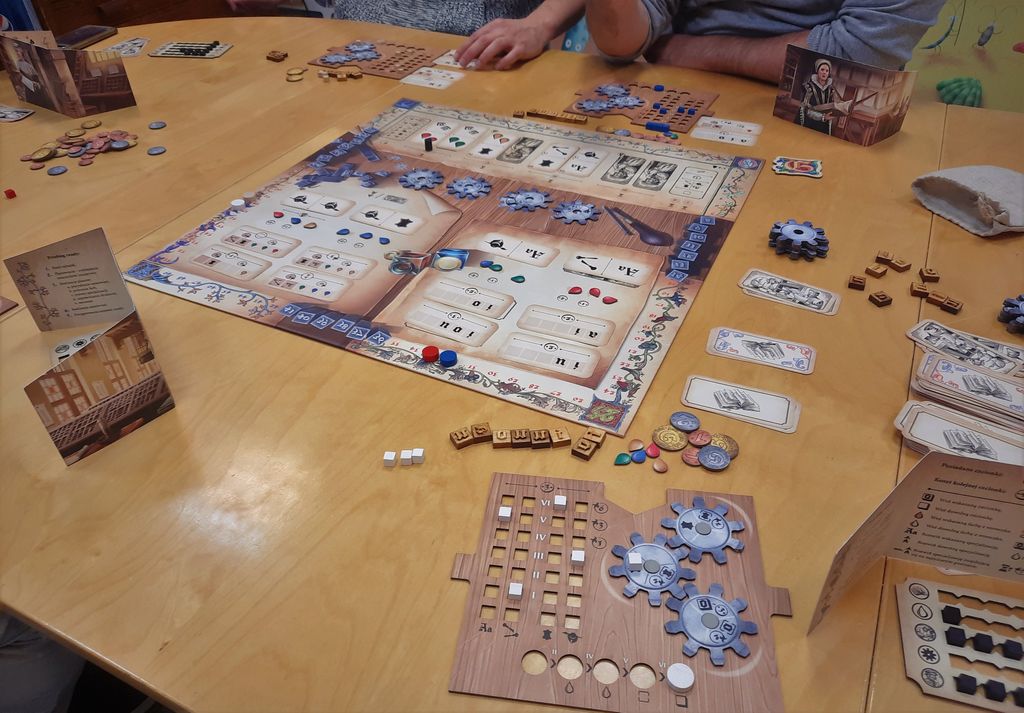
When I sat down to play Gutenberg with my usual crew (the same people who still argue about who invented the sandwich), I braced myself for a meaty brain-burner. Gutenberg didn’t disappoint. At its core, Gutenberg is all about managing resources, planning ahead, and making clever choices every round. There’s very little luck—unless you consider my friend Dave’s uncanny ability to pick the exact ink I wanted as luck, in which case, I want his lottery numbers.
The main mechanic feels like a blend of auction and engine-building. You secretly assign initiative cubes to various actions, like getting orders, buying ink, or grabbing upgrades. Everyone reveals at once, so there’s a delicious tension as you hope you outbid the others. Maybe you really need that cyan ink, but so does Sally, and she’s been staring down that ink row like a hawk at a chicken buffet. Hate unfair mechanics? Fear not: your choices actually matter and outsmarting opponents feels super rewarding.
The game also has this neat gear system—think fancy machine parts, not cycling gear—which you rotate to trigger small bonuses and combos. It’s a puzzle that keeps your brain spinning faster than a hamster on espresso. I found myself torn between grabbing new orders or building my letterpress, and often wished for one more turn to do everything. Still, the only real randomness comes from order and upgrade cards. This keeps things fair, and my grumpy uncle can’t blame the dice for his defeat.
Coming up next, I’ll talk about Gutenberg’s components and setup—brace yourself for some glue sticks, wooden bits, and the closest I’ve come to papercuts this year!
Gutenberg’s Components: Printing Perfection or Paper Jam?
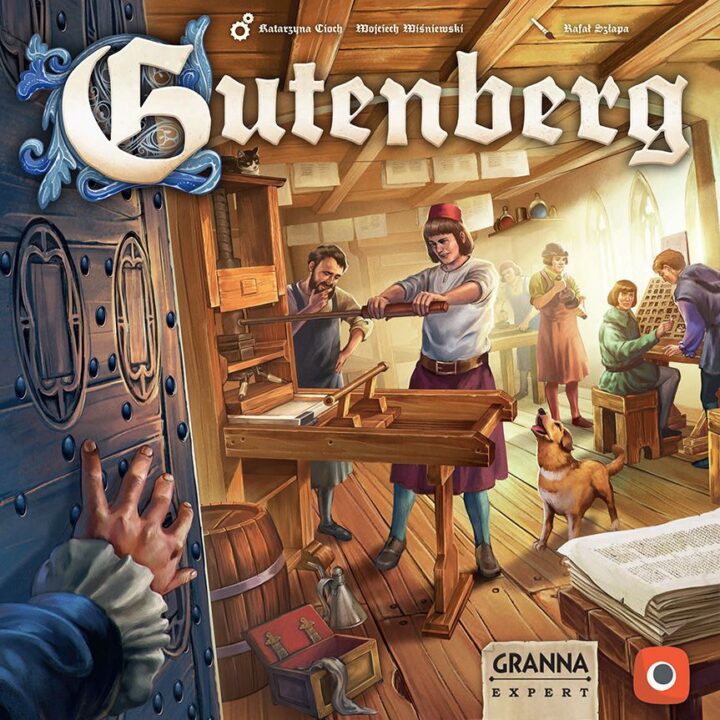
Alright, folks, let’s talk about the stuff you actually touch in Gutenberg—the pieces, bits, and bobs. When I first opened the box, it felt like unboxing something straight from an artisan print shop. The chunky wooden gears kept spinning in my hands until my friend Dave yelled at me to stop, because yes, the gears are that fun to fiddle with. The cardboard is thick enough to survive even my cat’s midnight rampages, which is saying something. The ink cubes look almost delicious. No, I did not eat one. Maybe. Anyway, the quality here is way above your average board game fare.
Setup time for Gutenberg is surprisingly quick, especially compared to other euro games that make you question life choices before you even start playing. You’ll lay out the main board, pop in those delightfully tactile gears, hand out some player boards, and toss each player their starting goodies. If you’re not distracted by reading the historical tidbits on each card (guilty!), you’ll be up and running in about ten minutes. My group managed to get everything sorted while finishing our pizza. Just don’t let anyone who’s too methodical sort the gears. We lost Steve for fifteen whole minutes to a spiraling organization binge.
No custom inserts in the box, though, which irks the neat freak inside me. But with the included baggies, at least my pieces won’t end up in another galaxy between game nights.
Next up, I’ll answer the burning question: Is Gutenberg as fair as a perfectly aligned printing press, or does luck jam up the works?
Is Gutenberg Fair? Balance and the (Not So) Dicey Side of Things
Let’s talk about balance and luck in Gutenberg, because I’ve played with people who always cry foul if a game hinges on lucky rolls or blind card draws. (Looking at you, Simon!) In Gutenberg, I can happily say you won’t find yourself flipping a table just because someone scored high on a dice roll or drew the magic unicorn card.
The main way you win in Gutenberg is through planning. There’s a blend of bidding for actions, upgrading your print shop, and juggling resources – but none of this comes down to pure luck. Trust me, if there was a secret “lucky” mechanic hiding somewhere, my pal Jen would have spotted it (she once won a coin-toss game six times in a row – still suspicious!). Instead, each round, you secretly allocate gears to actions. You have to think ahead: Where do you want to get ahead of the competition? Which orders should you snatch first? This means, if you lose, you probably made a misstep – not because the cardboard gods conspired against you.
Is the game perfectly balanced? I think so. I never felt like somebody got ahead just from a random turn of events. There’s a slight race to specialized upgrades, but everyone has a fair shot. Even when I lost (twice, no less!), it was more about me overcommitting to a wild printing strategy than a fluke.
So, who is Gutenberg for? If you want a game where your choices matter more than a rabbit’s foot, this one’s your jam. I solidly recommend it, especially if you hate games that hinge on dumb luck. Just be prepared for some brain-burning decisions and the smug joy of outsmarting your friends!
Conclusion
Alright folks, that’s a wrap on my Gutenberg review! I’ve spun those little gears, printed those fancy letters, and tried my best to outwit my friends (spoiler: it didn’t always work). Gutenberg stands tall as a top-tier euro that values skill over luck, with slick components and a theme you won’t forget. Sure, a better insert would’ve helped my messy shelf, but I can live with baggies. If you crave clever strategy and zero nonsense from dice, this game is a no-brainer for your table. Now if only I could print a certificate for winning…