
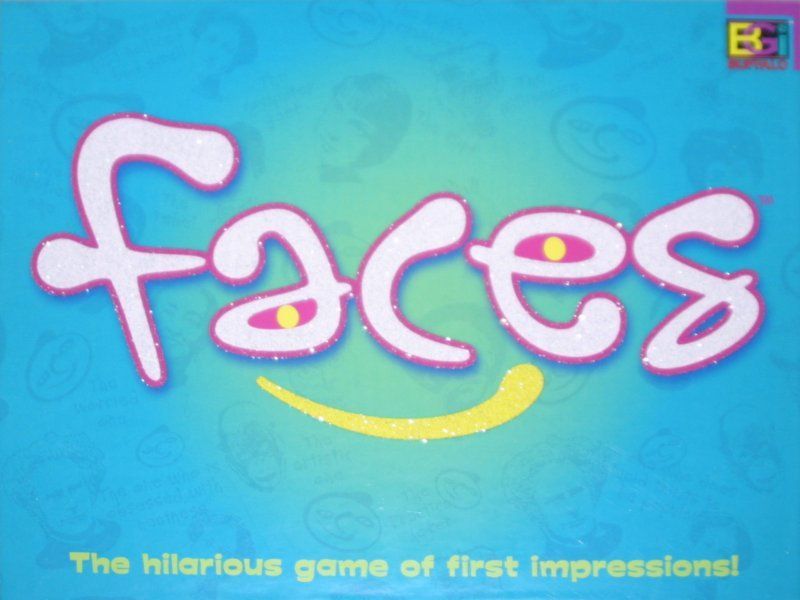
This review looks at a game built on silly faces, quick thinking, and the sort of laughter that makes your stomach hurt. After several rounds with friends, I found plenty to enjoy, from its easy rules to its lively table chat. It also has a few weak spots, especially when a prompt feels too vague or the group lacks a brave performer. Still, Faces gives party nights a cheerful boost without needing a rulebook the size of a brick.
How It Plays
Setting up
Shuffle the face cards and place them where everyone can reach them. Give each player a way to score points, then choose the first player to act.
Gameplay
On your turn, draw a prompt and use your face to show the matching feeling, person, or idea. Keep your words tucked away unless the card allows them. The other players guess what you are showing, then the group checks the answer. Expect strange eyebrows, heroic chin work, and at least one face that looks like it needs an urgent nap.
Winning the game
Players score points for strong guesses and convincing expressions. After the agreed number of rounds, the player with the most points wins. In our games, the real prize went to whoever made everyone laugh hardest, but the rules sadly refuse to print that on the score sheet.
Want to know more? Read our extensive strategy guide for Faces.
Faces Rules Made Easy
Starting out
Faces gets going fast, which is a gift when your friends have spent ten minutes arguing over snacks. The rulebook explains the goal, setup, turn order, and scoring without making you feel like you need a law degree. That feels right for a light party game.
Each turn gives players a task: study the face card, then choose or guess based on the rules. The active player does not need to perform a stage show. A eyebrow lift can do the work. Everyone gets chances to act, watch, and score. This keeps turns moving, even when someone studies a card like it contains the secrets of the universe.
The best part is how little table policing the game needs. Faces uses plain steps, so new players join in after one example. I taught it to my cousin, who usually treats rulebooks as emergency kindling. She understood her turn and beat me by one point, which remains a sore subject at breakfast. The scoring also stays easy to track. You can focus on reading the room instead of checking symbols every few seconds.
Small snags
Still, Faces has bumps. Some cards need timing, and new players may miss a step. A reference aid helps, but I wanted every scoring detail in one spot. The rules leave room for table debate. That creates moments, though strict groups may grumble. Once everyone knows the flow, Faces feels smooth and welcoming. Mistakes rarely ruin a round; players reset and carry on. This forgiving design makes it easy to teach, even to pizza-focused friends. Next, we’ll look at Facial expression creativity, where the real eyebrow gymnastics begin.
Facial Expression Creativity in Faces
Faces gives players a wonderfully odd job: copy a feeling using only their face. One friend puffed his cheeks, another pulled a tragic smile, and I delivered what looked like a haunted potato. The game rewards bold choices, not perfect acting, so shy players can still join without feeling judged.
Big Feelings, Tiny Canvas
Each prompt pushes you toward a fresh visual idea. You may stretch your mouth for shock, narrow your eyes for suspicion, or wobble your chin for panic. Faces works best when players avoid simply naming the emotion. Show “jealous” like a cat guarding lasagna, and the table starts guessing. Those little choices make repeated games feel different, because the same card can inspire a dozen silly performances. I also liked how the game lets people fail safely. A terrible face often earns more cheers than a polished one, which keeps the mood light.
Where Creativity Hits a Wall
Still, the prompts can sometimes feel too vague. If your group lacks a reference, guessing turns into noise. One player read a card as “sleepy,” while everyone else saw “alien dentist.” That confusion creates laughs, but it can also make a performance miss its mark. The game needs players willing to commit, and it shines more with expressive people than with thinkers. Even so, the low stakes invite attempts. Next, we’ll check Player interaction and laughter, where these strange faces become social fireworks.
Faces Player Interaction and Laughter Review
The Table Talk
One player would pull a look, and everyone else would react before they even had time to think. That instant response creates the best kind of noise: shocked gasps, fake outrage, and laughter that makes someone snort into their drink. I know because I was that someone.
Faces gets people watching each other, which sounds harmless until your mate spots a nervous eyebrow twitch and builds a story around it. The game rewards bold reactions, but it also gives quiet players room to shine. My shy cousin barely spoke during dinner, then delivered a perfectly timed stare and had the group folding over the sofa. Nobody needed to be the funniest person in the room. The table made that happen together.
Laughing Together
Interaction comes from the guessing and the teasing. Friends notice who breaks character, who copies another player, and who suddenly develops the face of a haunted potato. Those moments create running jokes that return later, often louder and worse. Still, the fun depends on the crowd. A group that fears looking daft may keep its faces small, while relaxed players turn every round into a comedy sketch. In my games, teasing worked best; personal digs killed the mood faster than a wet firework.
That balance makes Faces feel social rather than competitive, and the laughter never seems forced. It works best when people listen, leave room for odd choices, and laugh with players instead of at them. Next, I’ll look at Replay value and group size, two guests deciding whether Faces earns another seat at the table.
Faces Replay Value and Best Group Size
Faces earns replay value through the people around the table, not a huge pile of rules.
Each group creates a new rhythm. One crew may favor wild choices, while another rewards small, odd moves. That shift keeps Faces from feeling like the same show each time. A short break also helps; fresh players bring fresh energy.
When Faces stays fresh
It also scales nicely across mixed ages. Younger players can join without needing a long memory, while older players can enjoy the changing pace. Each group made the box feel new, which makes Faces easy to bring back.
Group size matters more than the box suggests. Four to six players gives Faces enough voices for a lively table, while everyone still gets room to join in. With two players, the fun loses some spark. With seven, turns slow down and side chats multiply. I once watched a seven-player round become a traffic jam with snacks.
Faces works best at four or five, though six still feels comfortable. It suits a family night, pub meet, or holiday visit where attention wanders like a lost sock. The game needs no long setup, and players can stop after a few rounds without wrecking the evening. Still, repeat sessions on the same night can blur together. I recommend Faces for groups of four to six who want quick, social games with solid replay value.
Conclusion
This concludes my review of Faces. After playing it with friends, I found a simple party game that gets people pulling silly expressions faster than you can say, “Please stop staring at me.” The rules take minutes to teach, and the creative prompts spark plenty of laughs. It works best with four to six players, where everyone gets enough turns without the game dragging its feet. Some prompts feel a bit vague, and the fun depends on having a group willing to act goofy. Still, Faces keeps luck from stealing the show and lets player choices create the best moments. I’d recommend it for casual game nights, family gatherings, and friends who enjoy a little harmless embarrassment. It will not replace your deepest strategy game, but it does not try to. It simply puts funny faces around the table and lets the chaos do the rest.