
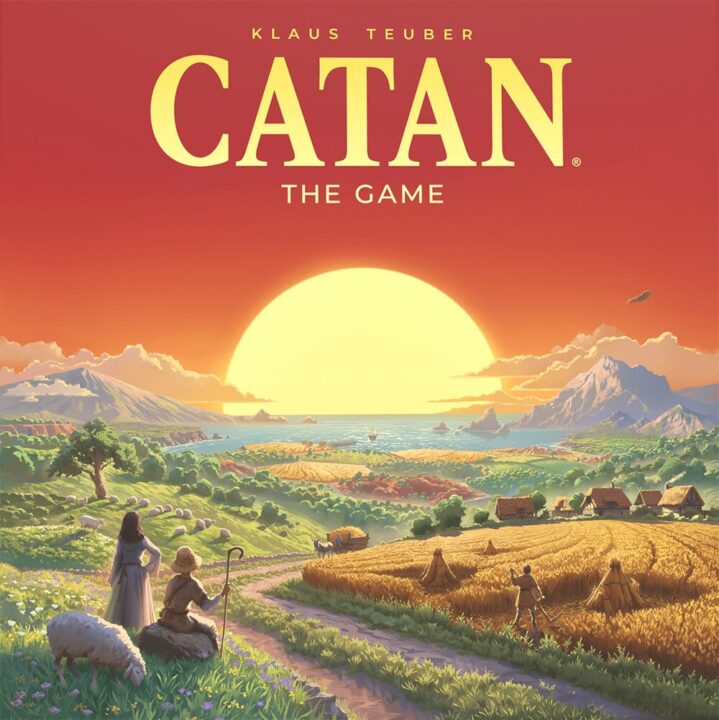
Catan Universe brings trading, dice rolls, and tiny wooden roads to the table in this review. The resource balance feels fair, the pace stays brisk, and three players gives the best tussle. More players add noise, while expansions offer fresh maps and longer battles. It is not perfect, since one bad roll can make your plans wobble like a sheep on ice, but the deals, rivalries, and race for victory keep each game fresh.
How It Plays
In Catan Universe, players build roads, settlements, and cities while trading resources and trying not to blame the dice too loudly.
Setting up
Place the island tiles, number tokens, ports, and robber. Each player takes roads, settlements, cities, and matching resource cards. Everyone places two starting settlements and roads, then collects resources from the second settlement.
Gameplay
On your turn, roll the dice. The number rolled produces resources for players with settlements or cities beside that number. You can then trade with other players or the bank, build roads and buildings, and buy development cards. A roll of seven moves the robber and makes players with too many cards discard some. Sneaky, but legal.
Winning the game
Reach 10 victory points on your turn to win. Settlements, cities, development cards, the longest road, and the largest army can all provide points. Keep an eye on your rivals, because someone who looks harmless may suddenly sprint ahead.
Want to know more? Read our extensive strategy guide for Catan.
Trading and Player Negotiation in Catan Universe
Trading sits at the heart of catan universe. You collect brick, lumber, wool, grain, and ore, then swap them to build roads, settlements, and cities. Sounds simple, right? Then someone offers you one sheep for the ore you desperately need. Suddenly, friendship becomes a very thin bit of string.
Every Trade Has a Price
In our games, the table talk often matters more than the cards. I once needed one grain to build a settlement and offered two lumber. My friend accepted, then spent the whole game reminding me that I had funded his victory. He was not wrong. Catan makes every deal feel personal, even when the math says it was fair.
The best trades help both players, but players rarely make deals without a hidden reason. Someone may offer you a generous swap because they want you to block a rival. Another player may reject a fair deal simply because you sit in first place. That tension keeps the table lively and stops the game from feeling like a quiet spreadsheet.
Negotiation Keeps Everyone Involved
Trading also gives players with poor rolls a way back into the game. You can turn extra sheep into useful cards, or persuade a neighbour to help you before the board leaves you behind. The robber can make this harder, since players often refuse to help the person who just stole from them. Fair warning: deals can become noisy, smug, and slightly dramatic.
The system works best with three or four players. With two, trading loses much of its spark, while larger games create long waits and crowded deals. Still, the human side of trading gives Catan Universe its strongest moments, and next we will weigh those clever plans against Luck versus strategic planning.
Luck Versus Strategic Planning in Catan Universe
When the Dice Have Other Plans
Every Catan game begins with a tiny hope and a suspicious amount of dice. In Catan Universe, I can plan three turns ahead, then watch a seven roll send my grand design into the bin. That sting feels familiar, but it also keeps the table lively.
Planning Still Pays Off
Luck in Catan does not simply add spice; it can steer the whole match. A lucky player may collect ore and wheat all night, while another player holds sheep like a farmer with a very sad hobby. Trade offers some control, but nobody can trade with the bank for a resource that never appears.
Still, strong planning matters more than the loudest dice complaint. I watch tile numbers, ports, and roads before placing my first settlement. A smart player builds flexible routes, saves cards for the right moment, and checks who might reach ten points first. In one four-player match, I missed a key port and paid for it all game. That mistake taught me more than any lucky roll.
Catan Universe makes this tug between chance and choice easy to spot. Its online games move quickly, so a bad roll can feel extra harsh when everyone sees the result at once. Yet the best players still find ways to grow: they shift plans, bargain hard, and block rivals without throwing a tiny wooden tantrum. Next, the section on resource balance and game pace will check whether the island feeds clever plans fairly, or serves everyone a slow stew of sheep, while our dice bob in the broth like pirate boats at dawn.
Resource Balance and Game Pace in Catan Universe
Every resource has its moment
In Catan Universe, resource balance decides whether a turn feels like a clever step forward or a sad stare at an empty hand.
The game gives each hex a job, yet the board does not always share the wealth. Ore, wheat, brick, wood, and sheep each matter, but their value shifts as roads, cities, and development cards leave the table. In one match, my friend built beside strong wheat and ore spots and moved like a shopping trolley with a wonky wheel. I settled for wood and sheep, then watched those supplies become useful when everyone needed roads and early settlements. That change keeps the market alive without making one resource king forever.
A steady climb, not a sprint
The pace feels best when players can turn small gains into visible progress. A new settlement opens a fresh supply line, while a city makes one strong area feel worth protecting. Catan Universe shows production clearly, so I spend less time checking tokens and more time plotting my next build. That helps online rounds move briskly. Still, a player with a narrow supply can sit out several turns, especially after a blocked route or a costly building choice. I have seen the whole table lean back while one player counted cards like a tiny accountant. The pause does not ruin the game, but it can make a short match feel longer than it should.
My verdict on the flow
Resource balance feels fair when players watch the board and adapt their builds. Catan Universe keeps that tension readable, though slow turns can drag. Next, we will visit Best player counts and expansions, where the party grows stranger.
Best Player Counts and Expansions for Catan Universe
Choosing Your Table Size
Catan Universe works best with three or four players, and that choice changes the mood. With three, turns move quickly and everyone gets room.
Two players can work, but the map feels wide and quiet. Catan’s duel option adds a sharper contest, yet it does not replace the chaos of a full table.
Expansion Picks
Expansions give Catan Universe legs, but each one suits a crowd. Seafarers is my recommendation. It adds ships and islands without rewriting the rules, so it feels like familiar Catan wearing a silly captain hat. Cities & Knights offers deeper choices and tougher city threats.
Traders & Barbarians brings small modules rather than one adventure. That makes it handy for groups who enjoy variety, but setup takes longer and some scenarios feel less essential. Explorers & Pirates looks grander and asks players to manage goals. I enjoyed it, yet I would not bring it out for a session unless I wanted confused faces.
For the best mix, I recommend Catan Universe with three players and Seafarers.
Conclusion
This concludes the review of Catan Universe. It offers fun trading, clever planning, and plenty of table talk, especially with three or four players. The expansions add fresh goals, while the online play keeps setup nice and quick. Still, dice rolls can wreck a great plan, and slow turns may test your snack supply. After playing it with friends, I give Catan Universe 3 out of 5 stars. It remains a friendly classic, but luck gets the final say a bit too often.