
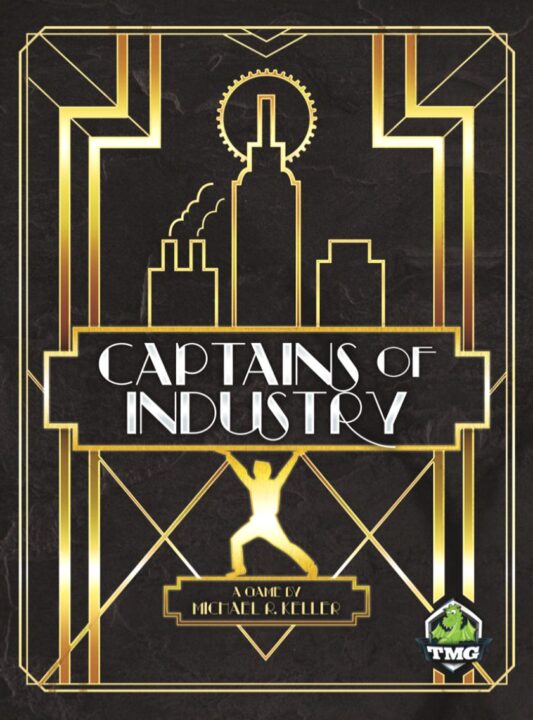
Have you ever wanted to feel like some big-shot business tycoon without actually risking your house on a lemonade stand? Welcome to my review, where I’ll spill the beans on whether this economic powerhouse of a board game is a must-play or just another day at the dusty ol’ factory. Grab your monocle, because I’ve played it, laughed, facepalmed, and possibly threatened to corner the spice market—so you’re getting the real scoop!
How It Plays
Setting up
First, toss the board in the middle of your table and try not to spill your snacks on it (learned that the hard way). Everyone grabs a player board, some starting resources, and their own company tokens. Shuffle the demand cards, set out a few market tiles, and fight over who gets to be first player. Usually, it goes to whoever can say ‘capitalism’ fastest.
Gameplay
On your turn, you make big-boss business moves. You can build new buildings, produce goods, jack up or slash your prices, and invest in research. Everybody gets to see what you’re up to—no sneaky stuff. Once you adjust your prices, you watch the market react. Sometimes you sell everything; other times you just sit there cursing your competition for undercutting you by a buck.
Winning the Game
The game ends when the city hits peak demand or someone develops all their research. Then count up your money, and whoever has the fattest wallet wins. In true board game tradition, everyone else pretends to be happy for the winner while quietly plotting revenge for next game.
Want to know more? Read our extensive strategy guide for Captains of Industry.
How Captains of Industry Keeps Players Scheming and Guessing
When my motley crew sat down to play Captains of Industry, we thought it would be a by-the-numbers euro game where you just shuffle resources around. Boy, were we wrong! The gameplay mechanics pack a punch, and player interaction is about as subtle as a brick through a window. Every turn, players have to make tough calls, and most of those calls involve messing with someone else’s plans. Think you can corner the market on food? Think again. Last week, I watched my friend Steve cackle like a goblin as he tanked my prices by flooding the board with cheap goods. In Captains of Industry, you can’t build your empire in a bubble. Someone will always be ready to swoop in and spoil your day.
What I like most is that actions always matter. You can build factories, upgrade them, do research, and adjust your supply—but the real fun comes when you start staring down your friends and trying to predict their every move. Bluffing and second-guessing are everywhere. A timid player will get eaten alive! You have to be bold, but not reckless, since the board can change in a blink. And since everything is open information, there’s no hiding behind a card draw. It’s brains versus brains, baby.
Of course, if you like games where you can quietly build your own thing and ignore the table, Captains of Industry probably isn’t for you. Here, everybody’s always poking their nose into your business, often literally as my buddy Brad proved with his nacho breath.
Now, let’s see how all these sneaky maneuvers actually play out when the market shifts and the dollars start flying—next up, the wild world of economic systems and market dynamics!
Economic System and Market Dynamics in Captains of Industry
If you love games that feel like running your own mini economy, Captains of Industry delivers the goods. The whole table becomes a churning marketplace where supply and demand aren’t just buzzwords—they’re the name of the game. Every player sets prices, produces goods, and invests in different sectors, trying to turn a profit while sabotaging their rivals’ wallets. It feels less like Monopoly and more like a boardroom brawl with less paperwork (but more cardboard).
I learned quickly that in Captains of Industry, the market is all about timing. If you flood the market with widgets while Joe is trying to sell his at a higher price, you’ll see your own profit margins fatten and Joe’s ego take a hit. It’s brutal, but it’s business. The game forces you to watch what your friends do and respond fast—or lose fast. There’s strategy in every dollar spent, and you can really mess with market prices if you play smart.
Don’t expect to just sit back and collect cash. You need to keep an eye on investments, price wars, and sometimes even trick your friends into crashing the market (Sorry, Lily. I’ll buy you coffee next time.) The engine-building aspect is neat, but what gets your pulse racing is when you outmaneuver a rival and scoop up all the profits while they’re left scrambling.
Stay tuned, because next we’re about to judge Captains of Industry on looks alone. Spoiler: I’ve got opinions.
Component Quality and Visual Design: The Look and Feel of Captains of Industry
When you open the box for Captains of Industry, it feels a bit like finding your granddad’s old business journal—functional, serious, and surprisingly free of coffee stains. The game doesn’t try to wow you with flashy minis or a shiny board. Instead, you get sturdy cardstock, wooden cubes, and a board that looks a bit like an economics professor’s dream poster. If you love art that leaps off the table, this one might not give you goosebumps, but at least it won’t blind you with neon colors or weird iconography either.
The player boards are thick and handle all the fiddling you’ll do over several hours. The resource cubes are, well, cubes, and come in different colors for easy management. I once tried to stack them as a challenge during a long planning turn. They didn’t fall over, so that’s a quality test passed. The cards are decent quality with clear text, making them immune to my clumsy snack-covered fingers. The graphic design is clear and mostly utilitarian, which is actually a big help when you’re trying to scan for info and make big business moves in a hurry.
If you care about eco-friendliness, there’s good news: there’s minimal plastic, and the box isn’t stuffed with needless inserts. Everything fits back in without the Tetris struggle. So, while Captains of Industry isn’t a visual showstopper, it’s solid, legible, and makes you focus on what’s important—out-maneuvering your friends in cutthroat capitalism.
But will you want to keep coming back for more rounds of cube-pushing corporate warfare? Let’s talk replayability and game balance next!
Replayability and Balance: Can You Play Captains of Industry Again and Again?
If you like a game that keeps you thinking, Captains of Industry might just be your jam. This game really shines when it comes to replayability. Every session feels different. Why? Because the player-driven market makes sure no two games play out the same. One day, my friend Janice tanked the steel market so hard that we called her “The Wrecking Ball” for a week. I still have flashbacks every time I see metal.
Another beauty is that there is no set way to win. You can focus on research, or you can try to corner the market with aggressive pricing, or build up production like a little capitalist squirrel. There are just so many ways to approach the game, so you never get bored.
But, balance is key. In Captains of Industry, I actually felt like my decisions mattered more than luck. That’s rare! There’s open info—so no hidden traitor stuff—and if you lose, well, it’s probably your own fault for trying to sell food when everyone’s going gluten-free. Some people might find it a bit punishing, because one bad mistake can haunt you for a while, but it never feels unfair. We’ve played it many times, and nobody has figured out a broken strategy or a way to “cheese” the win. That’s a big plus!
So do I recommend Captains of Industry? Yes, especially if you love interaction, tough choices, and a good humbling now and then. Just beware the Wrecking Ball.
Conclusion
So, that’s my report from the factory floor! I loved the open info and player interaction. There was lots of groaning, scheming, and, yes, more than one pretend hostile takeover speech. The economics made us sweat, and mistakes haunted us (ask Dave about his concrete blunder). The game looks fine and the components get the job done, even if they won’t win any beauty awards. Best of all, every game felt different thanks to the player-driven market.
On the downside, the rules can be a bit much for new players, and it’s not the prettiest cardboard box on the shelf. Some folks might want more luck, but if you love strategy and friendly competition, this might be right up your alley.
This wraps up my review of Captains of Industry! Thanks for reading, and may your concrete always sell out before Dave gets the chance.