
You know, nothing says friendship like fighting over cardboard planets with bright suns staring back at you. If you’re wondering if this game brings more heat than your average family BBQ, stick around. I’ll cover the squabbles, the luck, and if the pieces are sturdy enough to survive game night tantrums.
How It Plays
Setting up
First, toss the board on the table. Give everyone their player mat, a handful of colorful tokens, and some cards. Place the sun marker right in the center because it’s the star of the show (pun intended). Shuffle those decks, hand out starting resources, and pick who looks most sunburned to go first.
Gameplay
On your turn, pick an action: snag resources, claim sunny spots on the board, or haggle with your friends for a better deal. It’s all about area control and clever trading. Keep an eye out for sneaky moves—your buddies will try to steal those prime sunbathing spots just when you blink or go for more chips.
Winning the game
Once the sun marker makes a full lap (or everyone’s patience runs out), count up your points. You score for captured regions and happy sunbathers lounging in your zones. The player who collects the most points (and survives the trash-talk) wins the ultimate ‘A Place in the Sun’ bragging rights!
Want to know more? Read our extensive strategy guide for A Place in the Sun.
How “A Place in the Sun” Gets Player Interaction Right (Mostly)
Let me tell you, nothing brings out the true colors of your friends quite like a board game about colonizing space. “A Place in the Sun” throws you onto a wild solar map where grabbing territory and outmaneuvering your opponents is the main goal. It’s like space Monopoly, but you don’t want to throw the board out the window—yet.
The main draw for me is how the game pushes players into constant negotiation and bluffing. You can make alliances just to stab your mates in the back a turn later. My buddy Laura tried to team up with me against everyone else, but after four rounds she sold me out for a spaceport and her best evil laugh. It was beautiful and tragic. There’s a mechanic for trading resources too, and it’s always tense. You never quite know if that deal is getting you ahead or putting you in a black hole of despair.
On the mechanics side, each turn feels meaningful. Actions include expanding, researching, or just messing with opponents’ plans. I love that your choices matter, but sometimes it drags when someone suffers from analysis paralysis. If your group has someone who likes to debate with their own brain for ten minutes per move, bring snacks.
Player interaction is mostly direct, but never feels unfair. There are a few “take that!” cards, but they’re rare enough not to ruin friendships. In my games, the most fun moments came from arguments over territory. If you like games where ignoring your friends is an option, this one’s not for you.
If you’re curious whether luck or genius wins the day in “A Place in the Sun,” stick around for the next section—I’ve got thoughts hotter than Mercury on that!
Strategy vs. Luck: Who Really Gets a Place in the Sun?
Let’s talk about the big elephant at the game table: does A Place in the Sun reward your clever plans, or does it just roll you over with the dice gods? After several heated rounds with my pals (one of whom claims his cat is his lucky charm), I can say this game tries to walk the line between planning and plain old luck.
The core of A Place in the Sun lets you build alliances and set sneaky traps for your friends. On good nights, I’ve outsmarted everyone with my master plan, only for a single card draw to throw me back into the shadows. Seriously, one time I had a perfect setup to win, but then Sheila picked the only event card that could ruin everything. It was both tragic and hilarious (okay, mostly tragic for me).
Random cards and the occasional dice roll keep you on your toes, but sometimes they smack your strategy right out the window. If you’re a big fan of games where the best tactician always wins, you might find yourself staring at the sun and wondering where you went wrong. On the bright side, the unpredictability keeps things fresh and gives everyone, including the underdog, a shot. But if you want skill to beat luck every time, you may come away a bit sunburned.
Next up, I’ll chat about replayability and if you’ll want to keep coming back for another sun-soaked showdown or pack your bags after one trip!
Replayability and Game Length in A Place in the Sun
A Place in the Sun has become a regular guest at my game nights, always showing up with a new twist. The replayability is solid, I’ll give it that. That unpredictability keeps it fresh, but never so wild I want to flip the table (I save that for Monopoly).
What helps is the way “A Place in the Sun” tosses out modular objectives and variable player powers. It can be tense, as you try to pick the best path and block your rivals, but it always comes with a healthy dose of laughter and table talk. Sometimes, we end up with story moments—like that time I thought I had the perfect victory lined up, until Dan managed to snatch the sun token out from under my nose. I still haven’t forgiven him.
As for game length, we clocked most plays around 90 to 120 minutes, which feels just right. It’s long enough to dig in, short enough that you don’t regret picking it on a weeknight. And if someone leaves early, the game doesn’t grind to a halt, which I always appreciate. There’s not much downtime—everyone’s watching, plotting, and occasionally trash talking.
If you’re the type who likes mastering a game but wants each round to feel distinct, A Place in the Sun earns its rays. Up next, I’ll be shining a light (see what I did there?) on its component quality and artwork!
Component Quality and Artwork: Shining Bright or Cloudy Days?
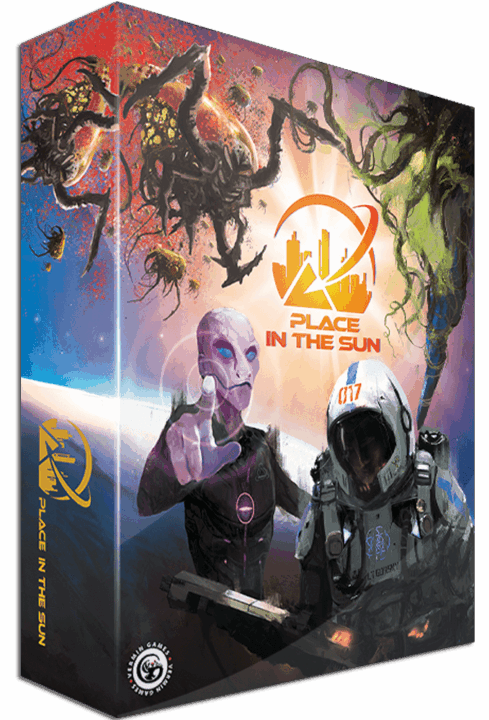
When I first opened A Place in the Sun, I half-expected the sun to pop out and blind me with a golden ray. It didn’t, but the game’s box is pretty darn bright. The artwork on the front screams, ‘Hey, look at me! I’m the game to play at your next board game night.’ It’s colorful and energetic—like a parrot trapped in a paint store—and it sets a solid first impression.
Now, onto the components. No split corners yet! The tokens and markers are also chunky and easy to handle, which is good news for sausage-fingered players like me. I did notice the sun token is both a highlight and, oddly, a tad too yellow. A bit more contrast would have helped, especially after two glasses of lemonade (or something a little stronger).
The board itself spreads out nicely, leaving enough room for elbows and mid-game snacks. The iconography is clear, and the color palette will keep you awake even after an epic 120-minute session. The artwork makes you feel like you truly have ‘a place in the sun,’ soaking up the theme without ever feeling tacky or overdone.
Would I recommend A Place in the Sun based on component quality and artwork alone? Absolutely. It’s a visual treat and physically well made. Just don’t expect a real suntan afterwards!
Conclusion
A Place in the Sun packs a ton of fun in a sunny box. The game bursts with color, clever interaction, and enough backstabbing to keep your in-laws entertained. It isn’t perfect—luck pops up more than a seagull at a picnic, and strategic masterminds might grumble when the dice spoil their plans. But if you want a game that feels fresh every time, looks lovely, and gives you a real social spark, this one’s got your ticket. Thanks for sticking around for my review—now go grab your sunglasses and give it a spin!